Terraforma Documentary Examines Human-Made Nature on Ascension Island
Ascension Island emerges from the deep Atlantic Ocean as a volcanic outpost formed over millions of years through eruptions and sediment accumulation. While its origins appear as a cosmic creation, much of its current landscape is actually a human-made construct. During the Victorian era, British botanists introduced various plant species to cultivate locally, turning what was once a barren terrain into a lush green oasis. This remarkable transformation serves as the central focus of Kevin Brennan and Laurence Durkin's contemplative documentary, which delves into the concept of "terraforming"—the theoretical ecological process where humans modify hostile environments to suit their needs.
Visual Poetry and Atmospheric Landscapes
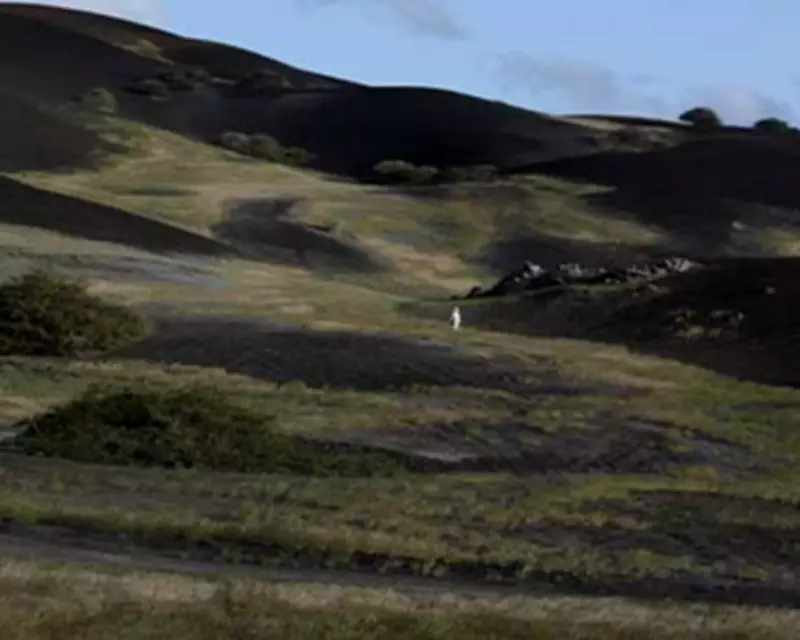
The film unfolds through a series of static vignettes that capture the natural topography of Ascension Island in stunning detail. Cracked lava fields and expansive golden sands gradually give way to verdant forests, creating a striking color palette dominated by blacks, yellows, and greens. The cinematography is poetic and visually arresting, showcasing a diverse array of flora and fauna. Notably, human presence is minimal on screen, with people rarely appearing, which adds an eerie and contemplative atmosphere to the viewing experience.
Human Perspective Through Voiceover Narration
The human point of view is primarily conveyed through voiceover narration layered over Ascension's unique landscapes. Conversations with geological experts explore the complex relationship between humans and nature, musing on philosophical and speculative themes. However, these discussions often lack historical and practical insights into the potential pitfalls of terraforming. A significant omission is the absence of interviewees from the global south, which is particularly problematic given the imperialist motivations behind the desire to reshape and conquer this so-called uncharted territory.

Critical Analysis and Sociopolitical Context
Without concrete examples and evidence, the film inadvertently reinforces simplistic binaries that lack sociopolitical nuance. The absence of analytical rigor means that the beautiful cinematography, while visually impressive, can feel hollow and decorative, resembling little more than an elaborate slideshow. This approach misses opportunities to address crucial environmental and social questions, leaving viewers with more aesthetic appreciation than substantive understanding.
Terraforma is available on True Story starting from March 13, offering audiences a visually stunning but philosophically limited exploration of human intervention in natural landscapes.