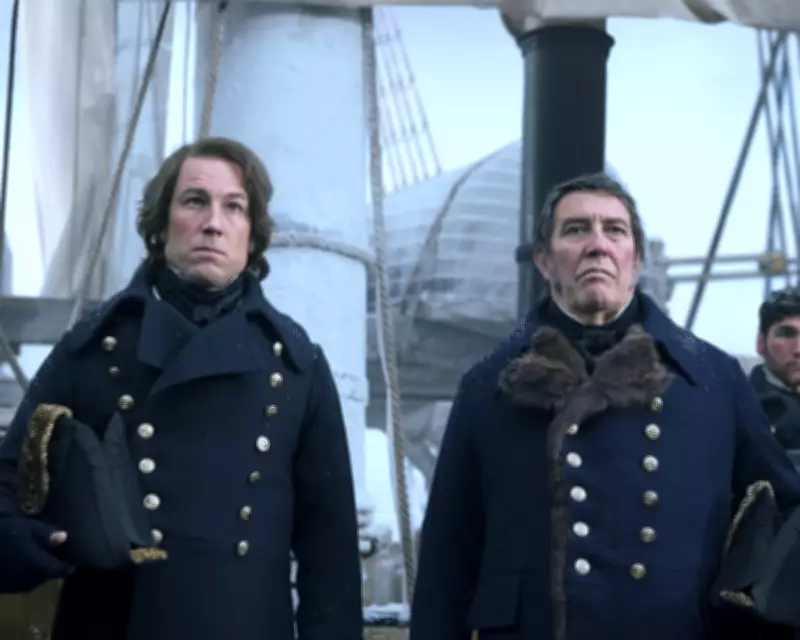
The Terror: A Haunting Masterpiece of Colonial Folly and Arctic Horror
In the vast landscape of peak television, AMC's anthology series The Terror stands as an unsung treasure, a brutal and magnificent corrective to colonialist fantasy. With a world-class ensemble cast that prompts constant recognition, this horror drama chronicles the ill-fated 1845 Royal Navy expedition to discover the Northwest Passage, transforming historical tragedy into a grand treatise on human arrogance and survival.
The Doomed Expedition Reimagined
Based on Dan Simmons' bestselling 2007 novel, which the author completed shortly before his recent passing, The Terror speculates on the ultimate fate of Captain Sir John Franklin's vanished Arctic mission. The historical facts provide the foundation: in 1845, HMS Erebus and HMS Terror, carrying 129 crew members under Franklin and Captain Francis Crozier, became trapped in pack ice near King William Island. Neither ships nor men ever returned, creating a Victorian-era mystery that has fascinated generations.
The series embellishes this historical framework with elements of Lovecraftian horror, creating a narrative where the stranded sailors face not only subzero temperatures and suspected lead poisoning from their tinned supplies, but also a supernatural predator. The Tuunbaq, described as "a spirit dressed as an animal" made of "muscles and spells" by the local Netsilik people, stalks the icebound vessels, treating the Englishmen as high-protein snacks in a year-round Arctic buffet.

A Cavalcade of "That Guy!" Performances
While AMC is renowned for groundbreaking series like Mad Men, Breaking Bad, and The Walking Dead, the first season of The Terror stands shoulder-to-shoulder with the network's finest achievements. The writing rivals the complexity of Deadwood, delivered by what might be television's greatest collection of character actors.
The cast reads like a who's-who of premium television: Jared Harris (Mad Men, The Crown) as the pragmatic Captain Francis Crozier; Ciarán Hinds (Game of Thrones) as the doomed Sir John Franklin; Tobias Menzies (The Crown, Outlander) as the ambitious James Fitzjames; Alistair Petrie (Sex Education); and Paul Ready from Channel 4's cult masterpiece Utopia.
Beyond these familiar faces, the series introduces remarkable discoveries. Greenlandic musician Nive Nielsen delivers a haunting performance as Silna, known to the English as "Lady Silence," a Netsilik woman with mysterious connections to the Tuunbaq. Adam Nagaitis is phenomenal as Cornelius Hickey, the conniving Caulker's mate whose delusions of grandeur transform him into a populist mutineer, stoking division and craving power for its own sake.
Colonial Folly and Masculinity in Crisis
Through the ideological clash between Captain Crozier and Hickey, and through the very premise of blindly carving a path through Indigenous territory, The Terror becomes a profound exploration of colonial arrogance and masculinity in extremis. The series suggests that men would rather sail to the Arctic and spend three years going mad while being hunted by a nine-foot, soul-eating polar bear than confront their psychological demons through more conventional means.
What could have been a simple Predator on Ice narrative—a chest-beating tale of Western military might conquering savage wilderness—instead becomes something far more sophisticated. A show populated almost entirely by white men forcefully positions itself as a brutal corrective to colonialist fantasy, examining how ego and the promise of legacy drive imperial expansion using disposable bodies.
The End of Vanity
The series' most powerful theme emerges as the officers gradually abandon their airs and graces. True leadership emerges not from rank but from character; true brotherhood forms not through duty but through decency. At the literal ends of the Earth, all men become equals, stripped of the social hierarchies that defined their lives back in England.

In one of television's greatest scenes, Tobias Menzies' James Fitzjames laments his life of self-serving conceit while stranded on King William Island, an 800-kilometer walk from the nearest trading post. "We have arrived," he declares with devastating clarity, "at the end of vanity." This moment crystallizes the series' central thesis: that ego, at imperial scale, has led these men to a place beyond their dominion and spiritual understanding, past the limits of where even the hungriest civilizations should ever venture.
Legacy as Animating Force
The Terror suggests that more than resources or wealth, it is the promise of legacy that historically spurred imperial expansion. In early episodes, officers sit in heated quarters, eating tainted food from fine china while dissecting fellow adventurers' memoirs and planning their own. They imagine how their story will sound when recounted from that elusive armchair of safe return.
Even as characters succumb to lead poisoning in later episodes, the greatest comfort their companions can offer is the assurance that "there will be poems." This proves prophetic: The Terror itself becomes a haunting, magnificent poem about human ambition and its limits, a narrative that sticks to the viewer's consciousness like a frozen spyglass to an eyelid.
The series ultimately transcends its horror trappings to become a profound meditation on colonialism, masculinity, and the human cost of empire. It stands as one of the decade's most ambitious and accomplished television achievements, a masterpiece that continues to resonate long after the final credits roll.