US Cinema Audiences Embrace Jimmy Savile Style for Horror Film Screenings
In a bizarre cultural disconnect, American film enthusiasts are turning up to screenings of the latest horror sequel 28 Years Later: The Bone Temple dressed in attire that British audiences immediately recognise as the signature look of disgraced entertainer Jimmy Savile. The phenomenon has sparked significant controversy and confusion across social media platforms.
The Savile-Inspired Character in 28 Years Later
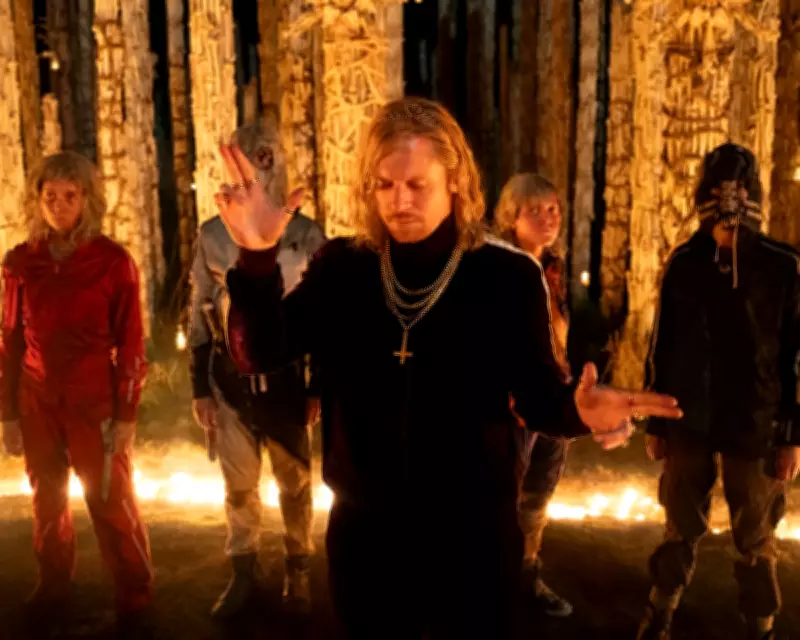
The film, which continues the acclaimed 28 Days Later franchise, features a murderous cult known as "the Jimmies" who stalk post-apocalyptic Britain. Led by Sir Jimmy Crystal, portrayed by British actor Jack O'Connell, the sect members are instantly recognisable for their cheap tracksuits, bleached blonde wigs, and distinctive mannerisms that deliberately echo Jimmy Savile's public persona.
Both producer Danny Boyle and O'Connell have been explicit about the character's inspiration. Boyle explained to Business Insider that Sir Jimmy Crystal draws upon Savile's entire pop-cultural footprint, creating what he described as "all kind of twisting in this partial remembrance" that the character's followers then recreate as an image within the film's narrative.

O'Connell elaborated to the Hollywood Reporter, noting that his character "models himself on the memory of this figure that was always on TV." The actor emphasised that the portrayal serves as a warning about the dangers of weaponised nostalgia and unchecked power, stating clearly: "It totally exists in the story to unsettle."
American Audiences Miss the Reference
Despite the clear intentions behind the character, many American and Canadian viewers appear to have missed the disturbing reference entirely. Across TikTok and other social media platforms, clips, photographs, and dedicated fan accounts celebrating the "Jimmy Gang" have proliferated. Enthusiastic fans are showcasing their cosplay outfits, complete with tracksuits, gold chains, cigars, and the signature white bob wig that defined Savile's public image.
Some videos take the admiration further, imagining specific dance moves each Jimmy character might perform or enthusiastically idolising Sir Jimmy Crystal as a compelling character in his own right. This enthusiastic embrace of the aesthetic has created significant cultural friction, particularly with British audiences who remain acutely aware of Savile's horrific legacy.
The Dark Reality Behind the Costume
For British viewers, the character's appearance triggers immediate recognition of Jimmy Savile, whose decades-long history of sexual abuse against hundreds of victims – predominantly children – only became widely known after his death. Savile exploited his fame and positions of trust to commit crimes across television studios, hospitals, children's homes, and various institutions where he had cultivated influence and unrestricted access.
The film's timeline adds another layer of complexity to the portrayal. If the original 28 Days Later is set in the present, Britain's collapse in the sequel occurs in 2002 – before Savile's crimes became public knowledge. Within the narrative, the characters idolise Savile not because he represents evil, but because the truth about his actions never emerged in their fictional world.
Cultural Divide and Historical Awareness
Many American fans have defended their costume choices by arguing that Savile was never a household name in the United States and that his infamy simply hasn't crossed the Atlantic with the same cultural weight. This isn't the first instance of Americans misunderstanding Savile's legacy – Netflix's Tiger King star Carole Baskin previously fell victim to a tasteless prank involving birthday messages for Savile and convicted paedophile Rolf Harris, later insisting she had no idea who either man was.
British audiences have been quick to criticise the outfits, with many expressing hope that American fans will eventually understand the disturbing context behind the aesthetic they're embracing. Actor Robert Rhodes, who plays Jimmy Jimmy in the film, admitted to Metro that he only realised the resemblance during his costume fitting, thinking to himself: "Am I dressed as Jimmy Savile?"

The Broader Implications
While O'Connell has been broadly supportive of people enjoying the costume – perhaps jokingly telling Entertainment Weekly that "It's a great feeling to be in that attire" and suggesting fans shouldn't limit wearing it to Halloween – the situation raises important questions about cultural memory and historical awareness.
As Guardian critic Peter Bradshaw noted in his review, 28 Years Later: The Bone Temple presents "real human jeopardy and conflict" where "non-zombies are more cinematic." Yet perhaps the more disturbing horror lies in how figures like Savile can, within a generation, be reduced to mere aesthetic elements – a wig, a look, or a meme – stripped of the context that once made them truly monstrous.
Given Savile's relative obscurity outside Britain, it was perhaps inevitable that some international viewers would latch onto the visual style without understanding its origins. Nevertheless, the situation serves as a potent reminder of how cultural references can become detached from their historical context when they cross international borders, creating unintended interpretations and potentially offensive misunderstandings.