Certain cinematic creations possess a remarkable ability to embed themselves within our collective consciousness, remaining vividly alive long after the screen fades to black. One such enduring wartime classic, now approaching its seventieth anniversary, continues to generate fervent discussion, with contemporary audiences and critics alike proclaiming it the most "epic" contribution to the genre. This film is consistently praised for its monumental scale, profound narrative depth, and technical brilliance.
A Legacy of Critical and Popular Acclaim
Boasting an almost unparalleled legacy, a trove of prestigious accolades, and a reputation that has only intensified with the passing decades, this cinematic landmark is frequently described as remaining untouched by modern filmmaking. On the review aggregator Rotten Tomatoes, it holds a stellar critics' score of 96 percent, complemented by an equally impressive audience rating of 93 percent. This consensus reinforces the argument from its devoted fans that it rightfully occupies a place among the greatest motion pictures ever created.
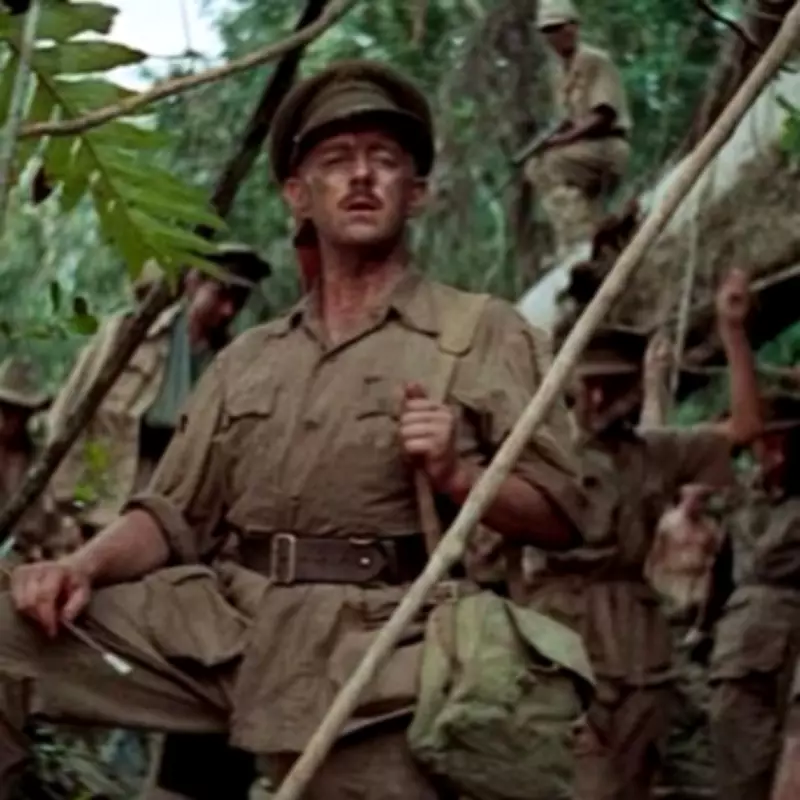
The film in question is the 1957 masterpiece The Bridge on the River Kwai, directed by the legendary David Lean. As reported by the Express, one passionate reviewer encapsulated the prevailing sentiment, stating: "Not much to say other than it is by far the most epic war film. It is a sublime, flawless masterpiece that you will never forget."

Audience Reactions: A Film That Endures
The emotional and intellectual impact of the film is a common theme among viewers. One comment noted, "It will stay with you for years and years and once in a while you will catch yourself thinking about it when you're making dinner or washing your car or doing anything else. Wow, just simply wow."
Another review delved into its complex thematic nature, observing: "The film is quite spectacular. I heard a film critic once say that there really aren't 'war movies'; there are only 'anti-war' movies. I'm still not sure what I think of that claim, but having seen The Bridge on the River Kwai enough times in the past several years, I think I'm persuaded that it's at least half right. It is, I believe, both a 'war' and 'anti-war' movie, and, in my view, it succeeds admirably at both."
Further praise highlighted its production value and emotional resonance: "I wonder if David Lean realised what he'd created when he completed this film, a timeless classic, a film for the ages. I know it's a film, but wow do you get a sense of what those poor men must have suffered... Incredibly well made, a production of epic proportions that holds up perfectly to this day, amazing location work, costumes, and sets, and remember there were no special effects to rely on in 1957."
Award-Winning Excellence and a Noteworthy Backstory
The film's quality is underscored by its formidable awards pedigree. The Bridge on the River Kwai triumphed at the Academy Awards, securing an impressive seven Oscars. These included the top honours of Best Picture, Best Director for David Lean, and Best Actor for Alec Guinness's iconic performance. The film also claimed Golden Globes for Best Motion Picture - Drama, Best Director, and Best Actor, alongside four BAFTA awards, including Best Film.
Starring Alec Guinness, William Holden, and Jack Hawkins, the film is adapted from Pierre Boulle's novel. However, its screenplay has a fascinating history. It was written by Carl Foreman and Michael Wilson, who worked covertly while being blacklisted in Hollywood during the McCarthy era. Consequently, Pierre Boulle was initially credited and awarded the Oscar for Best Adapted Screenplay in 1957, despite not speaking English. This historical inaccuracy was corrected by the Academy in 1984, when Foreman and Wilson were posthumously awarded the Oscar.
A final viewer's comment perfectly summarises the film's enduring appeal: "A brilliantly structured, beautifully written screenplay forms the basis of this: one of the greatest movies ever made." For those wishing to experience or revisit this landmark film, it is available for purchase or rental on digital platforms including YouTube.