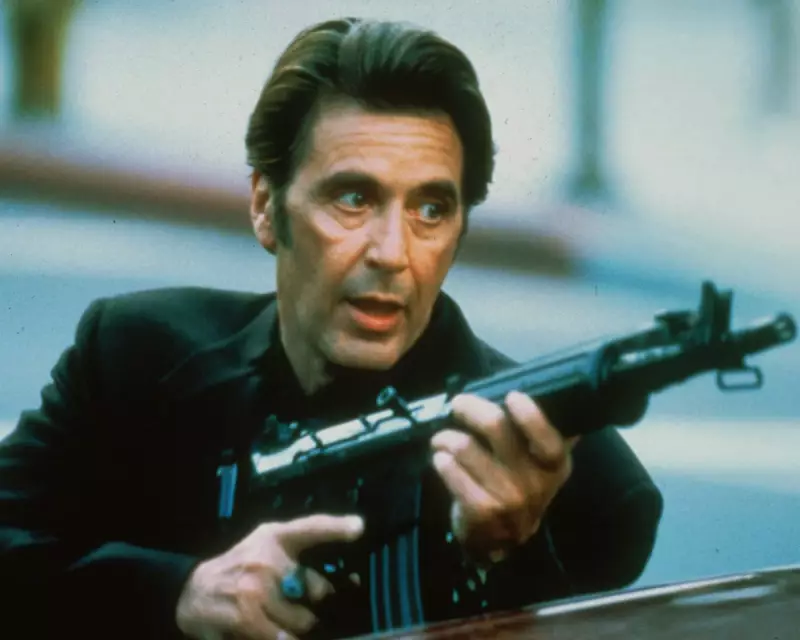
For a certain generation of film fans, the ultimate cinematic comfort food isn't a warm-hearted romance or a cosy comedy. It's the cold, chrome-and-glass world of Michael Mann's 1995 neo-noir heist thriller, Heat. This cult classic, starring Al Pacino and Robert De Niro, has evolved from a critical hit into a endlessly rewatchable touchstone, quoted religiously by its devotees and dissected in granular detail by podcasts and film scholars alike.
The Ritual of Rewatching a Modern Classic
The phenomenon is personal and communal. For many, like the writer who sparked this reflection, annual reunions with old friends descend into a festival of Heat quotations. Communication becomes a performance, alternating between screaming like Pacino's coked-up LAPD detective Vincent Hanna and delivering the deadpan, "I have a woman" line of De Niro's master thief Neil McCauley. Social media algorithms feed the obsession, serving up niche memes, vintage casting polaroids, and impressions, creating a loop that is "never-ending and also never enough."
But what drives this compulsion to rewatch a film seen dozens of times? Why does a tale of violent obsession and fatalistic heists qualify as a feelgood movie? The answers lie in the film's impeccable craft and its strangely consistent universe.

The Alchemy of a Perfect Thriller
The foundational reasons are clear: Heat is arguably Michael Mann's most accomplished work. The central duel between Pacino and De Niro is electric, a study in mirrored obsession. Mann's vision of Los Angeles is transformative, rendering the city as a landscape of austere modernity, what critic Mark Fisher called "endlessly repeating vistas of replicating franchises." Its influence is vast, directly inspiring the structure of Christopher Nolan's The Dark Knight, while itself borrowing from the climax of Bullitt.
Yet, beyond the craft, it functions as comfort. The opening armoured truck robbery is a masterful set piece that commands attention every time. The film establishes a steady-state universe with a merciless but consistent moral code. In a contemporary world of constant flux, Heat harks back to a mid-1990s era that, for all its problems, now feels oddly quaint. Its rules are harsh but never ambiguous.
A Universe in the Details
The obsession is far from solitary. London's Prince Charles Cinema has hosted months-long screenings, while podcasts like The Rewatchables and the ultra-specific One Heat Minute pore over every frame. The depth rewards this attention. Beyond the legendary leads, every bit part over-delivers: from Henry Rollins' meathead henchman to Natalie Portman's troubled teenager.
Fans revel in discovering new micro-moments, like Val Kilmer's mesmerising, wordless scene as his character watches a clerk verify his fake ID. The tragic arc of ex-con Donald Breedan (Dennis Haysbert), desperately trying to go straight, encapsulates the film's core themes: sliding doors, crossed red lines, and the destruction of carefully built futures.
For its devotees, Heat is a story about the conflict between irreconcilable worlds: domesticity and the underworld, obsession and consequence, cops and robbers. The upcoming Heat 2, with a rumoured all-star cast including Leonardo DiCaprio and Austin Butler, generates both excitement and apprehension. Can that perfect alchemy be recaptured? Whether it can or not, the original's legacy is unassailable. It remains available to stream, a permanent fixture in the pantheon of feelgood films that are anything but gentle. For a certain viewer, the action is, and will always be, the juice.