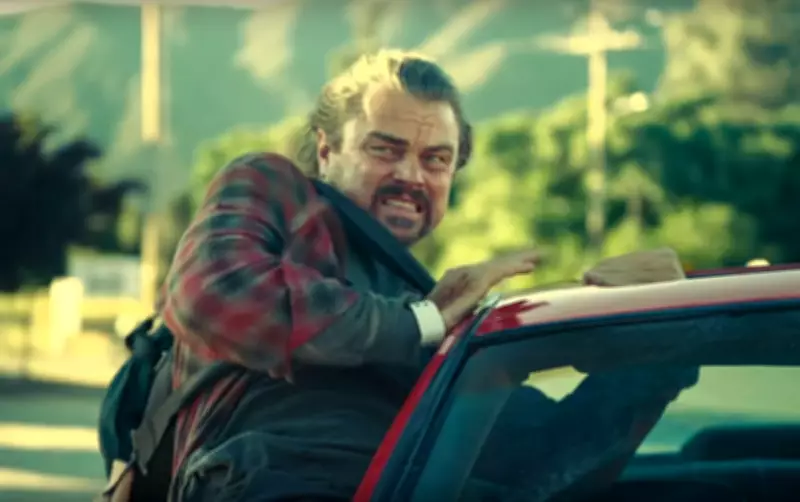
Why 'One Battle After Another' Should Win the Best Picture Oscar
Paul Thomas Anderson's latest cinematic offering, One Battle After Another, stands as a bold and timely contender for the Best Picture Oscar. This sprawling Hollywood spectacle, starring Leonardo DiCaprio, masterfully navigates the chaotic landscape of contemporary America, blending cartoonish humor with deadly serious political commentary. The film captures the nation's disunity and instability, making it a resonant piece for our current era.
A Political Epic for Modern Times
Despite advice from filmmakers like Wim Wenders to avoid politics, One Battle After Another is deeply entrenched in the political fray. It anticipates the tenor of a potential second term for Donald Trump, weaving a narrative that feels hard-wired to the present moment. Leonardo DiCaprio portrays Bob, a former firebrand turned burnt-out stoner, who is jolted back into action when his daughter Willa, played by Chase Infiniti, is captured. Adapted from Thomas Pynchon's novel Vineland, the story updates its post-60s disillusionment for the 2020s, exploring themes from migrant detention camps to Christian Nationalist cells within the U.S. government.
The film's volatile nature is underscored by Jonny Greenwood's jittery score, creating a melody from atonal notes that mirrors the clashing components of its plot. While labeled a comedy at the Golden Globes for its rambunctious and profane mischief, it remains deadly serious. Characters like Sean Penn's Colonel Lockjaw are cartoonish yet chillingly reminiscent of real-life figures, highlighting how fascism often hides behind laughter.

Beyond Party Politics and Social Struggles
One Battle After Another transcends simple party political allegiances. Its sympathies lie with underdogs and guerrilla fighters for social justice, but it acknowledges the exhausting, sisyphean nature of such struggles. The film delves into complex issues like identity and race, echoing Mark Twain's Pudd'nhead Wilson to explode the red and blue state divide. It portrays America as a marbled, mixed-up society where traditional divisions blur, emphasizing that the future is inherently diverse.
In a year where the stakes are high and many fear speaking out, the film's timeliness is undeniable. With Warner Bros, its backer, facing acquisition by Trump-friendly Paramount Skydance, One Battle After Another emerges as a crucial voice. It may not be Anderson's personal best or the unanimous favorite among nominees, but its rollicking, old-school epic style makes it uniquely suited for the moment. Hollywood once regularly produced such ambitious works; today, this film stands out as a potential last great American whale.
A Message of Hope and Resilience
The film insists that despite the slow and often backward bend of history, every effort and small victory matters. Its ending, while corny, is rousing and hopeful, suggesting that revolutionaries like Bob can only carry the flame so far before passing it to the next generation. This message of resilience and incremental progress resonates deeply, making One Battle After Another not just a film, but a call to action in turbulent times.