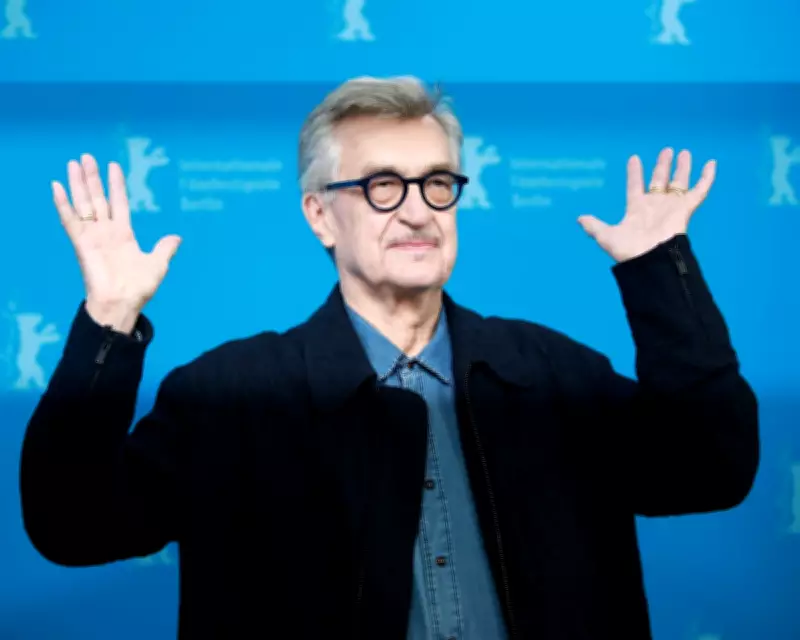
Renowned film-maker Wim Wenders has passionately championed the transformative power of cinema to foster empathy and bridge divides, while firmly rejecting overt political activism in film. Speaking as jury president at the opening press conference for the 76th Berlin International Film Festival, the veteran director behind classics like Wings of Desire and the Oscar-nominated Perfect Days articulated a vision of movies as a counterweight to politics.
The Empathetic Essence of Cinema
Wenders emphasized that cinema possesses an incredible capacity for compassion and understanding, qualities he sees as lacking in both news media and political spheres. "Movies can change the world," he declared to assembled reporters in Berlin. "Not in a political way. No movie has really changed any politician's idea, but we can change the idea that people have of how they should live."
The director elaborated that film-making should focus on human connections rather than political agendas. "We have to stay out of politics because if we make movies that are dedicatedly political, we enter the field of politics," Wenders explained. "But we are the counterweight of politics, we are the opposite of politics. We have to do the work of people, not the work of politicians."

Navigating Political Questions
When confronted with a pointed question about German support for Israel during the Gaza conflict and perceived selective solidarity with global crises, Wenders and fellow jury member Ewa Puszczyńska pushed back against expectations for the festival to take explicit political stances.
Polish producer Puszczyńska called the question's framing "unfair," noting the complexity of global conflicts. "Of course, we are trying to talk to people and make them think, but we cannot be responsible for what their decision would be," she stated. "There are many wars where genocide is committed, and we do not talk about them... so this is a complicated question."
Berlinale's 76th Edition Program
The seven-member international jury led by Wenders will evaluate twenty-two feature films from across the globe for the prestigious Golden and Silver Bear awards, with winners announced at a gala ceremony on February 21st. The festival opens with No Good Men by Afghan director Shahrbanoo Sadat, celebrated as Afghanistan's first romantic comedy, screening out of competition.
Now in its seventy-sixth year, the Berlinale will welcome numerous stars presenting new work, including Amy Adams, Channing Tatum, Pamela Anderson, Ashley Walters, Callum Turner, Ethan Hawke, Gemma Chan, and Charli XCX. However, Wenders highlighted that the majority of approximately two hundred feature films and documentaries in this year's program emphasize the impact of geopolitical turmoil and human rights struggles worldwide.
The Festival's Broader Context
The Berlin Film Festival maintains its position alongside Cannes and Venice as one of Europe's premier international film events, traditionally noted for its politically engaged programming. Wenders' comments arrive as the festival continues to navigate the complex intersection of art and contemporary global challenges.
"Cinema has an incredible power of being compassionate and empathetic," Wenders concluded. "The news is not empathetic. Politics is not empathetic, but movies are. And that's our duty." His remarks underscore a belief in film's unique ability to heal and connect people across divides, positioning the Berlinale as a platform for humanistic storytelling rather than political declaration.