How a Zelda Developer Helped Infinity Nikki Become a Multi-Million Fashion Phenomenon
Fashion-oriented live service game Infinity Nikki has captivated millions of fans worldwide, but its creation was significantly influenced by a former designer from Zelda: Breath of the Wild. At the Game Developers Conference (GDC) in San Francisco, where the industry gathers to discuss future trends, attention was high for Xbox's new Project Helix console, though details were sparse. Amidst conversations about AI pipelines and engine upgrades, I had the opportunity to speak with Infold Games art director Dodie Gong about the gacha fashion success story of Infinity Nikki.
The Rise of a Live Service Sensation
If the name Infinity Nikki doesn't immediately ring a bell, it, along with 3D dating sim Love And Deepspace, has built enormous audiences over the past few years, becoming live service phenomena across mobile, PC, and console platforms. These games represent a broader shift in the gaming industry, where stylish world-building, character relationships, and fashion mechanics are driving communities with as much passion as competitive shooters. Infinity Nikki stands out as one of the most charming and mechanically inventive games to emerge from the live service boom.
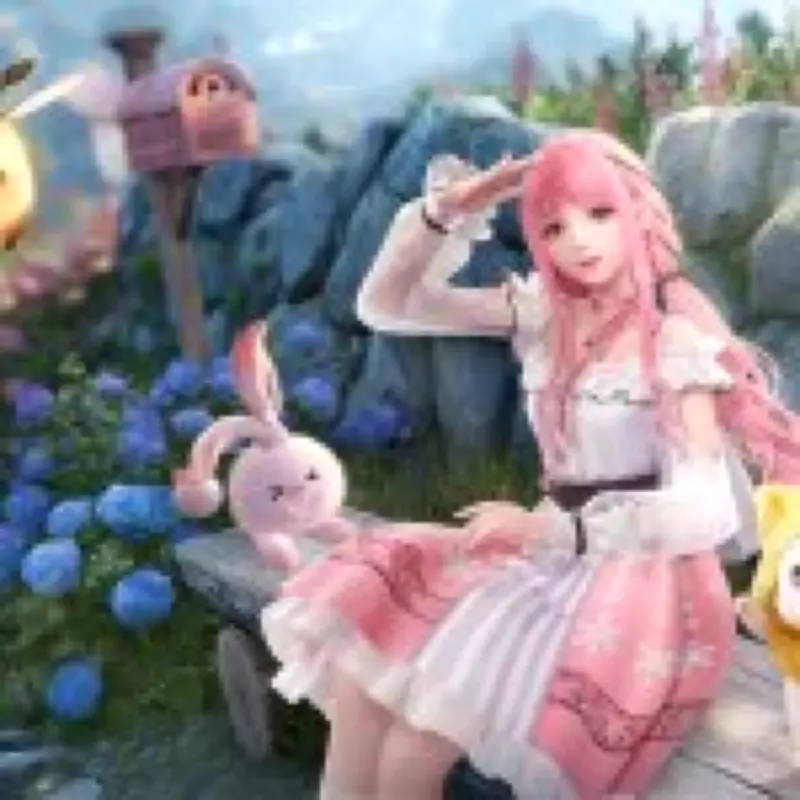
Set in the whimsical fantasy world of Miraland, players explore lush landscapes, solving environmental puzzles, platforming across floating islands, and discovering collectibles—all while unlocking outfits that double as tools. Dodie explained at GDC how each outfit is designed almost like a puzzle piece, altering how players interpret the landscape. Instead of designing abilities first and visuals later, the team integrates mechanics directly into the clothing itself. This concept might seem strange until seen in motion, where a wardrobe change can suddenly unlock an entirely new route across the world.

Audience and Design Philosophy
One of the most intriguing aspects of Infinity Nikki is its audience. Historically, dress-up games have been treated as a niche genre in the West, often assumed to appeal primarily to female players. However, the Nikki series has quietly built a massive global audience, and the developers are keen to avoid thinking about the game in such narrow terms. Dodie elaborated, 'When we design for Nikki, we start from the IP itself rather than a specific demographic. Clothing is something very beautiful and very diverse, so we don't want to limit it to a single group. Our goal is to create a dreamy experience that anyone can enjoy.'
Rather than focusing on who the game is for, the team concentrates on the feelings it should evoke. That said, the developers acknowledge that fashion-focused gameplay naturally attracts certain players first. 'Some players may naturally have a stronger sensitivity to clothing and fashion,' the art director noted. 'So our style first attracted a lot of female players.' Despite the game's nature, developer Papergames brought on former Nintendo developer Kentaro Tomigawa, who worked as a designer on Zelda: Breath of the Wild and served as a sub-director on other Zelda titles, to contribute to Infinity Nikki.
Collaboration with a Zelda Veteran
Reflecting on working with Tomigawa, Dodie shared, 'Talking about working with Tomi-san, the first thing that comes to mind is actually something quite personal. We discovered that we both keep birds as pets, and once we realized that, it became something we talked about quite often in our spare time.' From a professional perspective, when Tomigawa designed gameplay systems, Dodie focused on understanding the core mechanics to ensure Nikki's outfits supported those abilities while maintaining the desired artistic style.
'One thing I learned from working with him is how much he respects everyone's strengths. Even if someone has less experience or is newer to the industry, he is very patient and willing to share his knowledge. Even though my background is not in art, he never looked down on my ideas. He respected them and was always open to discussion,' Dodie added. Tomigawa often shares lessons from traditional game development, including the logic behind design decisions and the advantages of established principles, while remaining open to new ideas from the team.

For example, Tomigawa has admitted that clothing design is not his area of expertise, so he listens carefully to suggestions from the perspective of costume design or fashion mechanics. Similarly, he is open to ideas related to the Nikki IP as long as they don't interfere with core gameplay. This approach has fostered a strong collaborative culture within the team, where everyone contributes their strengths to create the final product.
Technical and Creative Challenges
Since the clothes in Infinity Nikki are not purely cosmetic, fashion design must integrate with gameplay systems, leading to unique creative challenges. Dodie explained, 'When we introduced the new mechanic Sticky Claw, the Spider-Man style movement ability in Version 2.0 Terra's Call, we had to think about what kind of outfit would suit that ability. The clothing becomes simpler and more comfortable, but we still try to make it playful and appealing. Some people think gameplay mechanics limit clothing design, but I don't see it that way, because we already have strong lore that gives us a foundation.'
Making elaborate outfits work in a fully explorable 3D world is a technical headache, with modularity being one of the biggest challenges. Players can mix and match hats, dresses, coats, and accessories, requiring each piece to function independently while looking coherent when combined. 'Compatibility is one of the most important technical considerations; if clothing doesn't move correctly, the sense of immersion drops immediately,' said Dodie. Realistic physics alone isn't always sufficient; the team developed 'active clothing' to create a more exaggerated effect, as garments behaving exactly as in the real world sometimes felt visually dull.
Reflections and Industry Impact
Reflecting on her career, which led her to speak at GDC, Dodie offered hope to aspiring game artists concerned about generative AI. 'I actually didn't have an art background. I came into the industry halfway through. My parents thought the company might be a scam as it was just a startup,' she laughed. Major patches over the past year have expanded Miraland with new regions, traversal abilities, and seasonal events that introduce limited outfits with unique gameplay properties. One standout feature allows Nikki to transform into a giant, stomping through forests and shouting at huge animals to knock them out.
These updates feed the game's evolving meta, as players collect materials and build effective styling loadouts for challenges scattered across the world. Yes, there is a competitive fashion meta. Infinity Nikki confidently sits outside traditional expectations of blockbuster game design, challenging the notion that the biggest audiences want gritty realism and combat-heavy power fantasies. Instead, it focuses on style, relationships, and storytelling, attracting an enormous global community.
Walking through the halls of GDC after the meeting, it was hard not to reflect on how much the industry has shifted in recent years, whether it wants to or not. Infold's titles serve as a reminder that not everyone plays games to fight or conquer. Sometimes, the most powerful mechanic isn't a weapon or a skill tree—it's a really nice outfit.