

Angela Hartnett's Culinary Philosophy: Elegance Through Simplicity
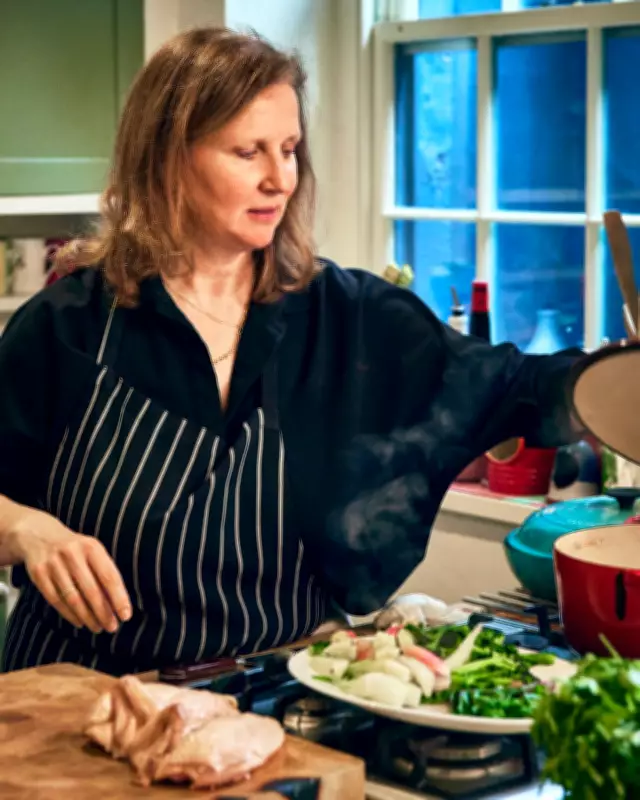
In the basement kitchen of her East London home, Angela Hartnett, the celebrated Michelin-starred chef, embodies a culinary paradox. Her space, described as having the "relaxed timelessness of a villa in a Sally Rooney novel," contrasts with the precision honed over four decades of professional cooking. Every utensil rests exactly where intuition demands, a testament to her journey from a family fish-and-chip shop to the helm of renowned establishments like Murano and Café Murano.
The Art of Poached Chicken: Avoiding Common Pitfalls
Hartnett's demonstration focuses on poached chicken with spring vegetables, a dish that deceptively challenges home cooks. "Poached chicken can emerge the color of over-washed underpants," she notes, highlighting how simplicity often breeds culinary missteps. The key, she insists, lies not in elaborate techniques but in foundational principles: sourcing quality ingredients, mastering basic skills, and maintaining a deliberate tempo.
Hartnett's first rule: "Look, the key is buying a good chicken." With poaching, there is nowhere to hide inferior quality. She emphasizes jointing the bird properly—a skill tested in her kitchens by evaluating a chef's knife sharpness and dexterity. While recipes often omit this step, jointing ensures even cooking, prevents a splayed appearance, and allows drumsticks to cook separately, enhancing both texture and presentation.

Tempo and Technique: The Chef's Secret Weapon
Hartnett moves with fluid consistency, never rushing. This steady pace yields uniformly cut vegetables and prevents splashing, embodying her rejection of kitchen machismo. "People associate Michelin with machismo," she observes. "It might have been once, but not anymore." Her calm demeanor, evident since her early TV appearances on Hell's Kitchen, underscores that aggression does not equate to skill.
Vegetable preparation receives meticulous attention. Carrots are cut on a slant for elegance; celery is chopped small to manage stringiness; and grelot onions—mild, sweet, and sometimes purple—add chic flair. Sourcing is paramount: Hartnett and her husband, chef Neil Borthwick, prioritize British-grown produce for its superior taste, sustainability, and support of local farmers.
The Critical Role of Salt and Stock
Hartnett advocates for generous salting, advising to multiply usual pinches by five, reimagining a "pinch" as "by a giant, using his thumb and all of his fingers." She recalls her father inspired by Keith Floyd's advice to salt poaching water until it tastes like the sea—a method that, while messy, yielded delicious results.
As the chicken simmers, skimming foam requires a relaxed approach. "It's not going to kill you, a little bit of impurity," Hartnett reassures, noting it will settle during draining. She distinguishes between instinctive and precision cooks, aligning herself with the former. "I would never weigh out the vegetables for a stock," she admits, sharing a humorous anecdote about a Christmas stuffing recipe that overestimated spinach quantities, leaving readers with trolleys full of greens.
Seasonal Adaptability and Final Touches
Hartnett stresses adaptability with spring vegetables, swapping peas and broad beans for chard, leeks, and sprouting broccoli when out of season. Blanching is brief—just three minutes—to preserve flavor without undercooking. "Vegetables don't taste of themselves when they're undercooked," she cautions.
Presentation aims for "timeless Italian elegance." The chicken is arranged artfully over vegetables, with reduced stock, butter, parsley, and finishing oil creating a sauce. Avoid floury gravies, which clash with the dish's refined aesthetic. Hartnett's favorite tool, the spider—a hybrid slotted spoon and sieve—exemplifies her practical approach, ideal for retrieving items from poaching liquid without capturing small debris like peppercorns.

Beyond the Kitchen: Hartnett's Broader Influence
Hartnett's passion extends to her podcast, Dish, co-hosted with Nick Grimshaw, where she cooks for guests without overtly discussing food. "I love my job, but I don't need to talk about it 24/7," she says, contrasting with chefs who dissect a carrot's virtues endlessly. Her philosophy centers on balance: whether at Murano or home, dishes prioritize beautiful, flavorful plates over complexity.
Reflecting on inspiration, Hartnett recounts visiting Michel Bras's three-star French restaurant, where a signature salad of garden vegetables underscored the importance of terroir and seasonality. For her, these elements, combined with salt and instinct, form the essence of cooking—where the rest is merely detail.





