Bruce Friedrich: Humanity's Biological Craving for Meat Demands Technological Solutions
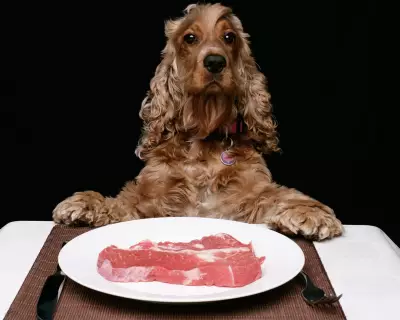
According to writer and advocate Bruce Friedrich, humanity's profound love for eating meat is deeply rooted in biology. In his new book, Meat, Friedrich, a vegan of nearly four decades, makes a surprising admission: meat is humanity's favourite food. He explains that this preference appears to be innate, driven by meat's dense calories from fat, its umami flavour that humans have evolved to crave, and its cultural significance as a centrepiece at social gatherings.
The Global Challenge of Rising Meat Consumption
The environmental damage caused by industrial livestock is well-documented, including climate-heating methane emissions, water pollution, and deforestation. Despite decades of efforts by environmentalists, health experts, and animal advocates to reduce meat consumption, global meat intake has risen every year since records began in 1961. Friedrich points out that humans have consumed meat for about 2.6 million years and farmed animals for around 12,000 years, with no historical decline in consumption. He notes that as incomes increase worldwide, so does meat consumption, making traditional appeals for dietary change ineffective.
Like-for-Like Replacements: The Electric Vehicles of Food
Friedrich's fundamental argument is that to address the world's insatiable craving for animal meat, we must replace it with like-for-like alternatives. This means developing cultivated meat from cells in brewery-like factories or creating plant-based meats that taste identical to conventional products. For these alternatives to succeed, they must achieve price and taste parity with traditional meat. Friedrich compares these innovations to electric vehicles (EVs), offering the same experience but with better outcomes. He emphasises that just as technology has revolutionised other industries, we can produce meat without live animals.

As the head of the nonprofit Good Food Institute, Friedrich is convinced that conventional meat could be replaced if there is sufficient will and investment. He believes it is possible for all industrial meat to be cultivated or plant-based by 2050, with only a niche market for regeneratively farmed conventional meat. Analysts from firms like McKinsey, Barclays, and Credit Suisse estimate alternative proteins could capture a 50% market share by mid-century.
Overcoming Obstacles and Accelerating Progress
Friedrich highlights the need for governments to ramp up support for scientific research in this embryonic field, drawing parallels to past transformative technologies like penicillin, the internet, and renewable energy. He cites China's rapid adoption of EVs as an example of what could be achieved with alternative proteins, suggesting that if China went all-in, conventional meat could be largely replaced by mid-century. Alternatively, tech companies like Google or Microsoft could leverage AI to solve key challenges.
He predicts that the rollout of alternative proteins will follow an S-curve growth pattern, similar to EVs, with rapid acceleration once price and taste parity are reached, potentially within a decade. Friedrich notes that every 10% replacement of conventional meat with alternative proteins has a climate impact comparable to replacing all fossil-fuelled vehicles with EVs.
Addressing Criticisms and Misconceptions
Friedrich addresses common criticisms of alternative proteins. He dismisses the yuck factor associated with cultivated meat as overblown, arguing that people eat meat for its taste and affordability, not its production method. Polling indicates significant enthusiasm for cultivated meat, especially among heavy meat eaters. Regarding plant-based meats being labelled as ultra-processed foods (UPFs), he points out that they are nutritionally superior to conventional meat, with less fat, saturated fat, and calories, and more fibre.

He also counters the narrative that alternative proteins are a failed trend, explaining that early products were not good enough or too expensive. Friedrich uses the analogy of the motorcar's rise, noting that most early car companies failed, but once the product was right, sales soared. He acknowledges potential opposition from livestock lobby groups but notes that major meat companies like JBS are investing in alternative proteins, driven by efficiency and reduced supply chain risks.
National Security and Economic Opportunities
Friedrich argues that alternative proteins offer significant economic opportunities and can enhance food security, which is closely tied to national security. In the foreword to his book, Caitlin Welsh of the Center for Strategic and International Studies writes that scaling plant-based and cultivated meats could mitigate national security threats related to animal-protein production. Countries like Israel and Singapore are pioneering cultivated meat to reduce food import reliance, while China is aggressively pursuing alternative proteins to address food self-sufficiency issues.
A 2023 CSIS report warns that China could become a strategic competitor in this field, urging the US and its allies to maintain leadership. Friedrich emphasises that without live animals, risks like animal diseases vanish, making alternative proteins a more secure option.
Personal Experience and Future Outlook
Friedrich, who grew up enjoying fast-food meat, went vegan in 1987 after reading Diet for a Small Planet. Decades later, when he tried cultivated chicken in 2016, he experienced a visceral, instinctual reaction, confirming that his taste for meat remained. He believes that humanity's appetite for meat can be satisfied through technology without consuming the planet, but this depends on the success of alternative proteins.
His book, Meat: How the Next Agricultural Revolution Will Transform Humanity's Favorite Food – and Our Future, is set to be published on 2 February, offering a compelling vision for a sustainable food system.