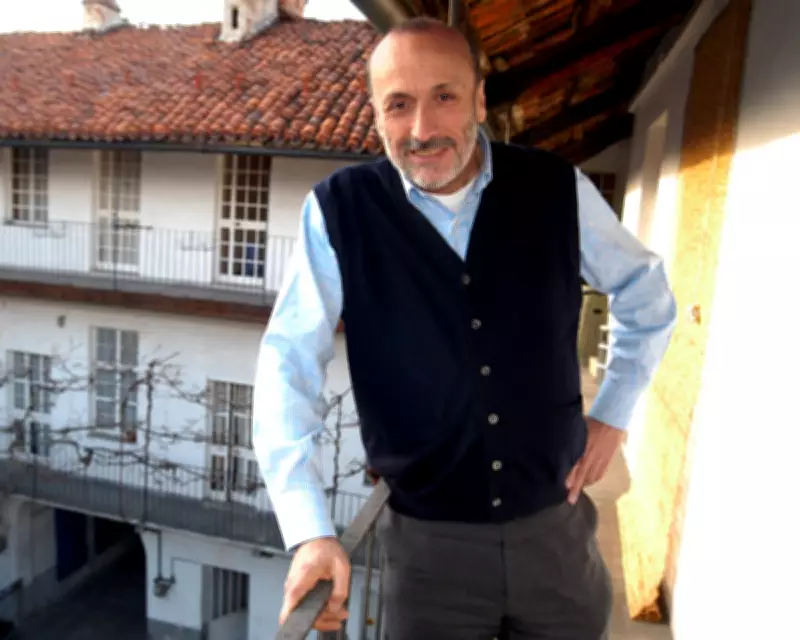
Carlo Petrini, the Italian activist, author, and pioneer of the Slow Food movement, has died at the age of 76. Born on 22 June 1949 in Bra, Piedmont, Petrini created a global system built around three words: good, clean, and fair. His vision transformed how people think about food, emphasizing environmental sustainability, cultural identity, and social justice.
The Birth of Slow Food
On 20 April 1986, Petrini was part of a group that cooked and distributed spaghetti to passers-by in Piazza di Spagna, Rome. This act was a protest against the opening of the world's largest McDonald's just meters away. For Petrini and fellow members of Arcigola, a group dedicated to food pleasures and political ideals, the fast-food giant represented an attack on Italian culinary identity, local biodiversity, and natural rhythms of life. The spaghetti was a declaration of resistance.
A few months later, during a dinner at Osteria dell'Unione in Treiso, southern Piedmont, the group conceived the idea of countering the fast food invasion, whose sole value was profit. Essayist Folco Portinari wrote the text, while Petrini gathered signatures. On 3 November 1987, a manifesto titled "A proposal aimed at all those who want to live better" was published on the front page of Gambero Rosso, a supplement of the communist newspaper Il Manifesto. The manifesto gave a name to their vision: "Slow Food." It called for defending the pleasure of food, biodiversity, and local producers against the standardization of the global agri-food industry.

The page was illustrated with a snail, symbolizing productive tranquillity, and signed by 13 writers, intellectuals, and artists. Following its publication, local groups known as convivia emerged across Italy. Marjorie Shaw, an early member of the Rome convivium, recalled how farmers, journalists, cooks, teachers, and students gathered around tables, animated by the sense that something culturally fragile was at stake. Petrini's Slow Food revolution had begun.
Global Expansion and Legacy
Two years later, in Paris, more than 20 delegations signed the official Slow Food manifesto, and Petrini was elected president of the movement—a role he held until 2022. Under his leadership, Slow Food became a global network active in over 160 countries, with 1,500 local branches, youth programs, 6,000 products protected by the Ark of Taste catalog, a publishing house, and more than 600 Slow Food "presidia" aimed at reintroducing supply chains, animal breeds, and plant varieties at risk of extinction.
Petrini's philosophy centered on three words: good, clean, and fair. He argued that food should not be seen merely as nourishment but as a matter of environmental sustainability, cultural identity, and social justice. He often said, "An environmentalist who isn't a gastronome is sad; a gastronome who isn't an environmentalist is foolish."
Early Life and Career
Petrini, affectionately known as Carlin, was born in Bra to Giuseppe, an auto electrician and communist from a family of railway workers who spent years in a Russian concentration camp after World War II, and Maria (née Garombo), a schoolteacher from a farming background. Following his parents' wishes, he enrolled in a technical institute for mechanics but failed the mechanical components. He recalled his oral exam: "Petrini, can you promise never to become a mechanical engineer?" He enthusiastically agreed.
He worked alongside his father to support his studies in sociology, attending evening classes in Turin and traveling to Trento University for exams. In a 2025 interview, Petrini described missing four final exams because there was too much to do. He returned to Bra to open a grocery shop, became involved with independent radio Radio Bra Onde Rosse and local politics, and wrote his first articles on gastronomy for the communist newspapers L'Unità and Il Manifesto. He became a political and cultural organizer within Arci (the Italian Recreational and Cultural Association) and co-founded Arcigola with Silvio Barbero.

Key Initiatives
In 1996, Slow Food organized the first Salone del Gusto, a biannual food and wine expo in Turin that brought together food artisans from around the world. In 2004, the event gained a new dimension with Terra Madre, a gathering aimed at giving a voice to those marginalized in the global food system. Petrini stressed the importance of food education in a post-industrial society where knowledge transmission from generation to generation is no longer physical, and considered eating as both an agricultural and political gesture.
In 2004, education became central to Slow Food with the creation of the University of Gastronomic Sciences in Pollenzo, near Bra—the first academic institution to offer an interdisciplinary approach to food studies. Petrini acknowledged this achievement as a particular source of pride. Since its founding, 5,000 students from 100 countries have graduated, carrying ideas forward. Among them is Edward Mukiibi, a tropical agronomist from Uganda, who succeeded Petrini as president of Slow Food. Petrini often said, "Those who sow utopia, reap reality."
Petrini also dedicated himself to Orti in Africa, a network cultivating thousands of sustainable community gardens across the continent, Slow Food projects in Mexico, his role as UN special ambassador for Zero Hunger in Europe, and the challenge to GM foods.
Later Years and Death
A diagnosis of prostate cancer followed Petrini's decision to step aside from the presidency in 2022, but he continued to travel, listen, and communicate about food, always returning to his home in Bra, where he lived with his younger sister, Chiara, who survives him. He continued to write, adding to his dozens of published books, including A Taste for Change (2023) with economist Gaël Giraud, and Terrafutura (2020), in which he addressed problematic aspects of our time in dialogue with Pope Francis, with whom he shared friendship, respect, a sense of humor, and hope for a world where everyone has food that is good, clean, and fair. Carlo Petrini died on 21 May 2026.