Tuesday 27 January 2026 11:56 am
DakaDaka Review: The Comfort Food We All Need Right Now
By: Steve Dinneen, Life&Style Editor
Heddon Street has cultivated a distinctive culinary microclimate in the heart of London. Whether through fortunate circumstance or deliberate planning, this vibrant thoroughfare has established itself as a reliable destination for exceptional dining experiences. The current roster of restaurants includes Sabor, celebrated for its superlative Spanish cuisine, Fonda, offering respectable Mexican fare, and Casa do Frango, renowned for its very good Portuguese dishes.

A Welcome Addition to London's Dining Scene
The latest arrival on this literal block is DakaDaka, a restaurant that promises to address the relative scarcity of Georgian eateries in the capital. This development is particularly welcome news for food enthusiasts. Periodically, a nation's culinary tradition experiences a breakout moment in London's competitive dining landscape. Several years ago, Peruvian cuisine captured the city's imagination. In these times of global uncertainty, perhaps the hearty dumplings and indulgent cheesy bread of Georgia represent the comforting nourishment we all crave to soften life's edges.
Familiar Surroundings with New Energy
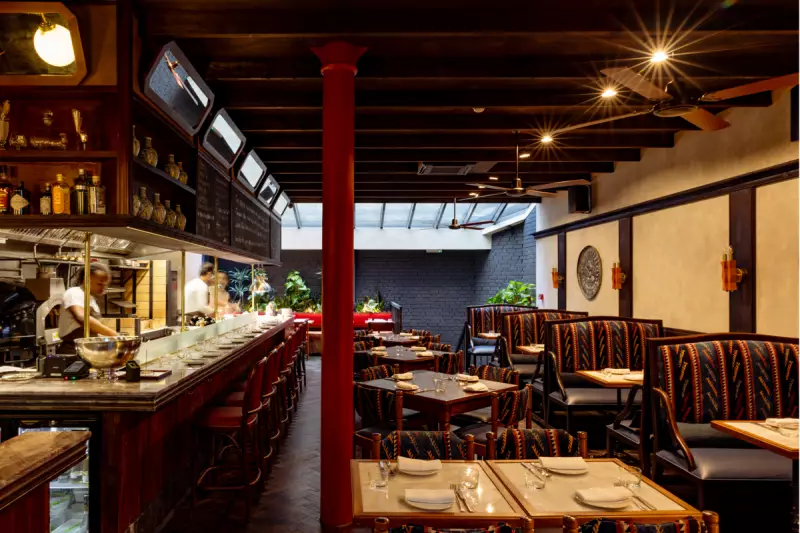
As I settled into my seat with a view of the open kitchen, I experienced a vague sense of déjà vu. I realised I had been quite intoxicated in this very room at some point in the past. After a moment's reflection, I remembered this space previously housed the original location of Fallow, which has since relocated to its expansive premises on Haymarket, where it now serves approximately 5,000 customers weekly. I recalled sitting in this exact spot enjoying bloody marys with founder and fellow Toast the City judge James Robson. Fond memories, albeit somewhat hazy.
DakaDaka has effectively taken up where Fallow left off, though I'm certain other establishments occupied the space in the interim. On a bustling Friday evening, the restaurant was filled with fashionable patrons sipping attractive cocktails. The name DakaDaka apparently references the percussive rhythm of a leisurely supra, the traditional Georgian feast, and that convivial energy was unmistakably present throughout the evening.
Atmosphere and Design
The restaurant, relatively intimate with just over 100 covers, already possesses a comfortably lived-in atmosphere despite only opening towards the end of last year. The interior features dark wood panelling and distinctive upholstery that likely holds deep cultural significance connected to Georgia's heritage. Like many smaller nations with historically ambitious neighbours, Georgia places considerable importance on traditional crafts such as textile production.
The background music of jazzy house tunes doesn't particularly evoke the dumpling establishments of Tbilisi, but it arguably provides a more suitable accompaniment for lively conversation than traditional Georgian polyphonic singing, which holds UNESCO Intangible Cultural Heritage status but might overwhelm dinner dialogue.
Navigating the Menu
The menu follows contemporary dining trends, presenting the familiar challenge of determining appropriate ordering quantities across various sections. The distinctions between "snacks" and "small plates" remain somewhat ambiguous, while bread appears in three different categories. Similarly, it's unclear whether a skewer qualifies as a main course. Fortunately, the exceptionally helpful staff provided excellent guidance, resulting in only minimal over-ordering, which represents the optimal outcome one can reasonably expect.
Culinary Highlights
The meal commenced with soko: oyster mushrooms fried in a light tempura-style batter that delivered an initial satisfying crunch before revealing deep, oily umami flavours. Despite being categorised as a "snack" and priced at just £6.50, the portion was remarkably generous, earning top marks.
Chvishtari followed, featuring cornbread pieces approximately the size of croquetas, generously stuffed with cheese sourced not from Eastern Europe but from the rolling countryside of Somerset. "This is my favourite item on the menu," enthusiastically revealed our waiter, and I immediately understood his enthusiasm.

Next arrived a bowl of Lobio, Georgia's distinctive interpretation of hummus prepared with kidney beans. I scooped this creamy delight with kubdari, a pork-stuffed flatbread, creating a combination that was simultaneously indulgent, satisfying, and clearly crafted by culinary professionals who understand their craft perfectly.
The Famous Khinkali Dumplings
Then came the celebrated khinkali dumplings. I had been forewarned that these versions differ from their Georgian counterparts, which typically reach the size of one's fist. At DakaDaka, they're scaled down to dimensions slightly larger than Chinese har gow dumplings. Traditionally, one picks them up by the twisted "nipple" at the top and bites carefully to capture the contained liquid. In a momentary lapse of judgment, I selected the mushroom filling instead of pork, thereby missing the rich meaty broth. While the reduced size proved slightly disappointing, the impeccable craftsmanship certainly did not.
Impressive Main Course and Georgian Wine
Following these substantial dishes, ordering an entire plaice might have represented overkill, but the fish arrived perfectly cooked nonetheless. The skin carried the salty essence of the sea from which it originated, while the glistening eyeball seemed to await plucking and sucking.
Washing everything down with Georgian wine feels virtually obligatory. Any knowledgeable enthusiast will inform you that Georgia boasts one of the world's oldest wine traditions, dating back approximately 8,000 years and utilising distinctive buried earthenware vessels called qvevri. The orange wine trend that recently swept through London has thankfully subsided, though Georgians can legitimately claim they were producing similar styles eight millennia before it became fashionable. The selection spans a broad spectrum, ranging from pale, dry, and refreshing varieties to deep-amber, full-bodied options.
Perfect Conclusion
I concluded the meal with a ramekin of exceptional red wine ice cream that required no additional commentary, followed by a shot of chacha. The last occasion I consumed this brandy-like spirit resulted in me stumbling merrily through Tbilisi's streets, though this particular variety proved slightly less caustic.
Seamless Integration
DakaDaka integrates seamlessly into Heddon Street's established culinary ecosystem. The restaurant creates the impression that it has always occupied this space, comfortably coexisting alongside esteemed neighbours like Sabor, Fonda, and perhaps even the memory of Fallow. In London's competitive restaurant landscape, that represents genuine praise indeed.