For millions across the United Kingdom, the Christmas season is a time of familiar rituals, cherished recipes, and family gatherings. But for the nation's vast and varied diaspora communities, the 25th of December often becomes a profound act of cultural navigation—a day where food, memory, and identity converge to create something uniquely personal yet universally understood.
The Table as a Map of Belonging
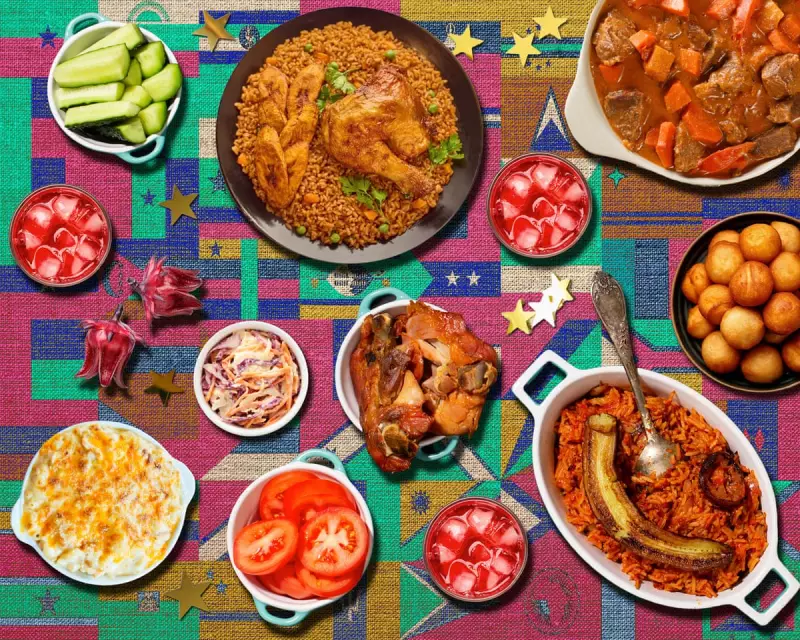
The article from The Guardian, dated 23rd December 2025, delves into this intricate tapestry through intimate portraits. We meet individuals like Kemi, a British-Nigerian woman who meticulously prepares a feast of jollof rice, fried plantains, and pepper soup alongside a classic roast turkey. Her table is not a clash of cultures, but a deliberate fusion, a culinary bridge for her children between their London upbringing and their Yoruba heritage.
Another story highlights Mateusz, a Polish architect living in Manchester. For him, Christmas Eve, or Wigilia, remains the heart of the festive period. The sharing of the opłatek wafer, the twelve meatless dishes, the empty seat for an unexpected guest—these traditions, maintained thousands of miles from Warsaw, are non-negotiable. They are a lifeline to a shared past and a way to root his family in a distinct sense of Polishness within a British context.

These narratives underscore a central truth: how we eat and gather is central to who we are. For diaspora communities, festive meals are rarely just about sustenance. They are acts of preservation, translation, and sometimes, gentle rebellion. The scents of specific spices, the textures of traditional breads, and the rhythms of ancestral songs performed in a British living room become powerful vessels for memory and identity.
Creating New Traditions in a New Landscape
The adaptation is not merely about replication. The piece illustrates how new, hybrid traditions are born from necessity and creativity. A family with roots in the Caribbean might incorporate sorrel drink into their Christmas Day toast. A second-generation British-Indian household may find that their Christmas lunch now features both mince pies and samosas.
This evolution speaks to a dynamic process of cultural integration. The festive season becomes a laboratory for belonging, where elements from the 'old country' and the new homeland are blended to form a coherent, personal whole. The result is a uniquely British Christmas experience, enriched by global influences and personal histories.
Furthermore, the gathering itself takes on amplified significance. In the absence of the extended family network left behind, friends often become 'chosen family'. Christmas gatherings morph into potluck celebrations of diaspora communities, where dishes from Jamaica, Ghana, Pakistan, and Poland sit side-by-side, creating a microcosm of modern Britain on a single dining table.
More Than a Meal: The Lasting Impact
The consequences of these culinary and social practices are profound. They ensure that cultural knowledge and languages are passed down to younger generations in an organic, sensory way—through taste, smell, and shared ritual. They provide a vital anchor of psychological comfort and continuity amidst the sometimes-disorienting experience of building a life between two worlds.
On a broader scale, these individual stories collectively reshape what Christmas—and by extension, British culture—means. They challenge monolithic ideas of tradition and demonstrate that national identity is not static but is continually being remade in homes and kitchens across the country. The diaspora Christmas experience is a testament to resilience and adaptation.
Ultimately, the article reveals that for Britain's diaspora communities, the festive season is the most poignant time of year to negotiate the complex question of 'home'. Through the deliberate acts of cooking specific foods, observing particular customs, and gathering with loved ones, they assert their multifaceted identities. They prove that one can hold multiple heritages dear, and that a British Christmas can have a thousand different, equally authentic, flavours.