Embrace the art of stir-frying with two vibrant recipes from chef Jeremy Pang, designed to bring authentic Chinese flavours to your home kitchen in just half an hour. The key to success lies in mastering wok hei, the essential 'breath of the wok' that defines a great stir-fry.
The Essence of Stir-Frying: Wok Hei
Stir-frying is a dynamic cooking technique that involves frying ingredients while constantly moving them in a searing hot wok. At its heart is wok hei, a Cantonese term translating to 'wok's air' or 'height of fire'. This concept refers to the intense heat and smoky essence that skilled chefs impart to dishes, achieved through precise control of temperature and timing. A cook's understanding of wok hei directly influences the texture and flavour of the final dish, making it a cornerstone of Chinese culinary tradition.
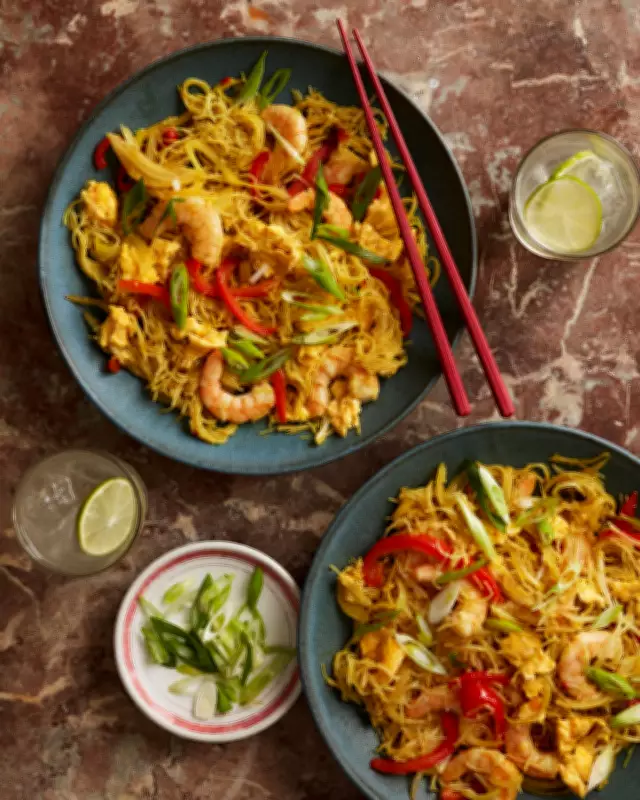
Singapore Noodles: A Flavourful Classic
Despite its name, Singapore noodles likely originated from a fusion of Asian culinary influences, with its title derived from the specific vermicelli used. This dish is celebrated for its dry yet intensely flavourful profile, requiring a consistently smoking hot wok to achieve perfection.

Ingredients and Preparation
Prep: 15 minutes Cook: 15 minutes Serves: 2
- 100g dried Singapore vermicelli noodles
- 2 eggs, well beaten
- ½ onion, finely sliced
- ½ red pepper, deseeded and finely sliced
- 6 large raw tiger or king prawns, peeled and deveined
- 1 handful fresh beansprouts, rinsed and drained
- Vegetable oil
- 1 spring onion, finely sliced for garnish
For the spice paste:
- 1 bird's-eye chilli, finely chopped
- 1 tbsp water
- 1 tbsp light soy sauce
- ½ tsp dark soy sauce
- 1 tsp sesame oil
- 1 tsp madras curry powder
- 1–2 pinches chilli powder, to taste
- ¼ tsp salt
Method: The Wok Clock Technique
- Soak the noodles in hot water for three minutes until separated, then drain and dry on a tea towel for 10 minutes. Combine all spice paste ingredients in a small bowl.
- Arrange your ingredients on a large plate in a clockwise fashion, starting at 12 o'clock with the beaten egg, followed by onion and pepper at 3 o'clock, prawns, beansprouts and noodles at 6 o'clock, and spice paste at 9 o'clock.
- Heat a tablespoon of vegetable oil in a wok until smoking hot. Pour in the egg, let it bubble briefly, then scramble until cooked. Push to one side.
- Reheat the wok until smoking, then add onion and pepper, stir-frying for a minute. Add prawns and cook for 30–60 seconds until lightly browned.
- Incorporate beansprouts, stir-fry for 20–30 seconds, then add noodles and cook for a minute. Stir in the spice paste and continue cooking until ingredients are combined and noodles begin to dry slightly.
- Transfer to a serving bowl, garnish with spring onion, and serve immediately.
Sichuan Chicken: A Spicy Delight
Hailing from western China, Sichuan cuisine is renowned for its bold flavours, particularly the numbing sensation of Sichuan peppercorns, known as ma la. This recipe brings that distinctive heat to a satisfying chicken stir-fry.
Ingredients and Preparation
Prep: 15 minutes Cook: 20 minutes Serves: 4
- 400g boneless, skinless chicken thighs, cut into strips
- ½ onion, cut into matchsticks
- 1 red pepper, deseeded and cut into matchsticks
- 10 dried red chillies
- 2 tsp Sichuan peppercorns, crushed
- 3 garlic cloves, finely chopped
- 1 bird's-eye chilli, finely chopped
- 200g cashew nuts
- Vegetable oil
- 1 spring onion, finely sliced for garnish
For the marinade:
- 1½ tbsp cornflour
- 1 tsp sugar
- 1 large pinch Chinese five-spice
- 2 tbsp light soy sauce
- 1 tsp sesame oil
For the sauce:

- 3 tbsp Shaoxing rice wine or dry sherry
- 1 tbsp light soy sauce
- 2 tbsp hoisin sauce
- 2 tsp chilli paste or chilli bean paste
Method: Building Layers of Flavour
- Marinate the chicken by massaging all marinade ingredients into the strips until evenly coated. Mix sauce ingredients in a separate bowl and set aside.
- Create your wok clock: place onion, pepper and dried chillies at 12 o'clock, marinated chicken, Sichuan peppercorns and garlic at 3 o'clock, bird's-eye chilli and sauce at 6 o'clock, and cashews at 9 o'clock.
- Heat a tablespoon of oil in a wok until smoking. Add onion, pepper and dried chillies, stir-frying for 1–2 minutes until onion is lightly browned.
- Reduce heat to medium, push ingredients aside, and add another half-tablespoon of oil to the centre. When smoking, add chicken and stir-fry for 3–5 minutes until golden.
- Lower heat to medium, add crushed Sichuan peppercorns and garlic, stir-frying for two minutes.
- Add bird's-eye chilli and sauce, cooking on medium-high for two minutes until sauce thickens and coats the chicken. Incorporate cashews and toss for 30–60 seconds.
- Transfer to a serving plate, garnish with spring onion, and enjoy.
These recipes are adapted from Jeremy Pang's cookbook, School of Wok – Jeremy Pang's Chinese Kitchen: Simple Techniques and Recipes to Enjoy Delicious Chinese Food at Home, published by Hamlyn. Embrace the wok clock method to streamline your cooking process and achieve restaurant-quality stir-fries with ease.