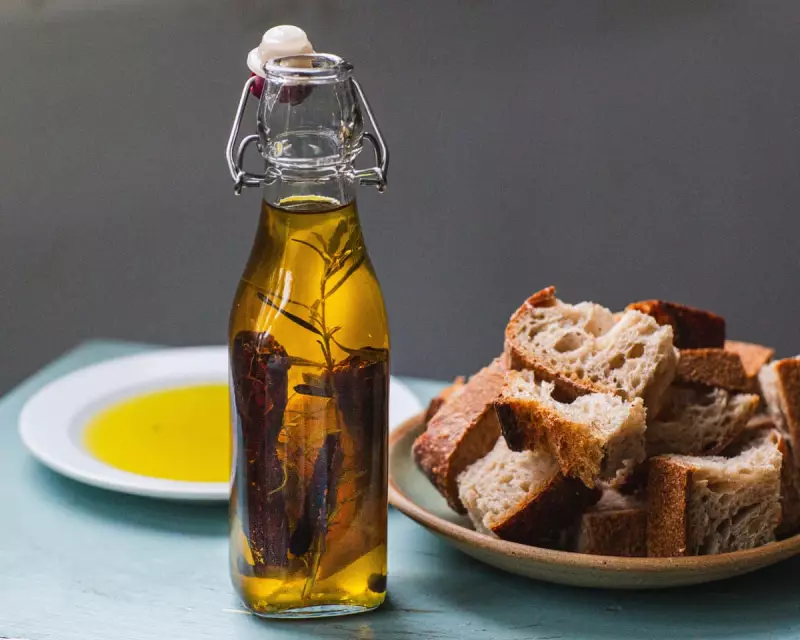
In an era where reducing food waste has become increasingly important, innovative culinary techniques can transform overlooked kitchen scraps into delicious flavour enhancers. Tom Hunt's approach to creating infused oils from leftover ingredients offers both an eco-friendly solution and a way to elevate everyday dishes with minimal effort.
The Art of Infusing Oils with Kitchen Leftovers
What began as a practical method for utilising garlic skins and herb remnants has evolved into a versatile culinary practice. These often-discarded components contain surprising amounts of flavour that, when properly extracted, can enhance numerous recipes. The concept demonstrates how creativity in the kitchen can align with sustainable living principles.
Versatile Applications for Your Homemade Infusions
Freshly prepared infused oils serve multiple purposes in contemporary cooking. They can be drizzled over delicate carpaccio, tossed through pasta, or used to dress vibrant salads. Their application extends to marinating proteins like meat and fish, or simply serving as a dipping accompaniment for artisanal sourdough bread.

Particularly successful combinations include lemon rind with garlic skin and rosemary, star anise paired with cacao and orange rind, or makrut lime leaf combined with lemongrass husk and coriander stems. This last combination proves especially delightful when drizzled over noodle dishes and pak choi.
Important Safety Considerations
While these infused oils offer tremendous flavour potential, they require careful handling. Freshly prepared versions aren't suitable for extended storage due to potential safety concerns. For optimal quality and safety, consume within one to two days of preparation.
Creating Your Own Kitchen Scrap-Infused Olive Oil
The beauty of this approach lies in its adaptability to whatever ingredients you have available. Hunt describes discovering a two-year-old jar of chillies, a bowl of clementines, and some long pepper in his own kitchen - ingredients that might otherwise have been forgotten. When combined and gently heated, they created what he describes as a "wildly aromatic and exotic aroma" that filled his cooking space.
Citrus rinds deserve special mention as flavour powerhouses. Rich in essential oils and highly aromatic terpenes, they serve as what Hunt calls "harbingers of incredible flavour" that can transform simple oil into something extraordinary.
A Recipe Framework for Creativity
This recipe serves as a starting point rather than a rigid formula, encouraging home cooks to explore their cupboards and discover hidden flavour combinations. The process invites experimentation and personalisation based on available ingredients.
Yield: Approximately 250ml
Ingredients:
- Assorted kitchen scraps including garlic skins, onion skins, chilli seeds, leek outer leaves, celery leaves, spring onion tops, unwaxed organic citrus peel, and fresh herbs like thyme or rosemary
- 1-2 teaspoons of whole spices such as star anise, cloves, or cardamom (optional)
- 250ml extra-virgin olive oil
Method:
- Place a saucepan over very low heat and add your selected kitchen scraps. For best results, choose a simple combination of two to four complementary flavours.
- Add optional whole spices if using.
- Pour the extra-virgin olive oil over the ingredients and heat gently until small bubbles begin to form.
- Maintain this gentle warmth for approximately 15 minutes, allowing infusion without frying the solid components.
- Remove from heat and allow to cool completely.
- Strain the oil if desired, then transfer to a clean bottle or jar.
- Seal and use immediately, refrigerate for up to two days (note that refrigeration may cause slight solidification that reverses at room temperature), or freeze for up to three months.
Important reminder: Do not attempt to store these infused oils beyond recommended timeframes, as they can become unsafe for consumption.

This approach to cooking represents more than just a recipe - it's a mindset that encourages resourcefulness, reduces waste, and unlocks hidden flavours in everyday ingredients. By looking at kitchen scraps through a different lens, home cooks can discover new dimensions of flavour while contributing to more sustainable kitchen practices.