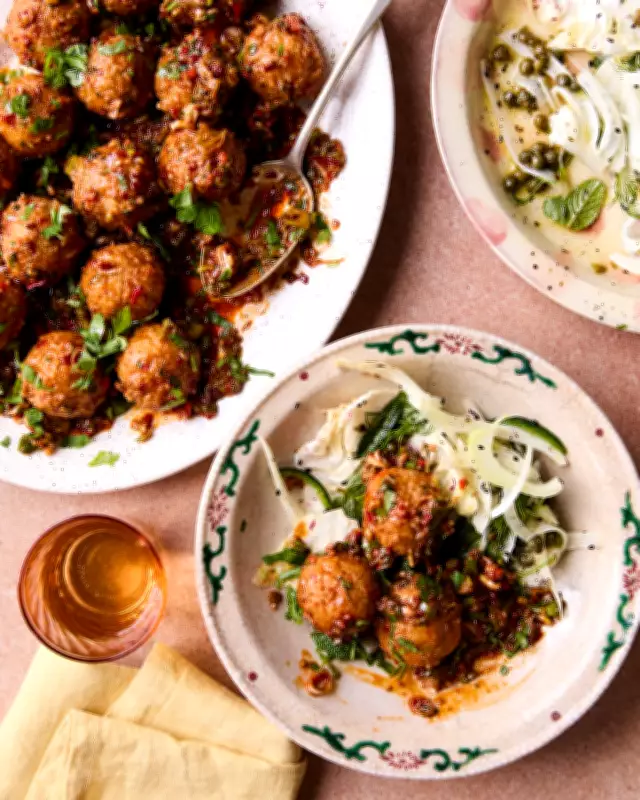
In a culinary homage to the historic Arab golden age, renowned chef Sami Tamimi presents two exquisite recipes that transport diners on a flavourful journey. These dishes, featuring kbeibat bulgur with spring onion and pomegranate, paired with a spicy fennel and herb salad, encapsulate the rich exchange of spices and ideas that once flourished across deserts and seas.
Reconnecting with Culinary Heritage
Tamimi shares a personal reflection on the dream of reviving the era when Arab trade routes facilitated the movement of spices, fruits, and culinary innovations. With today's global challenges, this vision remains aspirational, but through these recipes, he offers a tangible way to experience that magic. The layers of eastern spice and flavour in these mini bulgur wheat balls, served in a spicy sauce enhanced by pepper and pomegranate molasses, alongside a sprightly salad, invite a sensory exploration of this vibrant culture.
Kbeibat Bulgur with Spring Onion and Pomegranate
Originating from Latakia, a Syrian port city, kbeibat bulgur translates to small kibbeh in Arabic. This dish enjoys popularity across the Arab world and beyond, with variations found from Turkey to Iran and even Brazil. Common to all versions are the complex layers of flavour—sweet, sour, and spicy—that define this culinary tradition. Serve it with the accompanying spicy fennel and herb salad and bread to soak up the delicious juices.

Preparation Time: 10 minutes, plus 20 minutes soaking and 50 minutes cooking. Serves: 4.
For the kbeibat:
- 200g fine bulgur wheat
- 1½ tsp ground cumin
- ½ tsp ground coriander
- 1 tsp Aleppo chilli flakes
- 2 tbsp olive oil, plus extra for drizzling and greasing
- 1¼ tsp salt
- 55g plain flour
For the sauce:
- 4-5 large spring onions, trimmed and finely sliced (150g)
- 5g flat-leaf parsley, finely chopped, plus extra for sprinkling
- 1 red chilli, deseeded and finely chopped
- 4 tbsp olive oil
- 2 tbsp red pepper paste or harissa
- 2 tsp lemon zest
- 2 tbsp lemon juice
- ¾ tsp ground cumin
- 45g pomegranate molasses
- 1½ tsp caster sugar, or honey
- ¾ tsp salt
Begin by mixing the bulgur with the spices, olive oil, and salt in a bowl. Add 300ml of just-boiled water, mix well, cover, and leave to soak for 20 minutes until the water is absorbed. Incorporate the flour by hand, squeezing the mixture into a sticky paste. With oiled hands to prevent sticking, shape into 20 smooth balls, each about 30g, and set aside covered.
Combine all sauce ingredients in a large bowl. Bring a saucepan of salted water to a boil, gently add the kbeibat, and cook on medium heat for 15 minutes. Using a slotted spoon, transfer the balls to the sauce bowl, stir gently to coat, then serve with parsley and a drizzle of olive oil.
Spicy Fennel and Herb Salad
This bright and aromatic salad provides a refreshing contrast to the rich kbeibat bulgur. Crisp fennel adds sweetness and crunch, while chilli, herbs, and capers contribute heat and sharpness. For a variation, thinly sliced kohlrabi can substitute the fennel, offering a similar texture with a milder flavour.
Preparation Time: 20 minutes, plus 10 minutes cooking. Serves: 4.
For the dressing:
- 2 tbsp lemon juice, plus 1 tsp zest
- 2½ tbsp olive oil
- 1 tbsp capers, drained and chopped
- Salt and black pepper
For the salad:
- 2 fennel bulbs, trimmed, halved, and thinly sliced (about 400g)
- 1 green chilli, stalk discarded, flesh thinly sliced
- 100g Castelfranco radicchio or white endive, torn into bite-size pieces
- 3g mint leaves, roughly torn
- 3g picked coriander leaves
- 3g picked dill leaves
- 2 tsp black sesame seeds, toasted
Whisk together the lemon juice, zest, olive oil, capers, salt, and pepper to emulsify the dressing. Toss the fennel and chilli in the dressing until coated. Add the radicchio or endive, most of the herbs, and sesame seeds, tossing gently. Finish with the remaining herbs and serve immediately.

These recipes not only deliver a delicious meal but also celebrate the enduring legacy of Middle Eastern culinary arts, inviting home cooks to savour a piece of history on their plates.