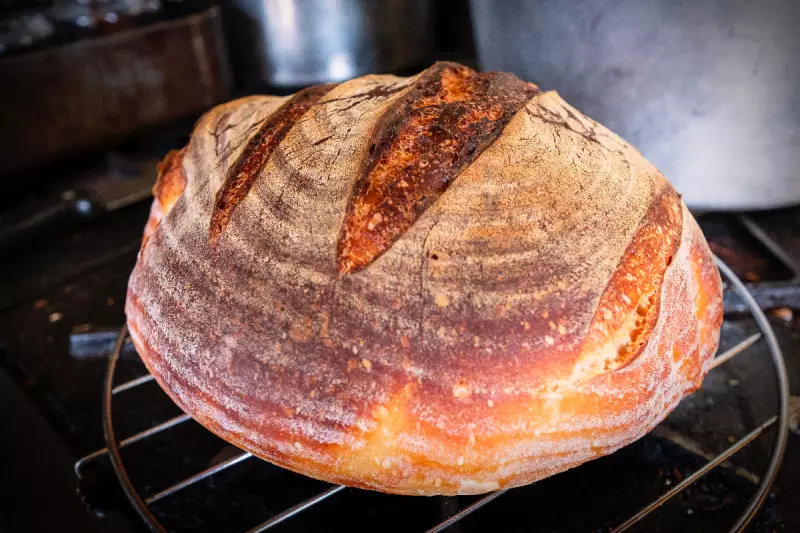
In the hushed, expectant atmosphere of Bread Ahead bakery in London's Borough Market, a sourdough masterclass is about to begin. For journalist Andy Blackmore, the mission is twofold: to breathe life into a new loaf and, crucially, to keep his 'mother' – the live flour-and-water starter – alive and thriving.
The Science and Soul of Consistent Sourdough
Successful baking, as Blackmore discovered, relies on far more than luck. It is a delicate balance of science, chemistry, love, and passion. Unlike a forgiving curry, sourdough demands precision. The cornerstone for any baker is consistency: the ability to replicate the same actions within the same environmental parameters, time after time.
This is notoriously difficult as ambient conditions are never static. Temperature and humidity fluctuate with the seasons, meaning a winter bake differs vastly from a summer one. This inherent variability is where many home bakers struggle, often resulting in dense, brick-like loaves rather than airy, fermented masterpieces.

Gadgets to the Rescue: Stability on Demand
Enter the consistency cavalry, in the form of innovative products from Brød & Taylor. The company's origin story is rooted in family necessity: founder Michael Taylor built the first folding proofer to help his mother-in-law bake bread in her cold South Dakota kitchen. What began as a homemade fix in Western Massachusetts has grown into a range of tools designed to domesticate professional baking conditions.
The Brød & Taylor Sourdough Home functions like a miniature, intelligent fridge. It allows bakers to set a precise temperature, providing a stable environment for the starter to flourish, irrespective of the weather outside. With a removable shelf for multiple jars, it caters to the 'mother's' need for routine.
Another game-changer is the Brød & Taylor Folding Proofer & Slow Cooker. This clever device creates the perfect climate for fermenting and proofing dough with professional accuracy. Once done, it folds flat for easy storage. Engineered for the harsh climate swings of the US Midwest, it is more than capable of handling the unpredictable conditions of a South London kitchen.
The Masnegro Sourdough Recipe: A Step-by-Step Guide
Armed with the right environment, technique is everything. Blackmore shares his detailed 'Masnegro' sourdough recipe, a three-day process that yields exceptional results.
Ingredients:
- 500g Strong White Bread Flour, plus extra for dusting
- 10g Rice Flour (for the banneton)
- 11g Fine salt
- 150g White Flour Starter/Mother
- 250g Lukewarm water
Essential equipment includes a Brød & Taylor Dough Whisk, a 10-inch cast-iron Dutch oven, a proofing banneton, and good oven gloves.
Day One involves mixing the flour, salt, starter, and water until just combined. The dough rests at room temperature for 2-3 hours before a long, slow fermentation in the fridge for 12-48 hours.
Day Two is for developing structure. After acclimatising, the dough undergoes a series of gentle 'folds' on a floured board to build gluten and introduce air. It is shaped, placed upside-down in a rice-flour-dusted banneton, and proofed further before another overnight stay in the fridge.
Day Three is bake day. After a final rise, the dough is scored and carefully transferred into a scorching-hot Dutch oven (preheated to 250°C or gas mark 10). It bakes covered for 25 minutes, then uncovered for around 11 minutes more to achieve the perfect crust.
Blackmore concludes that while these tools and this recipe won't magically make someone a master baker, they provide the controlled path necessary for consistent, excellent results. The combination of technology and tradition can elevate home-baked sourdough to a level that surpasses most shop-bought bread, turning a complex challenge into a simple, profound pleasure.