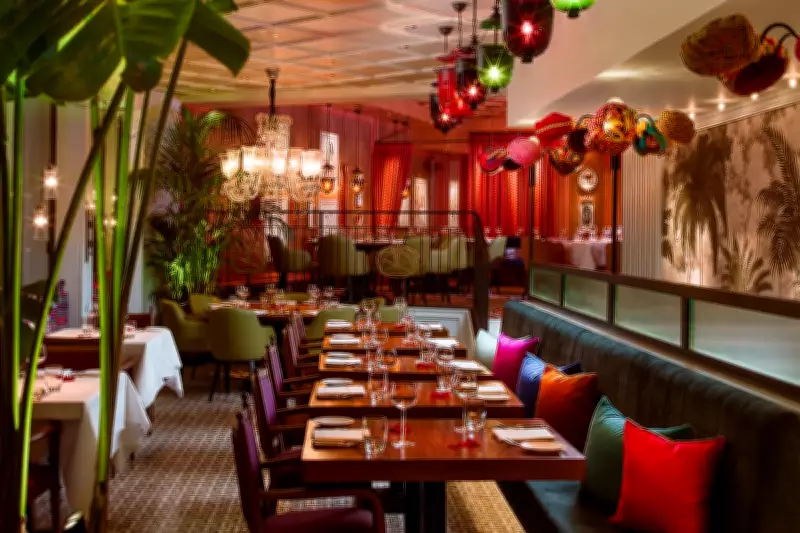
Century-Old Veeraswamy Restaurant Faces Uncertain Future Amid Landlord Dispute
Veeraswamy, the Michelin-starred Indian restaurant on Regent Street, marked its 100th anniversary on March 18, 2026, but celebrations have been overshadowed by a brewing conflict with its landlord, the Crown Estate. The historic establishment, glowingly reviewed by City AM's Adam Bloodworth just two years ago, now faces calls for royal intervention from campaigners concerned about its survival.
The Complex Origins of British Indian Cuisine
The story of Veeraswamy reflects the intricate history of what we now call Indian cuisine in Britain. This culinary tradition represents a fascinating fusion that developed through centuries of cultural exchange. The very word curry has disputed origins, potentially deriving from Tamil through Dutch influence, other Dravidian languages like Telugu or Malayalam, or Portuguese sources, often misunderstood by Westerners encountering unfamiliar terminology.
Former Foreign Secretary Robin Cook famously declared chicken tikka masala a true British national dish twenty-five years ago, highlighting how what we categorize as Indian cuisine represents a distinctly British creation that wouldn't exist without the historical connection between the two nations.

The Founding of a Culinary Institution
Veeraswamy's origins trace back to Edward Palmer, an Anglo-Indian entrepreneur born in Hyderabad who arrived in Britain in 1880. His great-grandfather, a British general, had married a princess from the ruling house of Oudh in northern India. Palmer established EP Veeraswamy and Company in Hornsey in 1896, specializing in Indian produce and spices.
The restaurant's breakthrough came during the 1924-1925 British Empire Exhibition at Wembley Park, an eighteen-month showcase designed to promote imperial unity after World War I. While J Lyons & Company handled most catering, Palmer served as Indian adviser for the India Pavilion, where his Anglo-Indian creations like duck vindaloo and mulligatawny soup proved enormously popular.
A Revolutionary Dining Concept
Veeraswamy opened at its current Regent Street location on March 16, 1926, not as London's first Indian restaurant (that distinction belongs to the Hindoostane Coffee House of 1810) but as something genuinely innovative. Its advertising promised Clean Indian and English Food, Good Wines and Oriental Coffee, representing a pioneering attempt to create a high-quality dining establishment that happened to serve Indian and Anglo-Indian cuisine.
Palmer brought an almost academic approach to his culinary creations, drawing from his family's connections to the princely courts of Oudh and Hyderabad while presenting dishes in ways British patrons would appreciate. This mirrored how soldiers and traders returning from India adapted remembered flavors to local contexts.
Beyond Authenticity: A Living Historical Artifact
In today's restaurant culture obsessed with authenticity, Veeraswamy represents something more profound: a tangible connection to a shared Anglo-Indian history that spanned three centuries of British presence in India. The restaurant, like its founder, embodied this cultural fusion at a time when India itself bore Anglo-Indian influences after 300 years of connection.
As Veeraswamy navigates its current challenges with the Crown Estate, its significance extends beyond being merely a restaurant or landmark. It stands as a living artifact of culinary history, representing how cultures transform and influence each other through food. The hope remains that this century-old institution will find a path to continue serving both its distinctive cuisine and its unique historical legacy to future generations.