

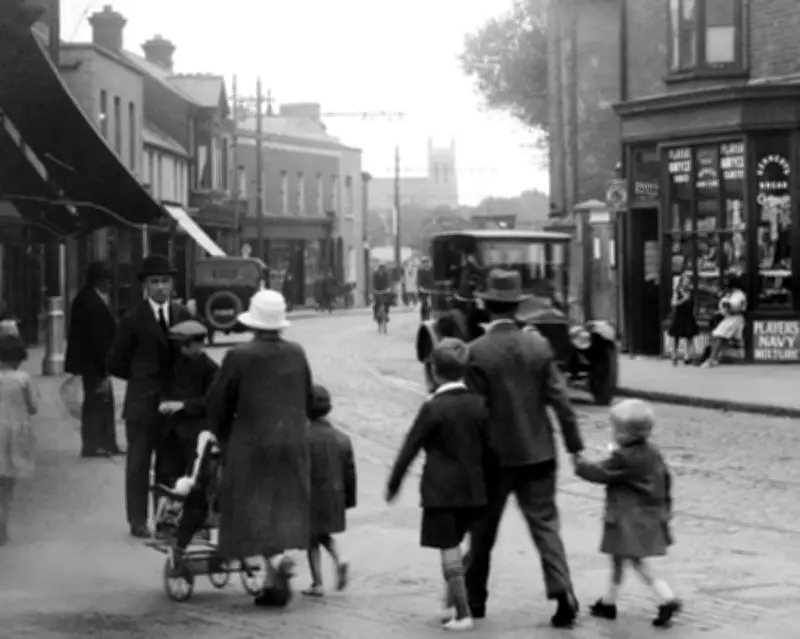
1926 Irish Census Shatters Monocultural Stereotypes of Early Independence Era
The long-held perception of early independent Ireland as a dreary, insular society dominated by parochial conservatism is being fundamentally challenged by the landmark release of the 1926 census. This vast historical archive, containing intimate details of 2.9 million people, reveals a nation with surprising diversity and global connections during its formative years.
A Century-Old Snapshot of Irish Society
Exactly one hundred years after its collection, the National Archives of Ireland has completed a monumental digitization project that makes the 1926 census freely available online from April 18th. The archive comprises more than 700,000 pages of personal information that provide an unprecedented window into the lives, occupations, and sometimes secrets of nearly the entire population of the Irish Free State.
According to historian John Gibney of the Royal Irish Academy, who contributed to the project, the findings directly contradict the stereotype of Ireland as a mono-ethnic backwater in the years following independence. "Immigrants could be found in every corner of the Irish Free State at that time," Gibney emphasized. "It bucks the image we have of this dour, conservative society."

Unexpected Diversity Across the Nation
The census documents reveal a scattering of British, American, French, Italian, German, Egyptian, and other nationalities living throughout Ireland during this period. While the absolute numbers of foreigners were relatively small, their presence across the country indicates a more cosmopolitan reality than previously assumed.
"You can almost see it at a ground level, a kind of cosmopolitan inflection," Gibney noted. "There's far more variety than might sometimes be assumed. There was probably no town or village that didn't have someone with a different accent to everyone else that was living there."
Orlaith McBride, director of the National Archives, highlighted specific examples of this diversity, including Germans who migrated to Limerick to work for Siemens on hydroelectric projects and an India-born Hindu law student residing in a Dublin boarding house. "You get such a mix of people," McBride observed. "It's fascinating."
Tourism and Economic Opportunities
Despite Ireland's peripheral position in Europe, census returns from hotels indicate that foreigners were vacationing in the country during this era. The records also document the significant employment provided by the hospitality sector, with entire towns sometimes dedicated to hotel operations.
While poverty and unemployment drove many native Irish to emigrate, the emerging state simultaneously offered economic opportunities that attracted international workers. This complex picture of movement both into and out of Ireland adds nuance to historical understanding of the period.
Preserving and Presenting History
The release of the census follows the legal requirement of Ireland's 100-year rule, which mandates public access to such records after a century. With €5 million in government funding, a team of fifty National Archives specialists extracted the records from 1,344 boxes, restored damaged pages using traditional conservation techniques, and meticulously cataloged and digitized the entire collection.
Unlike the United Kingdom's 1921 census, which was released with a paywall in 2021, Ireland's 1926 census will be freely accessible to both scholars and the general public. Each census entry contains twenty-one distinct topics of information, including age, sex, marital status, occupation, religion, housing conditions, and ability to speak Irish.
Revealing Family Secrets and Social Dynamics
The census forms were completed not only in private households but also in institutions including prisons, hospitals, ships, and other residences where people lived on April 18, 1926. The approximately 2,000 gardaí (police officers) who distributed and collected the census returns sometimes added their own observations based on local knowledge.

In one documented case, officers noted that a woman listed as the daughter of an elderly resident was actually her granddaughter, a fiction likely intended to conceal that the biological mother was unmarried. In another instance, gardaí recorded that a widowed farmer had married his housekeeper, a detail the couple themselves had omitted from their census form.
"The census is going to reveal things to people about their families that they may or may not have known," Gibney remarked, highlighting the personal significance of these records for contemporary Irish citizens researching their ancestry.
Addressing Historical Mysteries
Scholars anticipate that the census data will help address one of the era's most significant historical puzzles: the dramatic decline of Ireland's Protestant population between 1911 and 1926. During this fifteen-year period, the non-Catholic population in what would become the Republic of Ireland fell by thirty-two percent.
While factors including First World War casualties, the influenza pandemic, and the withdrawal of British military forces explain some of this demographic shift, historians continue to debate whether Protestants left because they felt unwelcome or threatened in the overwhelmingly Catholic new state. The detailed movement and occupational data contained in the census may provide crucial insights into this complex historical question.
Commemorating a Century of History
The release of the census will be accompanied by various commemorative initiatives, including exhibitions, documentaries, theatre productions, and a book titled The Story of Us: Independent Ireland and the 1926 Census. Authorities have also issued a call for "centenarian ambassadors" among the estimated 1,200 people currently aged one hundred or older in Ireland.
"They have a fascinating story to tell," McBride stated regarding these centenarians. "Their lives mirror the first one hundred years of the evolution of modern Ireland."
This comprehensive historical resource promises to reshape understanding of Ireland's early independence period, revealing a society more diverse, complex, and globally connected than traditional narratives have suggested.





