Ancient Upright Skeleton Discovered in Dijon, France: Gaulish Burial Mystery Deepens
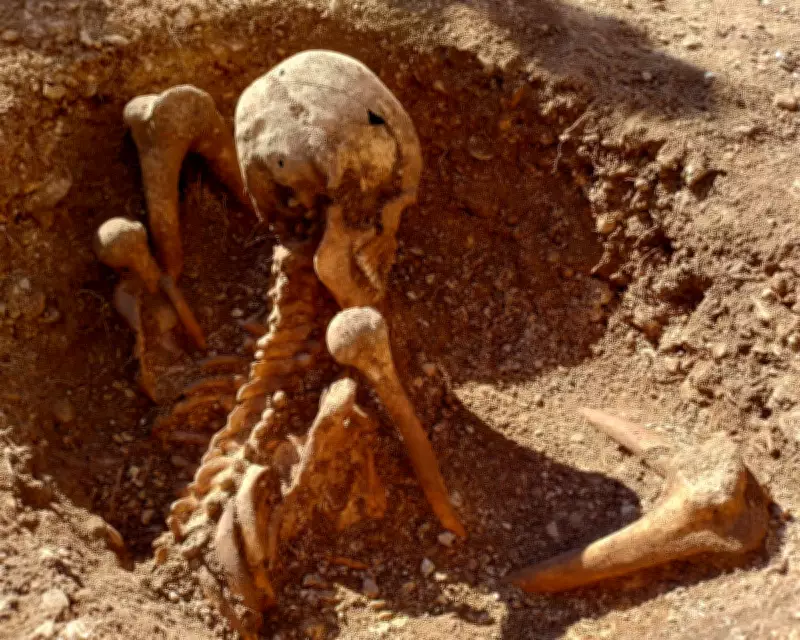
Archaeologists in central Dijon, located in central-eastern France, have made another remarkable discovery that deepens the mystery surrounding ancient Gaulish burial practices. This week, children at the Josephine Baker primary school in eastern France encountered a strange sight next to their playground: a remarkably well-preserved skeleton sitting upright, peeking out from the top of a circular pit.
Latest Discovery in a Series of Seated Burials
This skeleton represents the latest in a series of bodies discovered in Dijon that were buried in a seated position facing westward. Similar to four others unearthed nearby earlier this month, the skeleton sits upright at the bottom of a one-meter-wide pit with its hands resting in its lap. Like the others, its back rests against the eastern wall of the pit, with its gaze directed westward toward the setting sun.
Last year, archaeologists discovered 13 other skeletons approximately 20 meters away at the same construction site. These bodies are believed to date from around 300 BC to 200 BC, placing them firmly within the Gallic period of European history.

The Significance of Dijon for Gaulish Culture
Over the past three decades, archaeological excavations have revealed that Dijon was once a special place for the Gauls, a Celtic group of people perhaps best known through the popular French comic series "Asterix and Obelix." The Gauls first emerged around the fifth century BC, spreading across vast territories that now comprise modern-day France, Belgium, Switzerland, and regions further east.
Including earlier discoveries made in 1992, approximately 20 tombs containing seated Gauls have been uncovered within a small area of Dijon's city center. This represents more than a quarter of the 75 tombs featuring sitting Gauls identified worldwide, with other similar sites discovered in France, Switzerland, and the United Kingdom.
Limited Knowledge and Ongoing Research
Regis Labeaune, a researcher at the French archaeological institute INRAP, described the latest discoveries as "particularly impressive." He told AFP that "given the number and quality of these discoveries, we can say there was a significant Gallic settlement in Dijon."
However, much about these burials remains shrouded in mystery. Little is known about Gaulish culture beyond writings by others, which can be biased, such as those recorded by Roman emperor Julius Caesar, who conquered the Gauls in 50 BC.
Except for one armband that dates the settlement to the Gallic period, no personal belongings or ornaments were found among the Dijon bodies. All were men measuring between 1.62 and 1.82 meters tall, except for one child discovered in 1992.
Physical Characteristics and Unanswered Questions
Annamaria Latron, an archaeo-anthropologist at INRAP, noted that the skeletons' teeth were exceptionally well-preserved over the centuries, "probably because they did not know about sugar." Their bones display traces of osteoarthritis, suggesting intense physical activity, particularly in their legs.
Five of the bodies show signs of violence, including one with a fatal wound to its skull. This raises crucial questions about the purpose of these unusual burials: Were they punishments for wrongdoers or honors for the powerful?
"We do not have a preferred hypothesis," Latron admitted regarding why these individuals were buried in this bizarre manner. "We're missing the surface layer, which was above the tombs. Being an archaeologist can be a very frustrating profession," she added, highlighting the ongoing mystery that continues to puzzle researchers.