Hever Castle's Anne Boleyn Portrait Exhibition Sparks Debate on True Likeness
Hever Castle in Kent, the childhood home of Anne Boleyn, has launched a groundbreaking exhibition titled Capturing a Queen: The Image of Anne Boleyn. This display assembles the largest collection of portraits believed to depict Henry VIII's second wife, commemorating the 500th anniversary of their courtship. Curators Owen Emmerson and Kate McCaffrey describe it as a fitting tribute to this quincentennial milestone, though the exhibition also hints at the darker anniversary of her execution a decade later.
The Quest for Anne Boleyn's True Face
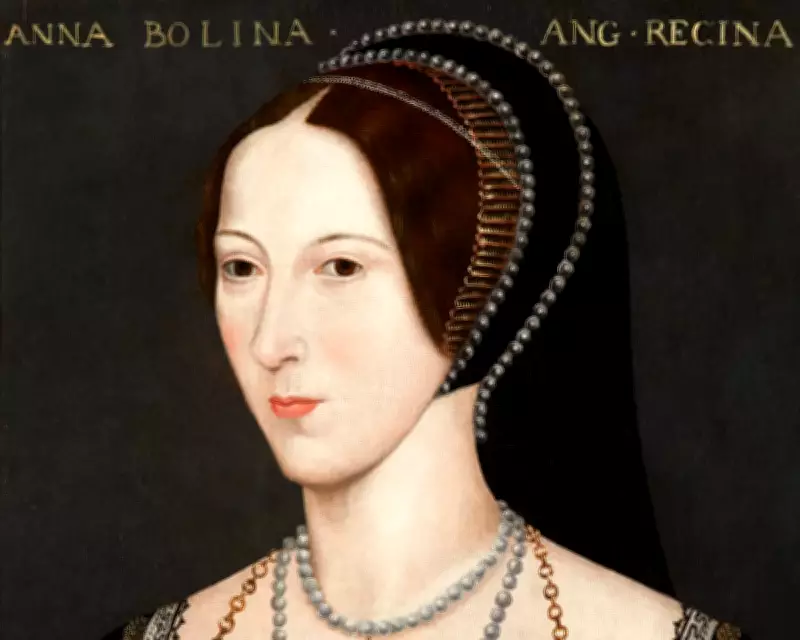
The exhibition is driven by recent technical analysis, including a study of Hever Castle's own "Rose" portrait from 1583, now identified as the earliest known variant featuring Anne holding a rose. New hypotheses challenge the long-held belief that Henry VIII systematically erased all imagery of Boleyn after her 1536 execution. Instead, the show suggests that depictions persisted, raising questions about what Anne truly looked like.
Visitors are confronted with a surreal array of portraits from the 16th to 18th centuries, all displayed in a low-ceilinged space within the castle's winding staircases. Each artwork presents Anne in a three-quarter profile, with similar scales and varying regal iconography. The collection includes notable pieces such as a portrait from the Countess of Rosse collection and the Lyndhurst Mansion portrait, on loan in the UK for the first time.

Challenges in Defining Likeness
Defining Anne Boleyn's real likeness proves nearly impossible. Tudor portraiture often aimed to convey piety, power, and prestige rather than accurate physical representation. This practice continued into Elizabethan times, as seen in the mask-like visages of Queen Elizabeth I. The exhibition's portraits resemble fun-house mirrors, with each artist using Anne's rough likeness as a template, resulting in varying levels of accuracy.
Only the talent of Hans Holbein the Younger seems to capture human warmth and verisimilitude, as evidenced by a facsimile drawing from around 1534 that shows Anne in profile, radically different from other cookie-cutter depictions. However, the exhibition's caption notes that new research argues this is the most complete contemporary likeness, though details are not readily available to visitors.
Exhibition Highlights and Organizational Feats
From an organizational standpoint, assembling this collection is a remarkable achievement. Emmerson, a fanatical collector, has included personal items such as a 19th-century replica of the clock Henry VIII gave Anne on their wedding day and The Arrest of Anne Boleyn, a painting from about 1870. However, availability issues are evident; for instance, the Chequers Ring, which shows Elizabeth I with her mother Anne, is represented only by a photograph, as the original is housed at the prime minister's Buckinghamshire retreat.
The exhibition's labeling has been criticized as chaotic, with no clear key explaining groupings like the "Bradford," "Pearl," "Rose," "Windsor," and "Moost happi" categories. Slippery language, such as describing the Nidd Hall portrait as "one of the most persuasive likenesses," adds to the confusion for casual viewers.
Public Engagement and Lingering Questions
In a unique interactive element, visitors are asked to vote on a screen for the group that "best represents" Anne Boleyn, sidestepping the impossible question of true likeness. This raises further questions about what defines representation in historical portraiture. Without physical remains, like a skull for reconstructive analysis, the mystery of Anne's appearance endures.
Capturing a Queen: The Image of Anne Boleyn runs at Hever Castle until January 2, 2027, offering a deep dive into Tudor art and history. It highlights the enduring fascination with Anne Boleyn's legacy, blending art historical research with public engagement, even as the search for her true face remains an elusive pursuit.