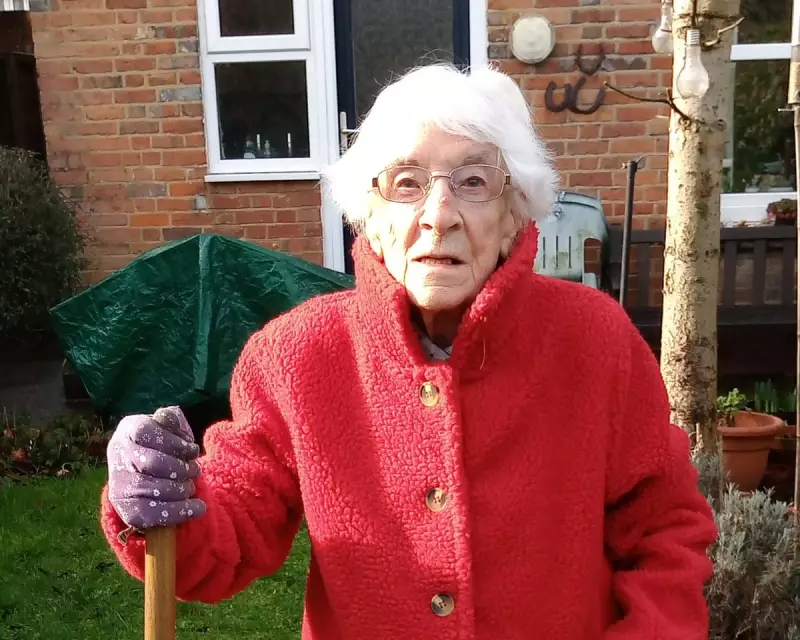
The remarkable life of Barbara Hurman, who has died at the age of 100, demonstrates that passion and professional achievement can blossom at any stage. An archaeologist specialising in the meticulous identification and illustration of finds, she embarked on this second career after raising her family, leaving an indelible mark on the field.
A Distinguished Archaeological Career
Barbara Hurman contributed her expertise to numerous significant sites and institutions across the UK. Her work included collaborations with the Buckinghamshire County Museum, the Milton Keynes Archaeological Unit, the Department of the Environment, and the prestigious Museum of London.
In a testament to her enduring dedication, she undertook four summer seasons in her late 70s as the finds supervisor and ceramic analyst. This role was with Nottingham University's excavation of the Roman site at Veliko Tarnovo in Bulgaria, showcasing her international reach and deep scholarly commitment.

Contributions to Archaeological Scholarship
Beyond fieldwork, Barbara played a pivotal role in the academic and professional structures of archaeology. She helped establish the Association of Archaeological Illustrators and Surveyors, serving as a technical paper editor for the body.
Her editorial skills were further applied as an assistant editor for the Medieval Later Pottery Research Group's Guide to the Classification of Medieval Ceramic Forms. She was a frequent contributor to papers for the Bucks Archaeological Society and, in 2019, co-authored the influential volume Pots, Potters and Potteries of Buckinghamshire with Michael Farley.
Early Life and Wartime Service
Barbara was born a twin in Thornton Heath, south London, to Charles Sanders, an engineering clerk at Vickers Armstrong, and Jeanie (née Coleman), a housewife. The family later moved to the Cumbrian coastal village of Silecroft.
After leaving Millom school at 16 and attending secretarial college, she answered the call of duty. She enlisted in the Auxiliary Territorial Service (ATS) and then the Royal Corps of Signals, serving as a teleprinter operator throughout the Second World War.
Following basic training, she was stationed at Fort Widley in Portsmouth, where she was on duty during the critical D-Day operations. Her service continued in Italy, with postings in Caserta, Naples, and Padua. She was demobilised in 1947, having attained the rank of sergeant.
Post-War Life and Archaeological Awakening
After the war, Barbara worked in Egypt as a secretary for the Navy, Army and Air Force Institutes. It was there she met her future husband, Gordon Hurman, a colleague whom she married in 1950 at the British Consulate in Suez. Egypt also ignited her lifelong fascination with the ancient world.
The couple returned to the UK in 1970 when Gordon took a position as an area manager with the Aylesbury Brewery Company in Buckinghamshire. Only after her family was raised did Barbara fully pursue her archaeological passion, beginning as a volunteer on excavations.
This led to an intensive period of study with the Universities of London, Oxford, and Keele. She forged long-standing associations with the Bucks Archaeological Society and the local County Museum, invigilating, working on digs, organising volunteers, running evening classes, and giving talks to local societies.
Later Years and Recognition
In her nineties, Barbara reconnected with her wartime legacy, contacting the Royal British Legion to raise awareness of the vital role servicewomen played during the conflict. This resulted in media interviews and a profound honour: delivering a reading at Westminster Abbey in 2015 to commemorate the 70th anniversary of VE Day.
Her service was further recognised when she met her ATS contemporary, Queen Elizabeth II, while helping to launch the Together at Christmas initiative. At 99, she was among a select group of Second World War veterans invited to an official reception at Buckingham Palace marking the 80th anniversary of VE Day.
Gordon died in 2009, and Barbara's twin sister, Edna, died in 2018. She is survived by her three children, David, Susan, and the author of this obituary, along with three grandchildren and four great-grandchildren.

The story of Barbara Hurman is one of resilience, intellectual curiosity, and service—a life that spanned a century and contributed richly to both national history and our understanding of the ancient past.