

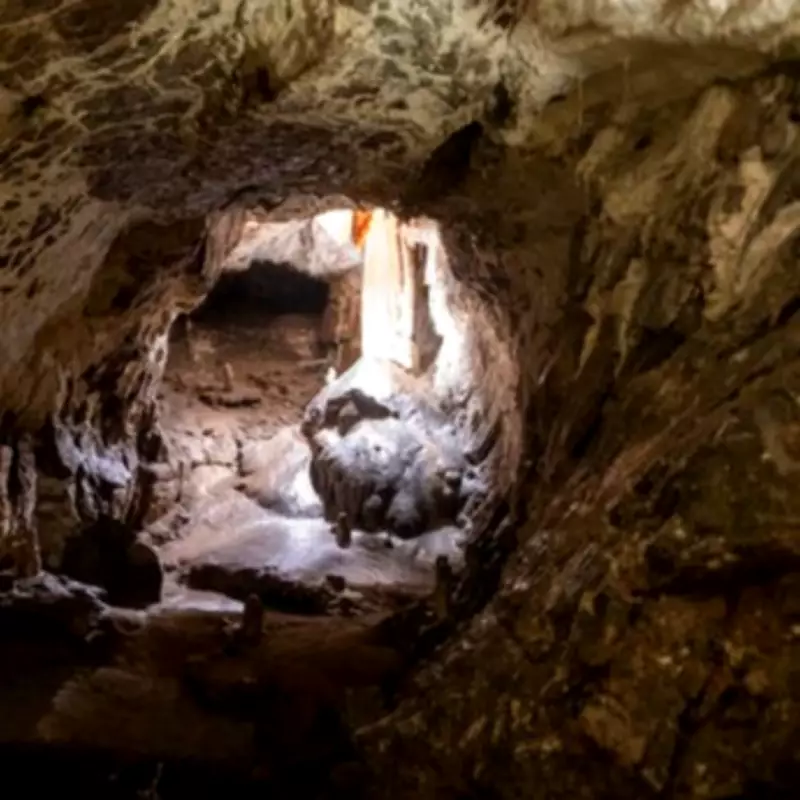
Beneath the bustling streets of South London lies a hidden world shrouded in mystery and wild speculation. The Beddington Caves in Mitcham have long been the subject of local folklore, with stories circulating about an extensive network of tunnels that supposedly stretch all the way to the coastal city of Brighton, some 50 miles away.
The Legend of Smugglers and Pirates
According to popular tales, these subterranean passages once served as secret routes for pirates and smugglers transporting contraband goods to London. The stories suggest that barrels of rum, boxes of tobacco, and delicate lace were hauled through these dark corridors to supply affluent Londoners with luxury items while avoiding import duties. This romantic notion of underground smuggling operations has captured imaginations for generations, painting a picture of clandestine activities beneath the city's surface.
Historical Documentation and Early Accounts
The caves first gained documented attention in January 1880 through an article published in the Croydon Review and Timetable. An anonymous writer, in a piece titled "Haunted," described the caves as "shudderus" - presumably meaning extremely frightening. The author noted that local informants referred to them as a "robbers cave" located at Plough Lane, near the road to Bandon Hill in Mitcham.

Interestingly, while the writer acknowledged the popular belief that the caves extended to Brighton, he personally disputed this claim after examining them himself, stating there was "nothing very remarkable about them." This early account highlights the tension between local legend and observable reality that has characterized discussions about the caves for over a century.
The Physical Reality of Beddington Caves
The entrance to these mysterious caves was traditionally located near the Plough Inn on Plough Lane, though it has since been bricked up for safety reasons. Local residents from the 1960s and 1970s recall exploring the tunnels as teenagers, describing how a small fox-hole-like opening would expand into larger passages, including what they called a "hall" large enough to host a small banquet.
Sue Chester, a former local resident, shared her memories: "We used to play down there. Suddenly, they were bricked up. We later learnt that the council had done this for safety reasons." Her account provides valuable firsthand testimony about the caves' accessibility before their closure.
Geological Constraints and Expert Analysis
Despite the colorful legends, geological evidence tells a different story. Steve Roud, author of London Lore, explains that the local geography - including rivers, chalk faces, and gravel beds - makes extensive tunnel systems highly unlikely. Geological constraints suggest the caves could only extend a few hundred yards at most, far short of the fabled connection to Brighton.
Furthermore, the tunnels don't appear in any documented records until the 1860s, casting doubt on older theories about Roman use or connections to Tudor palaces. This timeline discrepancy suggests many of the more elaborate stories about the caves' historical significance may be more fiction than fact.
Industrial Origins and Practical Uses
According to investigations by the London Speliological Society in 1940 and the Chelsea Speliological Society in 1968, the caves likely originated as sand mines for industrial purposes. The system appears to combine natural formations with man-made excavations, created primarily for practical rather than romantic reasons.
During the 19th century, historical records show that Beddington Cave was included in the lease for the adjacent Plough Inn, with the publican using it as a cool, dark cellar for storing barrels of alcohol. This practical application aligns with the geological evidence of limited, localized excavations rather than extensive smuggling networks.
Persistent Legends and Unanswered Questions
Despite the geological and historical evidence pointing toward more mundane origins, local legends persist. Stories continue to circulate about connections to Nonsuch Park, the Tudor palace that once stood there, Carew Lodge, and Beddington Manor. Some even claim the ghost of Sir Walter Raleigh haunts the caves, adding a supernatural element to the already rich mythology.

In the 1920s, an elderly parishioner named Mr. Roffey shared childhood stories with Reverend Thomas Bentham about donkey trains transporting smuggled goods across the downs into Beddington at night, with the caves supposedly serving as storage for this contraband. These oral traditions, passed down through generations, continue to fuel speculation about the caves' secret history.
The Sealed Mystery
Today, with the entrances bricked up and no comprehensive exploration ever conducted, the full truth about Beddington Caves may remain forever hidden. The sealed passages prevent modern investigation, leaving room for continued speculation and legend.
While geology and documented history suggest the caves were primarily industrial sand mines with limited extent, the absence of definitive exploration means none of the stories can be entirely discounted. This combination of partial evidence and physical inaccessibility ensures that Beddington Caves will continue to occupy that fascinating space between documented history and local folklore, between geological reality and imaginative legend.
The caves serve as a reminder of how physical spaces can accumulate layers of meaning and story, transforming from practical industrial sites to subjects of wild speculation and local mythology. Whether as sand mines, storage cellars, or imagined smuggling routes, Beddington Caves represent a tangible connection to South London's layered history, both real and imagined.





