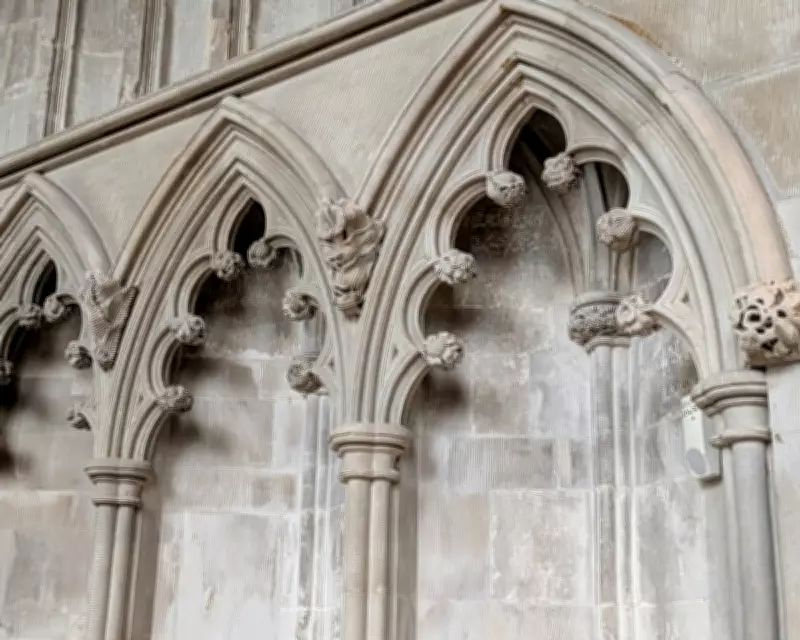
In the serene Lady Chapel of St Albans Cathedral in Hertfordshire, a remarkable fusion of history, art, and nature unfolds within its thick limestone walls. Constructed from Totternhoe clunch quarried nearby in Bedfordshire, this sacred space offers a tranquil escape from the city's hustle. Yet, its quietude belies a vibrant legacy etched into the stonework, echoing the contributions of women from centuries past.
A Dilapidated Chapel Reborn Through Restoration
By the late 19th century, the Lady Chapel had fallen into disrepair, with much of its original 14th-century ornamental stonework lost to time. An extensive restoration project was launched to revive its grandeur. Commissioned for this task was John Baker, a London-based ecclesiastical sculptor renowned for his naturalistic masonry. Baker embarked on a unique approach to recreate the decorative capitals, bosses, and corbels adorning the arches.
Inspired by Local Flora and Parish Women
Seeking authenticity, Baker turned to the community for inspiration. He asked the ladies of the parish to bring in plants as models, aiming to replace the botanical carvings from the medieval era with accurate representations. This collaborative effort resulted in a stunning array of carvings that celebrate Hertfordshire's rich flora.

Walking through the chapel today, visitors are captivated by the intricate details: tiny elm samaras, waving polypody ferns, coiled passion flower tendrils, and the voluptuous spathes of cuckoo pint. The stonework also features an abundance of fruit, including plums, pears, pomegranates, and peaches, sourced from the region's thriving orchards.
Exotic Orchids and Royal Connections
Among the carvings, exotic orchids from the Himalayas and South America stand out, such as Coelogyne cristata, Odontoglossum vexillarium, and Cattleya mendelii. The latter is depicted as a floral wind god with closed upper-petal eyes, blowing a storm through its ruffled lip. These orchids would have been cultivated in St Albans at the time by Frederick Sander, known as "the Orchid King" and the royal orchid grower to Queen Victoria, adding a regal touch to the chapel's botanical collection.
A Living Record of Local Nature
During the restoration period, the Lady Chapel would have been a bustling hub of activity, filled with people and the sights and scents of over a hundred plant species. For modern visitors, the carvings serve as a precious record of the city's flora, collected by local women and immortalized in local stone. This connection to nearby nature underscores the chapel's significance as both a historical and environmental artifact.
As one exits the chapel, passing under a veteran cedar of Lebanon planted outside the Chapter House in 1803, the carvings' relevance endures. Baker's depiction of two cones nestled in cedar needles prompts curiosity: did he model this on a specimen from this very tree? This question lingers, inviting reflection on the enduring bond between art, community, and the natural world.