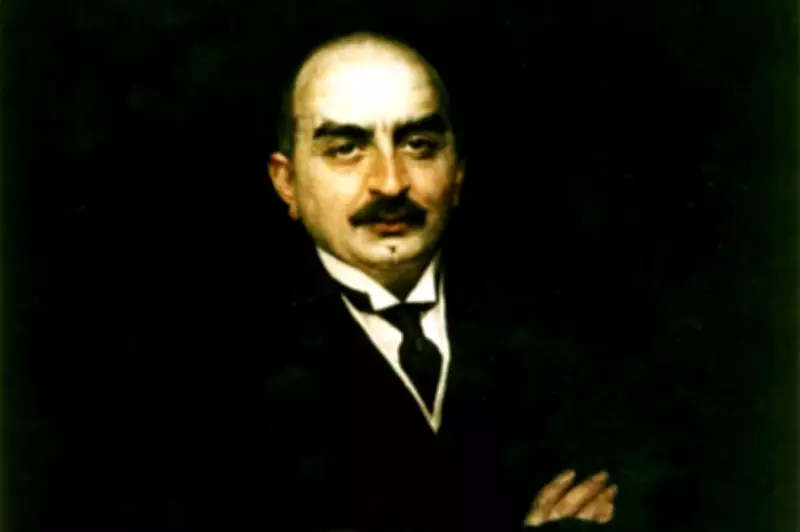
Calouste Gulbenkian: The 'Mr Five Per Cent' Who Shaped Global Oil Markets
On this day in 1869, Calouste Sarkis Gulbenkian was born in Constantinople, the capital of the Ottoman Empire, a man destined to become a pivotal figure in the world's oil industry. His life story intertwines with the turbulent history of the Middle East, where conflict in the Persian Gulf today threatens global energy stability, a region now synonymous with oil but not always so.
Early Life and Education
Gulbenkian hailed from an Armenian family living in the Scutari district, where his father, Sarkis Gulbenkian, amassed wealth through kerosene imports and tax collection for the Sultan. Educated at prestigious institutions like the French Lycée Saint-Joseph and King's College London, he graduated with distinction in engineering, setting the stage for his future endeavors.
Rise in the Oil Industry
By his mid-twenties, Gulbenkian was deeply involved in the nascent oil sector, conducting surveys in Mesopotamia and leveraging connections in Baku. However, as an Armenian in Ottoman Turkey, he faced peril during the 1894-1897 massacres, prompting his relocation to London in 1900, where he became a naturalized British subject.

Deal-Making and Corporate Success
Gulbenkian's genius lay in his ability to broker deals. In 1907, he facilitated the merger that created Royal Dutch Shell, and in 1912, he founded the Turkish Petroleum Company, later renamed the Iraq Petroleum Company. His strategic maneuvering, including the Red Line Agreement of 1928, ensured Western control over Middle Eastern oil without conflict.
Legacy and Impact
Earning the nickname 'Mr Five Per Cent' for his modest but profitable stake, Gulbenkian's influence extended until his death in 1955, with his fortune estimated at $840 million. The Iraq Petroleum Company's monopoly lasted until nationalization in 1972, overseen by Saddam Hussein, highlighting Gulbenkian's enduring impact on global energy dynamics.
An enigmatic figure, Gulbenkian's philosophy—'Better a small piece of a big pie, than a big piece of a small one'—encapsulates his approach to power and success, leaving a legacy that continues to resonate in today's oil-dependent world.