One of history's most celebrated diamonds has dramatically reappeared after vanishing for nearly a century, having spent decades hidden within a Canadian bank vault under conditions of absolute secrecy.
The Royal Escape to Canada
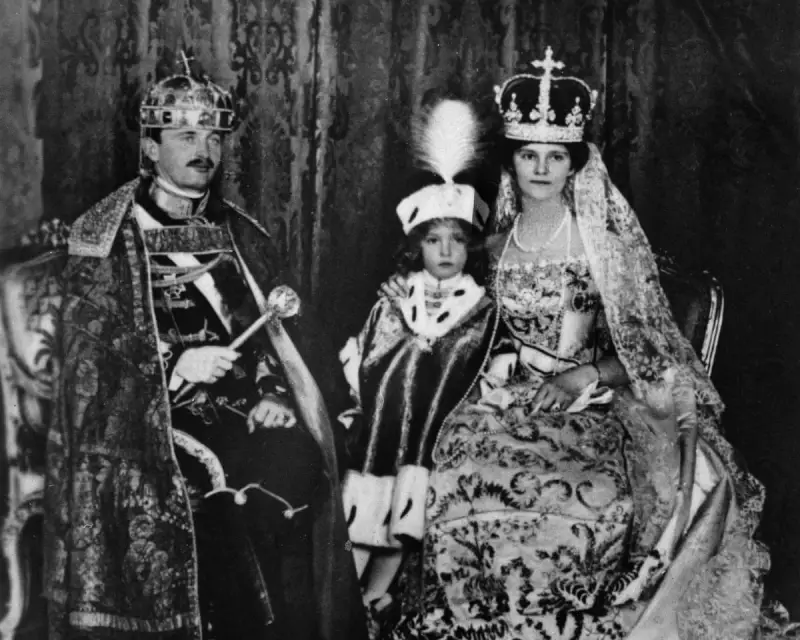
During the tumultuous years of the Second World War, Empress Zita of Austria-Hungary undertook a perilous journey across the Atlantic with her eight children, carrying the magnificent Florentine diamond among other imperial jewels in a simple cardboard suitcase. The royal family sought refuge in North America as Nazi forces advanced across Europe, eventually settling in Quebec, Canada.
Karl von Habsburg-Lothringen, grandson of Emperor Charles I, revealed to the New York Times that his grandmother finally felt secure upon reaching Canadian soil. "My grandmother felt very safe – she could breathe finally," he explained. "I assume that, at that stage, the little suitcase went into a bank safe, and that was it. And in that bank safe, it just stayed."

A Century-Long Secret
The Empress implemented extraordinary security measures around the diamond's whereabouts. She instructed that its location remain confidential for 100 years following her husband Charles I's death in 1922. Initially, only two of her sons, Robert and Rodolphe, knew the diamond's hiding place, with the secret being passed down through generations before their deaths.
"The less people know about it, the bigger the security," von Habsburg-Lothringen emphasised, explaining the family's strict adherence to maintaining silence about the jewel's Canadian resting place.
The Diamond's Storied Past
The Florentine diamond boasts an impressive royal pedigree spanning centuries. The 137-carat pear-shaped stone, renowned for its distinctive "fine citron" hue, may have originally belonged to Charles the Bold before becoming part of Florence's Medici family collection. It certainly later became property of the powerful Habsburg dynasty.
Experts have long debated the diamond's origins and craftsmanship. Some suggest its irregular octagonal outline with 126 facets indicates Indian cutting techniques, while others attribute the work to Lodewyk van Bercken, the celebrated Flemish jeweller who might have shaped it into a pyramidal form.
The diamond's disappearance after the Second World War spawned numerous theories. Some historians believed Nazis had stolen it during Austria's annexation, while others speculated American troops had recovered and returned it to Vienna. Another persistent theory suggested the Habsburgs, facing financial ruin as their empire collapsed, had sold the precious stone.
Mystery Solved
Christoph Köchert of AE Köchert, the former imperial court jewellers of Austria, has confirmed the authenticity of the rediscovered stone, declaring it "the genuine, historical 'Florentine Diamond'".
The Habsburg family has announced plans to display the diamond at a Canadian museum in coming years, confirming it will not be offered for sale. They have declined to disclose the jewel's potential value, maintaining an air of mystery around one of history's most fascinating royal treasures.
The discovery echoes Canada's historical role as a secure repository for valuable assets, reminiscent of Operation Fish during the Battle of Britain, when 186,332 gold bars were secretly shipped to Montreal for safekeeping beneath a specially constructed vault.