Holocaust Art Saved: Judy King Fulfills Mother's Promise to Recover Peter Kien's Suitcase
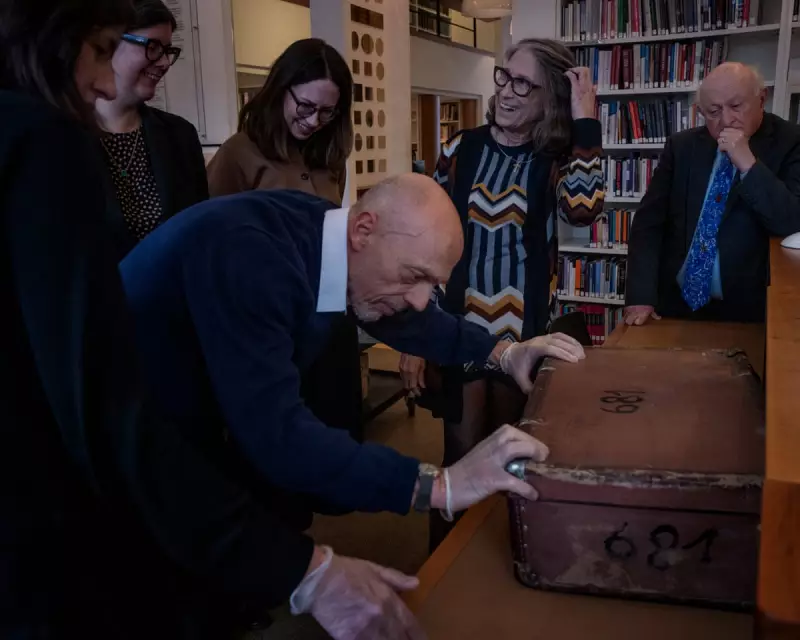
In a remarkable act of perseverance and dedication, Judy King has successfully brought a priceless collection of Holocaust-era artworks to their new home in the United Kingdom. The collection, comprising 681 drawings, love letters, poems, and manuscripts created by the Jewish artist and poet Peter Kien, has finally arrived at the Wiener Holocaust Library in central London after decades of bureaucratic struggles and historical turmoil.
A Promise Made at the Deathbed
Judy King, aged 66, made a solemn vow to her mother, Helga Wolfenstein, in 2003 as Wolfenstein lay on her deathbed. Wolfenstein had been Kien's lover in the Theresienstadt ghetto during the Second World War, and on the evening before he was transported to Auschwitz, where he was murdered at just 25 years old, Kien entrusted her with a small caramel brown suitcase containing his life's work. King promised her mother that she would complete the mission to recover these precious items, stating emphatically, "I will finish your work."
Surviving Nazis and Communists
The suitcase and its contents survived the Nazi occupation, hidden in the infectious diseases ward of the ghetto where Wolfenstein's mother served as matron. After the liberation of Theresienstadt in 1945, Wolfenstein fled to Libya and later to England, leaving the suitcase with her aunt in Prague due to fears that the new communist regime would confiscate it. Tragically, in the 1970s, a communist informant discovered the artworks, leading authorities to seize them under threat of cutting off Wolfenstein's pension.

Following the Velvet Revolution in 1989, the Terezín Memorial museum took custody of the collection. Despite Wolfenstein's persistent efforts over 33 years, including writing letters in multiple languages to institutions worldwide, the museum refused to return the items, citing lack of provenance. King noted that her mother's passionate but sometimes confrontational approach, such as beginning letters with "You thieves," may have hindered progress.
Decades of Bureaucratic Hurdles
In 2017, King and her cousin Peter visited the Terezín Memorial, where officials expressed willingness to work with them, unlike with Wolfenstein. However, it took nearly another decade to navigate the complex legal and logistical challenges. The artworks were considered national treasures in the Czech Republic, leading to significant reluctance to part with them. Key obstacles included demands for documented proof of ownership, which King overcame by presenting a notarised, handwritten document from her mother bequeathing the suitcase to her.
At the last minute, Czech customs officials nearly derailed the process by insisting on a court-appointed document instead of the handwritten one. Thanks to coordinated efforts with shippers in London and Prague, customs relented, allowing the artworks to leave Prague. Their arrival in London was further delayed by adverse weather conditions, but they finally landed at Heathrow last Thursday.
A New Home in London
The suitcase and its contents have now been donated to the Wiener Holocaust Library, where they join nearly a hundred other Kien works that were smuggled out by King's cousin during the communist era. Howard Falksohn, the library's senior archivist, expressed profound gratitude for this donation, which coincides with International Holocaust Remembrance Day. King believes her mother, an Anglophile who became a British citizen, would have been thrilled to see the artworks preserved in London, ensuring their legacy for future generations.
This story highlights not only the enduring impact of the Holocaust but also the power of personal commitment in overcoming historical injustices. Judy King's unwavering dedication has brought closure to a decades-long struggle, honoring her mother's memory and preserving a vital piece of Jewish cultural heritage.