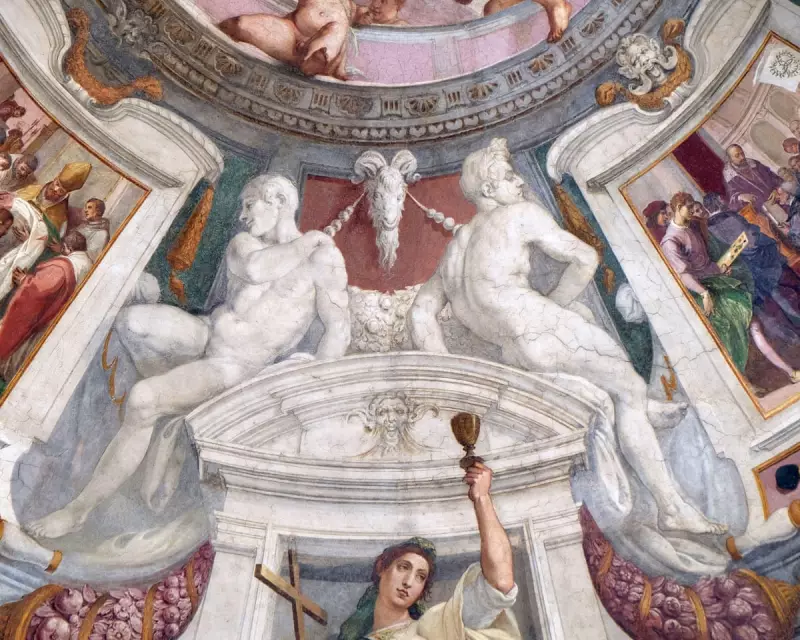
A captivating new book delves into the poignant history of Florence's Hospital of the Innocents, revealing how the care of abandoned children became intertwined with some of the Renaissance's greatest artistic achievements.
The 'Thrown-Away' Children of Renaissance Florence
In his work The Innocents of Florence, scholar Joseph Luzzi brings to life the precarious world of the first institution in Europe dedicated solely to unwanted children. Established by the Silk Weavers Guild, the Innocenti opened its doors in the 15th century, a time when children made up half of Florence's population and abandonment was tragically common.
Contraception was primitive and condemned by the church, leading to many desperate acts. Infants were left in church doorways, dumped in rivers, or discarded on rubbish tips. They were known locally as the gittatelli – the thrown-away ones. Many were girls, born into a fiercely patriarchal society, often the result of masters exploiting servants. Mothers would sometimes break a coin in two, leaving one half around their baby's neck as a token of hoped-for reunion.

The first recorded foundling, Agata, arrived on Saint Agata's Day in 1445, and had been nibbled by mice. The hospital's mission was born from this profound social crisis.
A Palace of Art and Contradiction
The building itself was a architectural marvel, featuring arches designed by Filippo Brunelleschi, the genius behind Florence's Duomo. It housed, and still houses, works by masters like Ghirlandaio, Botticelli, and della Robbia. This investment in beauty, however, existed alongside grim realities.
While the Innocenti saved countless children from destitution, sex work, or trafficking, and softened the brutal stigma of illegitimacy, its operations were a mix of high idealism and cruel utility. Donations were spent on expensive art, yet the children were often fed bread made from bran, the same as the mules. Babies were farmed out to wet nurses who sometimes treated them as cash cows, neglecting them and even collecting fees after their deaths.
Education was strictly gendered: boys studied a rounded curriculum of maths, rhetoric, and music, while girls were taught weaving and pushed into domestic service, a role the hospital's directors knew left them vulnerable to sexual exploitation.
A Document of Civilisation and Barbarism
Luzzi's book presents the Innocenti as a powerful case study in the dual nature of the Renaissance. The glorious frescoes and soaring columns masked what he describes as "the sweat and suffering of forced labor, the raping of slaves, the abuse of children". It embodies the critic Walter Benjamin's observation that every document of civilisation is simultaneously a document of barbarism.
While the claim that the hospital 'discovered' modern childhood may be debated, its core legacy is undeniable. It helped pioneer the now-fundamental idea that every child's fate matters, inspiring similar institutions globally, including London's Thomas Coram Foundling Hospital in 1739.
Luzzi, a Dante professor at Bard College, mostly tells this historical story straight, setting aside the personal memoir style of his previous work. He briefly notes his own connection to caregiving, having become a father and widower on the same day, a story detailed in his earlier book, In a Dark Wood. His new volume instead paints a vivid, cinematic portrait of early modern Florence in all its grubby, gorgeous detail, ensuring the stories of the Innocents are thrown away no longer.