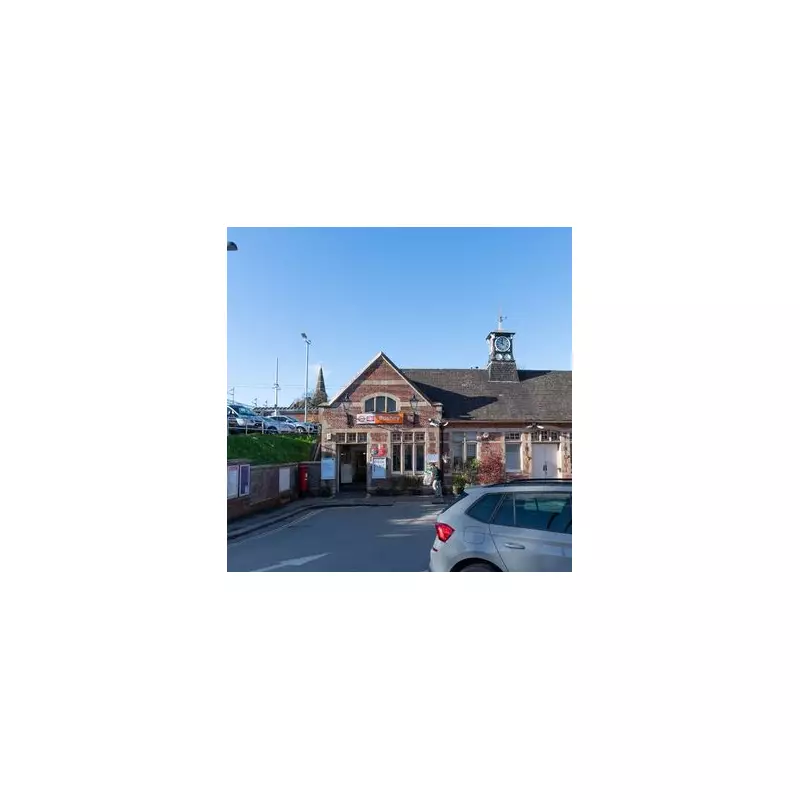
London's Underground network is a treasure trove of hidden stories and peculiar historical footnotes. Among its many curiosities is the tale of a station that, for a time, lost its name entirely and was known simply by the symbol '&'. This bizarre chapter was a direct, if somewhat haphazard, result of Britain's defensive preparations during the Second World War.
The Station's Origins and Wartime Transformation
The story begins not with the Tube, but with the London and Birmingham Railway, which first reached the Hertfordshire area of Bushey in July 1837. As demand grew, a station was built, which later became a rural stop on the Bakerloo Line. Underground services officially commenced there on 16 April 1917, when the line was extended to Watford Junction, partly to aid wartime logistics.
However, the station's most unusual period began in 1939. As part of widespread blackout measures to baffle potential German invaders, authorities ordered that station name signs be painted over or removed. The aim was to disorient enemy troops who might parachute in, leaving them unable to pinpoint their location from railway signage.

At Bushey and Oxhey station, this instruction was followed with a literal-mindedness that led to comedy. Painters covered the placards, but in a curious oversight, they left the conjunction in the station's name visible. All that remained on the sign was the word 'and' or its typographical symbol, the ampersand '&'.
Life as 'Ampersand' Station
This accidental rebranding did not go unnoticed by the travelling public. With typical British humour, commuters quickly began referring to the stop by its new, minimalist designation. It earned the affectionate nicknames 'and station' or, more popularly, 'Ampersand'.
The station's defences weren't solely reliant on cryptic signage. A more tangible threat was also installed: a small gun emplacement, or 'pillbox', was built under the viaduct between platforms two and three. This served as a stark reminder that the nation was prepared for direct confrontation, not just geographical confusion.
Post-War Changes and a New Life
After the war, the station's identity took further twists. In May 1974, its name was officially shortened from Bushey and Oxhey to simply Bushey—a slightly ironic choice given the station is physically located in Oxhey. In a classic piece of bureaucratic delay, the station's signs weren't updated to reflect this change until well into the 1980s.
The station's relationship with the Underground was also winding down. Bakerloo Line services to Watford Junction were gradually reduced from the 1960s. Finally, on 24 September 1982, London Transport ended Tube services on the Stonebridge Park to Watford Junction section, and Bushey ceased to be a London Underground stop.
Yet, this was not the end. The station found a successful second act. Today, it operates as a busy rail hub served by London Overground and London Northwestern Railway, with trains running to Tring, Watford Junction, and London Euston. It stands as a rare example of an 'abandoned' Tube station that continues to thrive.
The story of the station that became an ampersand remains one of the most charming and odd snippets of London's transport history, a testament to the strange measures taken in a time of national crisis and the enduring wit of the city's commuters.