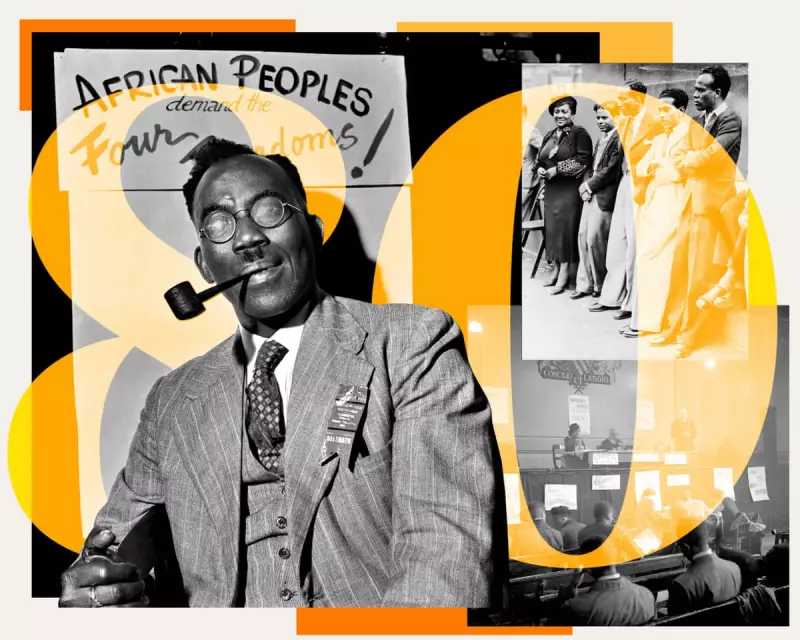
In the autumn of 1945, as Britain emerged from the shadow of world war, an extraordinary gathering took place in Manchester that would quietly set in motion the unravelling of the British Empire itself. The Fifth Pan-African Congress, held from 15-21 October, brought together future presidents and freedom fighters in what became known as the 'Congress of the Unheard'.
The industrial city of Manchester, still bearing the scars of wartime bombing, provided an unlikely backdrop for what historian Hakim Adi describes as "the most significant political gathering of the 20th century for Africa and its diaspora." For six days, Chorlton Town Hall became the epicentre of a revolutionary vision that would ultimately liberate nearly a billion people from colonial rule.
The Architects of Freedom
Among the 200 delegates were names that would soon echo across the African continent: a young Kwame Nkrumah, who would become Ghana's first president; Jomo Kenyatta, future leader of an independent Kenya; and South African activist Peter Abrahams. They were joined by Caribbean intellectuals like George Padmore and Trinidadian historian C.L.R. James.

What made this congress particularly remarkable was its working-class character. Unlike previous gatherings dominated by middle-class intellectuals, Manchester's event included dockworkers, factory labourers, and trade unionists - many from the city's own growing African and Caribbean communities.
A Blueprint for Liberation
The congress produced a radical manifesto that declared: "We are determined to be free." Its resolutions demanded immediate independence for African nations, an end to racial discrimination, and economic justice. The document served as a practical blueprint for independence movements across the continent.
Professor Adi emphasises the congress's lasting impact: "Within 20 years, 35 African nations had achieved independence. The political strategies, the networks, the ideological foundations - much of it can be traced back to those six days in Manchester."
Manchester's Hidden Legacy
Today, few physical reminders of the congress remain in Manchester. The original Chorlton Town Hall building still stands, but there's no permanent memorial to what was achieved within its walls. Local community groups and historians are now campaigning to raise awareness of this pivotal moment in global history.
As we mark the 80th anniversary, the Manchester Congress stands as a powerful reminder that revolutionary ideas often emerge from unexpected places. From the heart of industrial Britain came the vision that would ultimately transform the African continent and redefine Britain's place in the world.