Could the world's most famous painting have a scandalous, undressed twin? This tantalising question has haunted art historians for centuries, weaving a mystery that stretches from the Louvre to the Loire valley and even to a stately home in Norfolk. Now, a compelling new theory suggests the answer may finally be within reach, potentially rewriting a chapter of Renaissance art history.
The Nude 'Joconda' of Georgian England
The trail begins not in Italy, but in 18th-century Britain. An engraving published by John Boydell offered Georgian libertines a chance to hang a very different version of the masterpiece in their boudoirs. This print, titled "Joconda," depicted a woman in the exact pose of the Mona Lisa, complete with her enigmatic smile and elegantly crossed hands. The key difference? She was naked from the waist up.
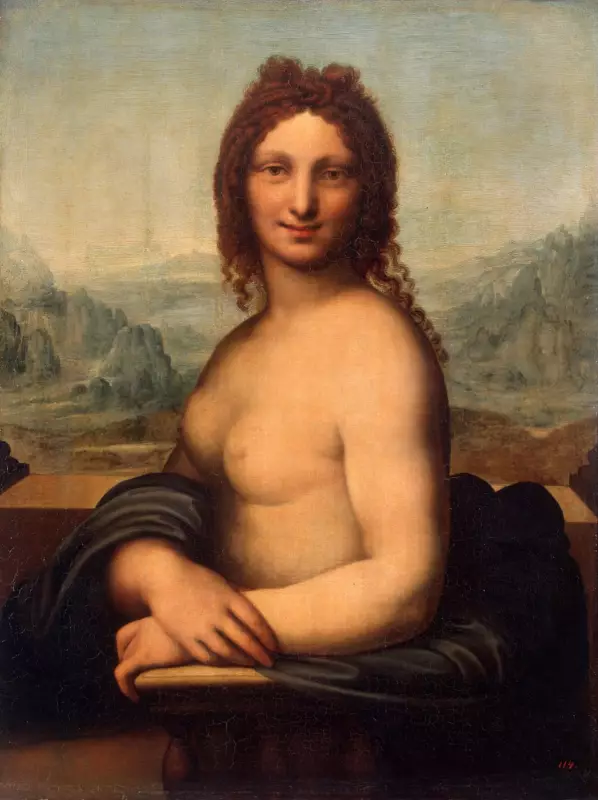
The engraving's caption stated it was reproduced from a painting by "Lionardo da Vinci" hanging "in the Gallery at Houghton." This refers to Houghton Hall in Norfolk, the home of Britain's first and notoriously corrupt Prime Minister, Sir Robert Walpole. His son, Horace Walpole, catalogued the collection in 1743, apparently believing their "Joconda" was the real deal, describing her as "reckon'd the handsomest Woman of her Time" and mistress to King Francis I of France.

That painting no longer resides in Norfolk. In 1779, Walpole's vast art collection was sold to Catherine the Great of Russia. Today, the nude Mona Lisa hangs in the State Hermitage Museum in St Petersburg, attributed not to Leonardo himself, but to an unnamed 16th-century follower. This attribution raises the central question: if this is the work of an imitator, was there an original nude version by the master to copy?
A Trail of Clues: From the Loire to a Chantilly Cartoon
The investigation leads to France, where Leonardo spent his final years. In October 1517, at his chateau in the Loire, he received visitors: Cardinal Luigi of Aragon and his secretary, Antonio de Beatis. De Beatis recorded being shown three paintings, including a portrait of "a certain Florentine woman" made for the late Giuliano de' Medici. This is widely accepted to be the clothed Mona Lisa we know today, but Leonardo's claim about its patron was misleading.
A document at Heidelberg University proves the portrait was begun in Florence in 1503 for silk merchant Francesco del Giocondo, depicting his wife, Lisa. So why did Leonardo mention Giuliano de' Medici? The critic's hypothesis is that Leonardo may have painted a nude version for the nobleman.
A crucial piece of evidence supports this. In the Musée Condé at the Château de Chantilly, north of Paris, there exists a mysterious full-scale preparatory drawing, or "cartoon," dated to 1514-1516. It depicts a nude woman in the identical seated pose as the Mona Lisa, with the same positioning of the hands and arms. In 2017, the Louvre announced technical analysis provided strong evidence the drawing was at least partly by Leonardo's own left hand.
The creator of the Hermitage painting likely worked from this Chantilly sketch or a lost painting based on it. This makes it highly probable that Leonardo, perhaps with workshop assistance, did indeed create a nude Mona Lisa.
Raphael's Revolution and the Legacy of Erotic Art
Further evidence hangs in Rome's Barberini Palace. Raphael's La Fornarina (c. 1520) portrays a topless woman with a small, knowing smile, seated in a garden. The similarities to Leonardo's composition are striking and, the argument goes, too close for coincidence. Raphael was a great admirer and assimilator of Leonardo's work. It is suggested he saw the revolutionary nude Mona Lisa concept at Leonardo's Roman studio and was inspired to create his own sensual masterpiece.
This nude version, the theory proposes, acted like a grenade in High Renaissance art, radicalising the depiction of the female body. It influenced not only Raphael but also his assistant Giulio Romano and later masters like Titian.

Leonardo was no stranger to erotic themes. His lost Leda and the Swan was famously sensual. In his notebooks, he wrote that a painter could bring a patron's lover to life in a way a poet could not, so that "the lovestruck judge" would prefer the picture. The critic's final hypothesis is that Leonardo painted the nude version as a intimate memento for Giuliano de' Medici, perhaps portraying a mistress the nobleman had to give up upon his marriage in 1515.
Ultimately, if Leonardo did create a nude Mona Lisa, it reveals something profound about the artist and his most famous work. It shows he was confident enough in the iconic power and perfection of the original to playfully travesty it. His masterpiece was legendary from the moment it was seen, and its creator, it seems, knew it.