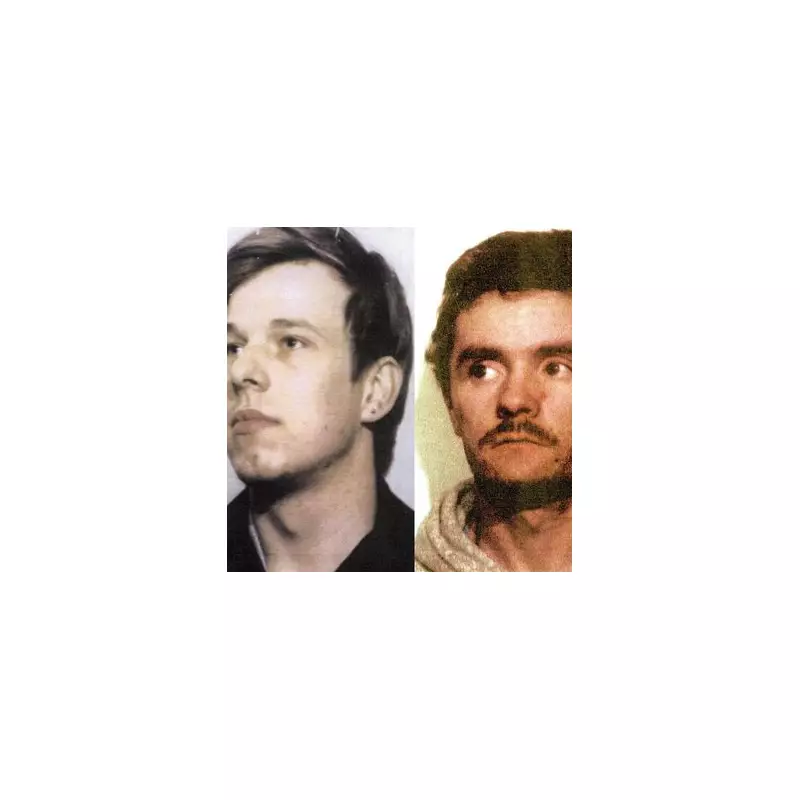
The case of the 'Railway Killers' remains one of the most chilling chapters in British criminal history. This is the story of John Francis Duffy and David Mulcahy, childhood friends whose bond was forged in cruelty and who unleashed a reign of terror across London and southern England in the 1980s.
A Bond Forged in Brutality
John Duffy and David Mulcahy were inseparable from their schooldays at Haverstock School in Chalk Farm, north London. Long before they targeted women, their disturbing nature was evident. Fellow pupils once discovered the pair laughing and covered in blood after they had beaten a hedgehog to death, using it as a cricket ball.
Psychologists later noted that such a blatant lack of empathy for an animal's suffering in childhood is a recognised trait in individuals who escalate to violence against humans. This theory proved tragically accurate as the duo's fantasies grew more sinister and violent.

The Descent into Terror
After leaving school, both men appeared to settle. They married and held jobs—Mulcahy as a plasterer and builder, Duffy as a carpenter for British Rail. This latter role provided him with intimate knowledge of the railway network that would become their hunting ground.
Their first known rape occurred in 1982 in North London. Over the next year, at least 18 women were attacked in similar fashion near deserted railway stations. The spree paused briefly in 1983, possibly due to Duffy's marital separation, but resumed with increased ferocity.
The violence escalated horrifically on 29 December 1985. Alison Day, 19, was abducted near Hackney Wick station, raped, and then murdered. Her body, bound and gagged, was found in the River Lea 17 days later, leading to a dedicated police operation, 'Operation Lea'.
They were not finished. In April 1986, 15-year-old Maartje Tamboezer was killed in Surrey after being tripped from her bike. A month later, in May, 29-year-old Anne Locke, a newlywed secretary, became their third murder victim in Hertfordshire.
The Manhunt and Groundbreaking Profiling
The third murder triggered 'Operation Trinity', the first multi-force murder investigation since the hunt for the Yorkshire Ripper. Facing a case involving up to 40 rapes and three murders, and with DNA technology still in its infancy, detectives turned to a novel technique: psychological offender profiling.
Renowned behavioural scientist Professor David Canter provided a detailed profile of the killer. Astonishingly, 13 of his 17 observations matched John Duffy perfectly. This success helped establish psychological profiling as a standard tool in British policing.
Duffy was arrested and, in February 1988, found guilty of two murders and four rapes. Following further confessions, he received additional sentences. David Mulcahy evaded justice longer but was finally convicted in 2001 of three murders, seven rapes, and five conspiracies to rape. He received three life sentences.
The legacy of the Railway Killers is one of profound tragedy for their victims and families. It also marks a pivotal moment in British criminal investigation, where the dark psychology of the killers was used as a key to unlock the case.