Roman Artifact Discovery Challenges Columbus' Discovery of America
For centuries, history has credited Christopher Columbus with discovering the New World in 1492. However, a remarkable archaeological find in the Americas, dating back to the 1930s but recently re-examined, is sparking intense debate about whether the Romans might have reached the continent over a thousand years earlier.
The Tecaxic-Calixtlahuaca Head: A Mediterranean Mystery in Mexico
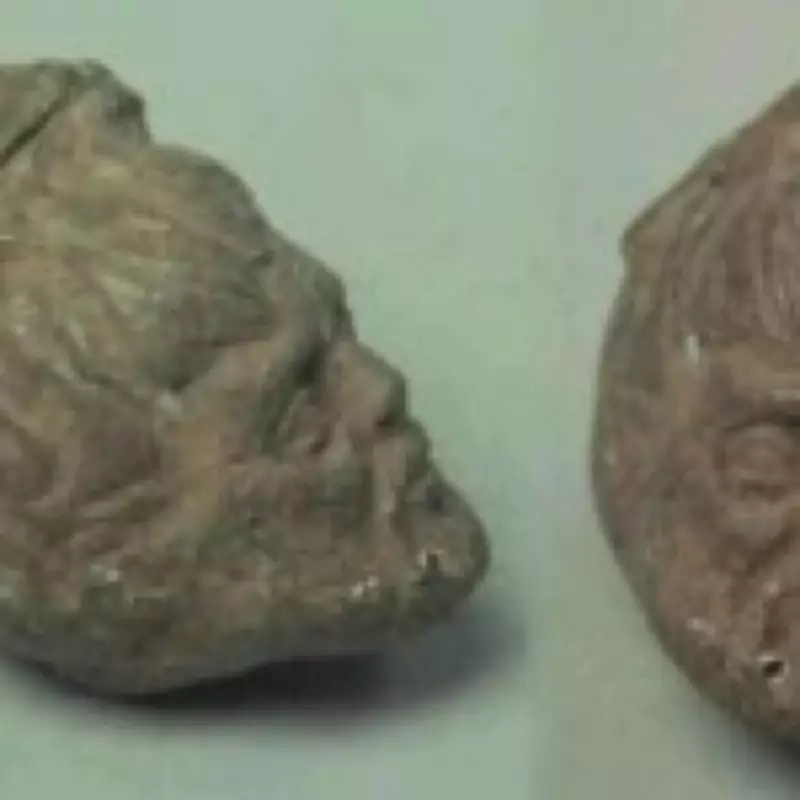
Known as the Tecaxic-Calixtlahuaca Head, this 1,800-year-old terracotta artifact was originally discovered in 1933 near Mexico City, Mexico. It was found inside a sealed, pre-Hispanic burial site beneath several intact layers, indicating it had remained undisturbed since its placement. Experts note that the head's features bear a striking resemblance to objects from the ancient Mediterranean rather than indigenous Mesoamerican traditions.
In the 1960s, archaeologist Bernard Andreae declared the artifact was 'without any doubt Roman'. Further testing suggests it predates European contact with the Americas, potentially buried as early as the 15th century. This has led to the provocative idea that while Columbus is traditionally credited, the Romans may have visited a millennium before.

Stylistic Analysis and Historical Context
Andreae elaborated on the stylistic examination, stating: 'The stylistic examination tells us more precisely that it is a Roman work from around the 2nd century AD, and the hairstyle and the shape of the beard present the typical traits of the Severan emperors' period [193-235 AD], exactly in the "fashion" of the epoch.'
However, theories about the artifact vary widely. Many experts argue that strong evidence is required to prove anyone discovered the Americas before Columbus. Critics point to the lack of Roman ships or other artifacts in the region to support such claims. Some suggest the head was brought to Mexico much later, possibly as part of a hoax, especially given gaps in the records from the 1933 dig led by archaeologist Jose Garcia Payon, who was absent for part of the excavation.
Potential Explanations and Oceanographic Insights
Despite skepticism, the artifact's discovery in a sealed burial site beneath multiple floor layers suggests it has been there for centuries, potentially before Europeans arrived in the early 16th century. Researchers propose that ancient ships could have been swept across the Atlantic by currents, such as the Canary Current and the North Equatorial Current, which are capable of transporting debris over vast distances.
This scenario could explain how the artifact ended up in the Americas, where it might have been incorporated into local cultural or burial practices, leaving no trace of its origin. Oceanographers have previously noted that certain currents can carry objects across oceans under specific conditions.
Broader Implications for Historical Narratives
The origins of the Tecaxic-Calixtlahuaca Head are likely to remain a mystery, but it raises important questions about how to treat such anomalies in historical records. The idea of pre-Columbian European visits has long been dismissed, but the confirmation of Norse settlements at L'Anse aux Meadows in Newfoundland, Canada, in the 1960s shows that history books can be rewritten.
This discovery challenges conventional narratives and encourages a re-evaluation of early transatlantic contact. As debates continue, the artifact serves as a reminder that history is often more complex than it appears, with potential for new findings to reshape our understanding of the past.