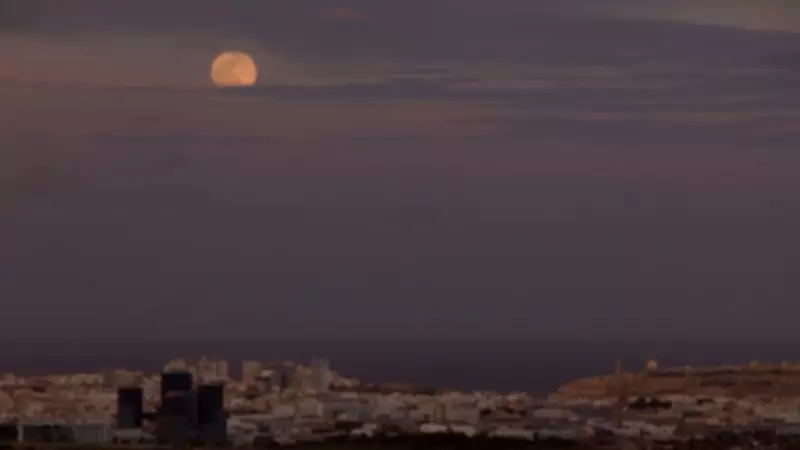
February's Snow Moon Reaches Its Peak Illumination
The second full moon of the year, commonly known as the Snow Moon, reached its peak illumination at 10.09pm UK time on Sunday, according to the Royal Observatory Greenwich. Even if you missed the exact moment of fullness, the lunar disc will continue to appear virtually complete for a couple of days as it transitions into its next phase, the Waning Gibbous, where the illuminated portion gradually diminishes.
The Rich Cultural Origins of the Snow Moon
This celestial event derives its primary name from Native American tribes in the northeastern regions of the United States, who named it in recognition of the heavy snowfall typically experienced during this month. NASA confirms this historical attribution, highlighting how indigenous communities closely observed lunar cycles as a fundamental method of timekeeping.
Beyond the Snow Moon, February's full moon carries two other evocative traditional names. It is also referred to as the Storm Moon, reflecting the turbulent and unpredictable weather patterns of the season. Alternatively, it is known as the Hunger Moon, a sombre reminder of the historical scarcity of food and the challenging hunting conditions that characterised this period in the annual cycle.

Optimal Viewing Techniques for Lunar Observation
Observing the full moon requires no special equipment; it is perfectly visible to the naked eye. However, for those seeking a more detailed experience, NASA recommends using binoculars. This simple tool reveals fascinating surface features such as craters and the broader outlines of large mountain ridges.
For an even more immersive view, a telescope can be employed. While it magnifies the moon to a scale where the entire disc cannot be taken in at once, it unveils incredible detail. Viewers can expect to see real mountains, valleys, and rilles – the intricate cracks in the lunar surface formed by ancient lava flows.
The Complete Lunar Calendar: Names and Meanings
The Snow Moon is part of a rich tradition where each of the 12 or 13 annual full moons is given a distinctive name, predominantly by Native American tribes. These names were later adopted by Colonial Americans and have since become embedded in modern culture. Here is the full list according to the Royal Observatory Greenwich:
- January: Wolf Moon – Named for the howling of wolves during the scarce midwinter.
- February: Snow Moon – Reflects the typical heavy snowfall of the month.
- March: Worm Moon – Marks the appearance of worm trails in the thawing ground.
- April: Pink Moon – Named after early blooming wildflowers.
- May: Flower Moon – Celebrates the abundant blooming of spring.
- June: Strawberry Moon – A North American nod to the strawberry harvest.
- July: Buck Moon – Honors male deer regrowing their antlers.
- August: Sturgeon Moon – Named for the once-plentiful sturgeon fish.
- September: Full Corn Moon – Associated with crop harvesting; its bright light aided night work.
- October: Hunter's Moon – Provided extended light for hunting prey in bare fields.
- November: Beaver Moon – Linked to beaver trapping or dam-building for winter.
- December: Cold Moon – A straightforward reference to winter's chill. Also known as the Long Night Moon or Oak Moon.
The Phenomenon of the Blue Moon
The phrase "once in a blue moon" originates from this rare lunar event. A Blue Moon occurs approximately every two and a half years. This happens because the lunar cycle of about 354 days is roughly 11 days shorter than our calendar year. Over time, this discrepancy accumulates, resulting in an extra, 13th full moon within a single year. The term is also sometimes used to describe a second full moon occurring within one calendar month. Unlike the traditional monthly moon names, the exact origin of the term Blue Moon remains somewhat mysterious.