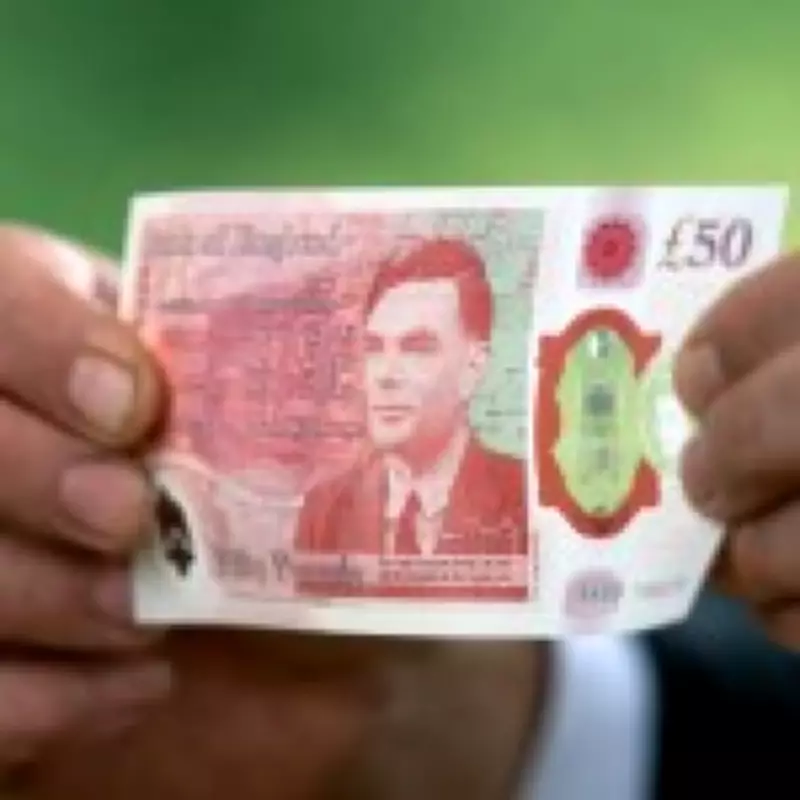
Turing Family Breaks Silence on Banknote Wildlife Shift Amid Political Backlash
The family of Alan Turing, the celebrated mathematician and codebreaker, has publicly addressed the growing controversy surrounding the Bank of England's decision to replace historical figures with wildlife on UK banknotes. This move has sparked significant debate, with political figures like Kemi Badenoch and Nigel Farage voicing strong opposition, particularly to the removal of Winston Churchill from the £5 note.
Family Emphasizes Education Over Symbolism
James Turing, the great nephew of Alan Turing and founder of The Turing Trust, expressed his perspective in an interview with Metro. He described the public agitation over banknote designs as "a bit odd" given the global conflicts and pressing issues facing the world today. Turing stressed that the focus should be on educating young people about the nuanced details of historical and contemporary issues, rather than simplifying debates to comparisons like "beavers are more or less important than Churchill."
While honored by Alan Turing's previous feature on the £50 note, James Turing highlighted that the true importance lies in leveraging his legacy to make a positive impact. The Turing Trust, for instance, donates IT equipment to support digital skills for hundreds of thousands of students in impoverished regions, embodying this practical approach to legacy.

Bank of England's Rationale and Public Consultation
The Bank of England announced earlier this month that wildlife will adorn the next series of banknotes, marking a departure from over 50 years of featuring historical figures. Currently, Winston Churchill appears on the £5 note, Jane Austen on the £10, and JMW Turner on the £20. The central bank cited enhanced security against counterfeiting and a celebration of nature as key reasons for the change.
A panel of experts will compile a shortlist of wildlife candidates for public consultation, aiming to engage Britons in the selection process. However, this shift has not been without criticism. Emma Soames, Churchill's granddaughter, dismissed accusations of "wokery" but acknowledged that her family understood his presence on currency was temporary.
Historical Context and Legacy Debates
Alan Turing, often dubbed "the father of computer science," played a pivotal role in World War Two by cracking intercepted messages, aiding the Allies' victory. Despite his contributions, he faced persecution for his homosexuality, leading to a conviction in 1952 and his death by cyanide poisoning in 1954, ruled a suicide. He received a royal pardon nearly six decades later.
James Turing reflected on history's lessons, warning against oversimplifying complex figures. He noted, "no iconic Briton has ever been completely infallible either," alluding to Churchill's contested legacy regarding race and colonialism. This underscores the broader challenge of balancing historical recognition with contemporary values.
Political Reactions and Public Sentiment
The decision has ignited a firestorm of political commentary. Kemi Badenoch labeled it "a silly thing to do," while Nigel Farage called it "absolutely crackers." These reactions highlight the deep-seated emotions tied to national symbols and historical representation.
Meanwhile, the fifth-great niece of Jane Austen described the move as "peculiar" and a "real shame," adding to the chorus of dissent from those connected to the figures being replaced. As the Bank of England proceeds with its plans, the debate continues to evolve, touching on themes of identity, heritage, and environmental awareness.
In conclusion, the Turing family's intervention shifts the focus from symbolic disputes to substantive educational efforts, urging a more nuanced understanding of history amidst the ongoing banknote redesign controversy.