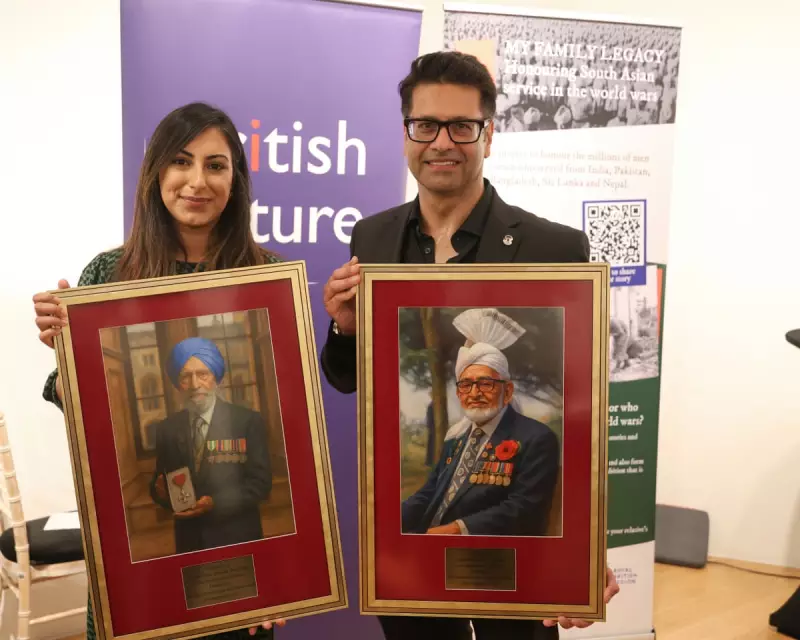
A major new initiative is calling on British Asian families across the United Kingdom to help preserve the stories of what's being called the 'greatest generation' – the 2.5 million servicemen from South Asia who fought for Britain during the Second World War.
The urgency comes as new polling data reveals a startling gap in public knowledge. Half of the British public is unaware that members of the armed forces from India, Pakistan, Bangladesh, Nepal, and Sri Lanka served in the conflict, with only around 60% of British Asians themselves aware of this monumental contribution.
Preserving a Fading Legacy
The My Family Legacy project, a joint venture by the thinktank British Future and the British Asian newspaper Eastern Eye, is creating an online archive to ensure these stories are not lost to history. Backed by the Royal British Legion, the project actively seeks stories, photographs, or even just the names of ancestors and living relatives who served.

This effort represents the largest volunteer army in history, a fact often overlooked in mainstream historical narratives. The project aims to build a comprehensive record of these veterans' experiences, highlighting the shared histories and sacrifices that helped shape modern Britain.
Parliamentary Tribute to Two Heroes
The project's importance was recently underscored at a UK parliamentary memorial event hosted by Tanmanjeet Singh Dhesi MP, Chair of the House of Commons Defence Committee. The event on 4 November honoured two late veterans whose stories are among the first on the new site.
It paid tribute to Havildar Maj Rajinder Singh Dhatt MBE, who was part of the crucial Battle of Kohima that repelled a Japanese attack on India. The event also honoured Sgt Muhammad Hussain, who ran away from home at just 16 to join up and fought in the brutal Battle of Monte Cassino in Italy.
Their grandchildren are now championing the cause. Ejaz Hussain, Sgt Hussain's grandson, stated it is "imperative" that these narratives are recorded. "The shared history, as a united people fighting for one common cause in spite of their differences, serves as the ultimate metaphor for future generations," he said.
Amrit Kaur Dhatt, Maj Singh Dhatt's granddaughter, echoed this, expressing concern that "today’s society clearly hasn’t learned enough from history." She emphasised the importance of capturing stories from Commonwealth and ethnic minority soldiers, which were often "left out of mainstream history."
A Unifying Force for Modern Britain
Leaders behind the project see it as a vital tool for social cohesion. Sunder Katwala, Director of British Future, said the aim is "to help people discover, document and share their family stories of courage, contribution, service and sacrifice." He believes this shows "how our traditions of remembrance can unite today’s modern, diverse Britain."
This sentiment was supported by Gail Walters, Director of Network Engagement at the Royal British Legion. She confirmed the charity's commitment to ensuring more families feel included in remembrance, stating that honouring Britain's South Asian military personnel will provide a "fuller picture" of history and the "integral role" they played in the national story.
Mr Dhesi MP summed up the driving force behind the initiative, stating he feels a duty to ensure that the sacrifices of Black and Asian Commonwealth service members are not "airbrushed and ignored." For many, this project is not just about preserving the past, but about learning its lessons for a more united future.