Vatican Intervenes to Erase Angel Mural Resembling Italian Prime Minister
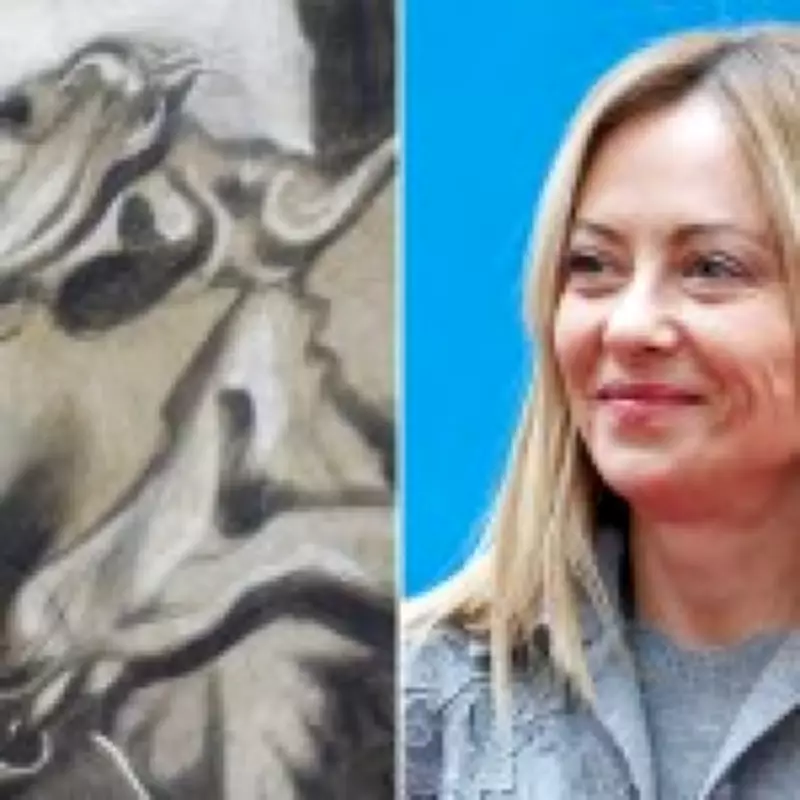
A contentious mural featuring an angel with a face strikingly similar to Italian Prime Minister Giorgia Meloni has been scrubbed off on direct orders from the Vatican. The fresco, located in the historic Basilica of San Lorenzo in Lucina in Rome, became a focal point of controversy after its restoration, with many fearing it could be exploited as a propaganda tool for the right-wing leader.
Church Overwhelmed by Visitors Seeking the Unholy Lookalike
Hundreds of locals and tourists flocked to the church to witness the angelic depiction, which many interpreted as a political statement. This influx disrupted normal religious activities, prompting the priest, Daniele Micheletti, to take decisive action. When the church reopened on Wednesday, the Meloni-like face had been crudely painted over, leaving the angel headless and sparking widespread discussion.
Father Micheletti explained to Italian news agency ANSA, 'I always said that if the Meloni image proved divisive, we would remove it. There was a procession of people that came to see it instead of listening to Mass or praying. It wasn't acceptable.' He emphasised that the restoration was necessary due to water damage and noted that the artwork dated back to 2000, thus not falling under strict heritage protection laws.

Restorer Denies Intentional Depiction of Meloni
The amateur artist responsible for the restoration, Bruno Valentinetti, was quoted by La Repubblica as confirming he had been instructed by the Vatican to erase the mural. Valentinetti, who worked on the fresco for two years and completed it a year ago, vehemently denied any intention to depict Meloni. He stated, 'They asked me to fix it and I did. I stressed it's not Meloni—I merely traced the outline of the original design and put the colour back in.'
The original artwork portrays Umberto II, Italy's final king who reigned for just 34 days, with two cherub-like angels watching over him. La Repubblica reported, 'Before the restoration, there was a generic cherub. Today, it is the face of the most powerful woman in the country.' This observation heightened concerns about the potential misuse of religious art for political ends.
Political and Cultural Reactions to the Controversy
The incident has drawn sharp criticism from opposition figures and political groups. Irene Manzi, an opposition lawmaker, labelled the touch-up as 'unacceptable,' while the Five Star Movement party issued a statement: 'We cannot allow art and culture to risk becoming a tool for propaganda or anything else, regardless of whether the face depicted is that of the prime minister.'
In a lighter response, Prime Minister Meloni herself took to Instagram to post a picture of the fresco, commenting humorously, 'No, I'm definitely not like an angel.' This move helped diffuse some of the tension, though the debate continues to simmer.
Authorities to Investigate Restoration Compliance
Italy's cultural heritage authorities, the Soprintendenza Archeologia, Belle Arti e Paesaggio, have announced they will inspect the restoration. They plan to compare it with archive materials to determine if any unauthorised changes were made. A spokesperson clarified, 'We will compare it with archive materials to determine not so much who the restoration resembles, but whether any changes have been made, because the restorer would have had to follow the original lines.'
This case underscores broader issues surrounding the intersection of art, religion, and politics in Italy, raising questions about artistic integrity and the potential for cultural symbols to be co-opted for partisan purposes. As the investigation unfolds, it highlights the delicate balance between preserving historical artworks and preventing their misuse in contemporary political discourse.