

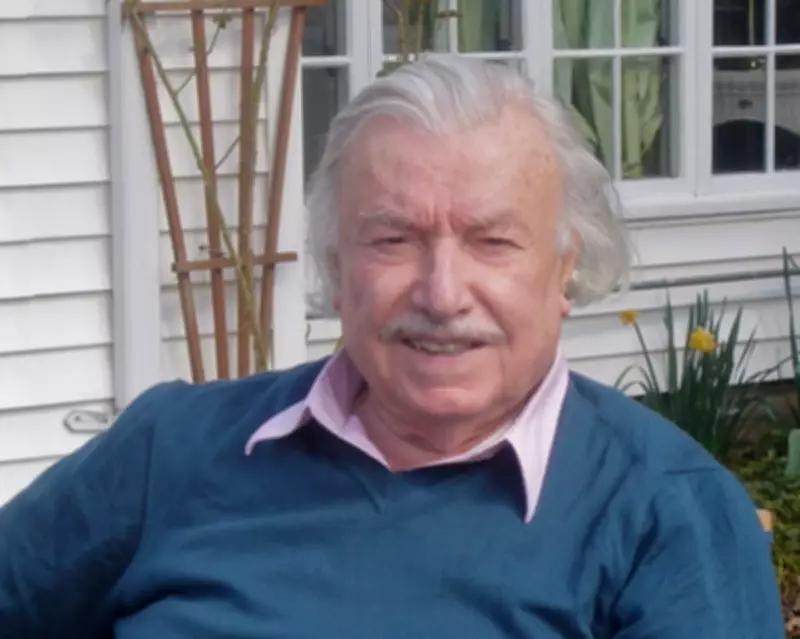
Walid Khalidi, Pioneering Historian and Two-State Advocate, Dies at 100
Walid Khalidi, a distinguished historian and public intellectual who played a crucial role in shaping the Palestinian narrative and advocating for a two-state solution to the Arab-Israeli conflict, has passed away at the age of 100. His groundbreaking research overturned long-held Israeli myths about the 1948 Nakba, while his diplomatic efforts helped steer the Palestinian national movement toward accepting a two-state framework.
Academic Contributions and Historical Impact
Khalidi was the first professional historian to meticulously document how approximately 750,000 Arab refugees fled or were forcibly displaced from their homes during the 1947-1948 wars, as Jewish military forces advanced. This work directly challenged the founding Israeli narrative that most Palestinians left due to orders from Arab leaders. His seminal articles, such as Why Did the Palestinians Leave? published in 1959, exposed the absence of such commands and highlighted "Plan D," a Zionist military strategy to seize Palestinian territories and destroy villages.
Among his over 40 books, Before Their Diaspora (1984) and All That Remains (1992) remain widely read texts on Palestinian history. The former provides a photographic account of Palestinian life from 1876 to 1948, while the latter offers an exhaustively documented record of 400 villages destroyed or depopulated in 1948. These works have become foundational in establishing the Palestinian historical narrative and have been reinforced by subsequent research from Israeli historians.

Diplomatic and Political Influence
Beyond academia, Khalidi was deeply involved in politics and diplomacy. In 1963, he co-founded the Institute of Palestine Studies in Beirut, serving as its general secretary until 2016. The institute's Journal of Palestinian Studies, launched in 1971, remains a leading academic publication in the field. Khalidi's influence extended to generations of students during his tenure as a professor in Beirut, Harvard, and Princeton, many of whom became leaders across the Arab world.
In 1978, he published a courageous article titled Thinking the Unthinkable in Foreign Affairs, which made the first detailed case for a Palestinian state alongside Israel. This publication, backed by Yasser Arafat, helped pave the way for the PLO's historic 1988 decision to endorse a two-state solution and subsequent U.S. recognition of the PLO. Khalidi continued to advocate for this framework throughout his life, despite opposition from figures like Benjamin Netanyahu, whom he once described as "the most dangerous political leader in the world today."
Early Life and Personal Background
Born in Jerusalem in 1925 into a prominent family with roots dating to pre-Crusader times, Khalidi grew up in a highly cultured environment. His father, Ahmad Samih Khalidi, was a dedicated educationist and principal of the Arab College, while his stepmother, Anbara Salam, was a pioneering Lebanese feminist. Educated at St. George's school in Jerusalem and holding a degree in classics from London University, Khalidi was fluent in both English and classical Arabic, with a diverse reading range from Abbasid poetry to P.G. Wodehouse.
He married Rasha Salam in 1945, and together they maintained a salon for politicians, diplomats, and academics in Beirut and later at Harvard. Rasha predeceased him in 2004. Khalidi is survived by his son, Ahmad, daughter, Karma, and half-brother Tarif.
Legacy and Continued Relevance
Khalidi's work continues to resonate in contemporary discussions on the Middle East conflict. His efforts to bridge divides included early dialogues with Israeli figures like Abba Eban and Matti Peled, as well as engagements with American policymakers such as Zbigniew Brzezinski and George Shultz. Despite the challenges posed by ongoing political tensions, his advocacy for a two-state solution remains a touchstone for peace efforts.

As a historian, diplomat, and intellectual, Walid Khalidi's legacy endures through his scholarly contributions, his role in fostering Palestinian national identity, and his unwavering commitment to a just resolution of the conflict. His passing marks the loss of a pivotal figure whose influence spanned academia, politics, and international diplomacy.





