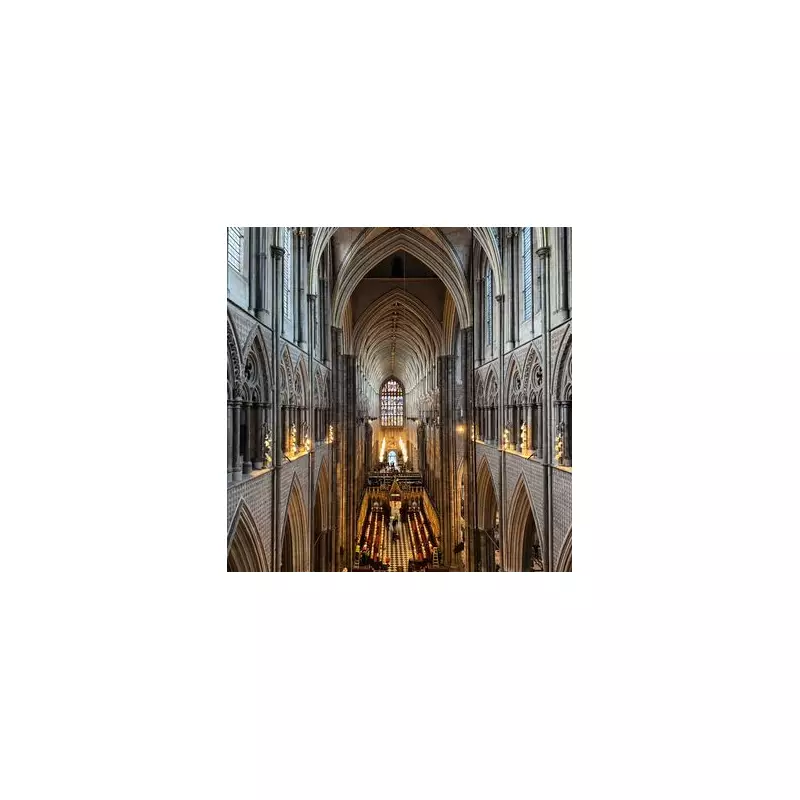
Westminster Abbey stands as one of London's most revered and visited landmarks, synonymous with coronations, royal weddings, and a millennium of British history. Yet, behind its grand Gothic facade lie layers of surprising stories, clever details, and little-known facts that even seasoned Londoners might overlook.
Clever Codes and Forgotten Islands
The Abbey's history is etched in more than just stone. Take its old telephone number, 222 1234. This wasn't a random sequence but a clever early example of alphanumeric dialling. On rotary phones, the number 2 corresponded to the letters A, B, and C. This meant the word 'ABBey' could be dialled as 222, a subtle nod that most callers would never have noticed.
Long before it became a centre of power, the Abbey's very foundations were laid in a very different landscape. It was originally built on Thorney Island, a small patch of firm ground surrounded by the marshes and waterways of the Thames. This isolated location was chosen for its stability, and the Abbey remained there until King Henry III embarked on a major Gothic rebuild in the 13th century, transforming it into the structure we recognise today.

Modern Martyrs and Medieval Theft
High above the Great West Door, among saints and kings, sits a figure from modern history: Martin Luther King Jr. His statue was added in 1998 as one of ten 20th-century martyrs from around the world, chosen for their stand against injustice. This powerful addition fills niches that had been empty for centuries, blending a story of civil rights with medieval stonework.
In the Middle Ages, the Abbey was considered so secure that it was used to store the Crown Jewels. This trust was shattered in 1303 when thieves successfully stole a vast hoard of royal treasure. The scandal that followed led to wrongful arrests and ultimately prompted the permanent move of the jewels to the Tower of London, where they remain under guard to this day.
How to Experience the Abbey for Free
While the Abbey charges an admission fee for tourists, it importantly remains a working place of worship. This means there is a legitimate way to step inside without paying. Anyone wishing to pray can enter for free during public opening hours. Entry is via the Great West Door, where you can ask an Abbey Marshal for directions to the quiet chapels.
This quiet policy is one of central London's best-kept secrets, offering a moment of peace and reflection amidst the bustle of the city. It serves as a reminder that beyond the crowds and the history, Westminster Abbey continues its ancient role as a living church.