World's Oldest Rock Art Possibly Discovered in Indonesian Cave
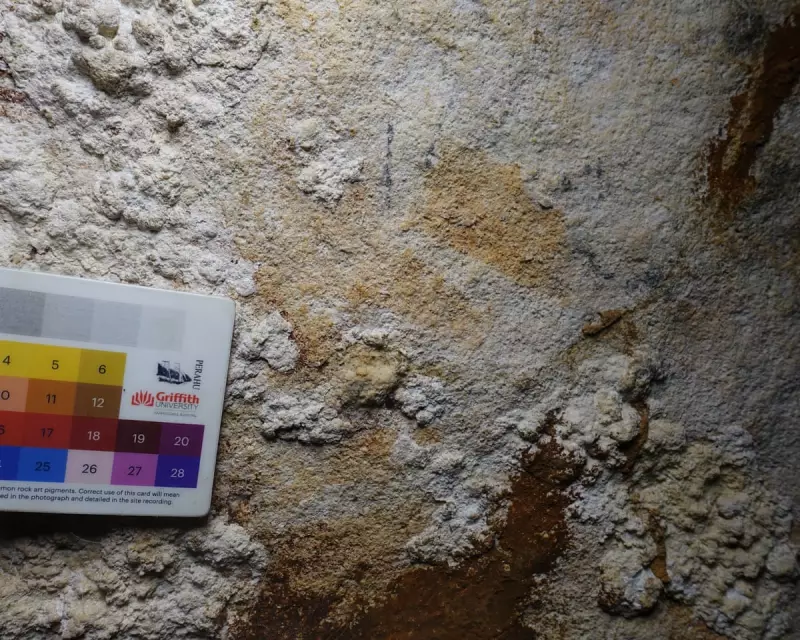
A remarkably ancient hand stencil, painted on a limestone cave wall in Indonesia, has been identified by archaeologists as potentially the world's oldest known rock art. The faded outline, created at least 67,800 years ago, had previously gone unnoticed among more recent paintings of animals and other figures in the popular tourist cave on Muna Island, part of south-eastern Sulawesi.
Groundbreaking Discovery and Dating
The discovery was made at Liang Metanduno cave, where researchers from Australia's Griffith University conducted extensive fieldwork. The team, led by Professors Maxime Aubert and Adam Brumm, determined the minimum age by dating tiny calcite deposits that had formed over the stencil. This method provides crucial evidence for understanding early human artistic expression.
Professor Maxime Aubert emphasised the significance of dating such artefacts, stating: "When you can date it, it opens up a completely different world. It's an intimate window into the past, and an intimate window into these people's minds." The cave has been used for painting over millennia, with fresh images adorning its walls for at least 35,000 years.

Migration Insights and Symbolic Meaning
Beyond its artistic value, this ancient stencil offers new perspectives on human migration patterns. It was most likely created by the ancestors of Indigenous Australians, supporting theories that northern Australia was settled at least 65,000 years ago. The rock art suggests some humans travelled on a northern route crossing Sulawesi during periods of lower sea levels, when land bridges opened between islands.
The hand stencil features narrow, pointy fingers, which researchers believe were intentionally modified, possibly holding symbolic meaning. Professor Adam Brumm commented: "Whether they resemble animal claws or more fancifully some human-animal creature that doesn't exist, we don't know, but there's some sort of symbolic meaning behind them."
Debate Over Complexity and Human Origins
In a paper published in Nature, the authors argue that the intentional modifications make this rock art "complex," likely the work of Homo sapiens. However, they acknowledge that other extinct human species, such as Neanderthals or Denisovans, cannot be ruled out. Neanderthals in Spanish caves have been dated to create ochre markings, including hand stencils, at least 64,000 years ago.
Professor Paul Pettitt of Durham University, who worked on the Spanish cave markings, offered a cautious perspective: "To call this complex is rather over-interpreting the hand stencil. Before writing grand narratives about the complexity and success of Homo sapiens, we really should consider other, potentially more interesting explanations of this fascinating phenomenon."
Broader Archaeological Context
This discovery adds to a rich history of cave paintings in Sulawesi, where previous finds include a narrative scene depicting human-like figures and a wild pig dated to at least 51,200 years ago. The ongoing research highlights the region's importance in understanding early human culture and migration across Asia and the Pacific.
The findings not only push back the timeline for rock art but also deepen our understanding of how ancient humans expressed themselves and navigated the world, offering a tangible connection to our distant past.