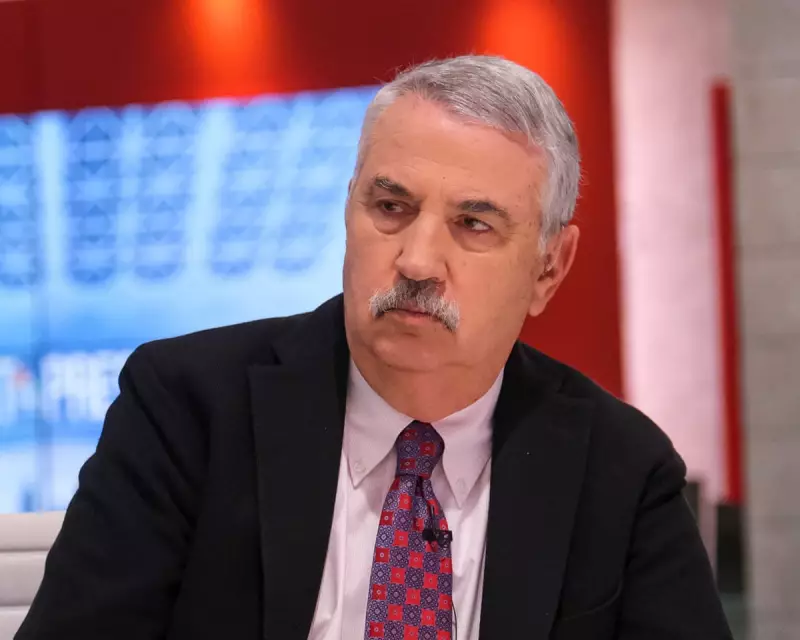
A prestigious Australian literary festival finds itself at the heart of a second major free speech controversy after a prominent Jewish American columnist revealed he was uninvited from its 2024 programme.
Friedman's Claim and the 'Timing' Issue
Thomas Friedman, a Pulitzer Prize-winning columnist for The New York Times, confirmed to Australian media that he was initially booked to appear via video link for the 2024 Adelaide Writers' Week. However, he was later informed by organisers that "the timing would not work out," effectively rescinding the invitation.
This revelation follows an extraordinary public accusation from former festival board member Tony Berg. Berg, who is of Jewish heritage, resigned from the board in October and has now publicly stated that the festival's director, Louise Adler, lobbied for Friedman's removal from the lineup.

A Clash of Perspectives and Accusations of Hypocrisy
The situation is deeply intertwined with another recent cancellation that rocked the festival. Earlier, Palestinian author and academic Randa Abdel-Fattah was disinvited from the 2024 event, a decision that prompted Adler's own resignation in protest.
Berg's resignation letter, which began circulating this week, alleges a stark inconsistency in the board's approach. He claims that while Adler programmed writers critical of Israel, she sought to cancel Friedman for expressing a differing view in a controversial column where he compared the Middle East conflict to the animal kingdom.
"I cannot serve on a board which employs a director of Adelaide Writers Week... who programs writers who have a vendetta against Israel and Zionism," Berg wrote. He accused both Adler and Abdel-Fattah of "utter hypocrisy" for defending free speech in one instance while allegedly seeking to deny it to Friedman.
Conflicting Narratives and Boardroom Fallout
The board's official communication at the time cited "last-minute scheduling issues" for Friedman's non-participation. This contrasts sharply with Berg's claim that Adler, alongside artistic director Ruth MacKenzie and chief executive Kath Mainland, presented the board with an ultimatum: disinvite Friedman or they would resign.
Adler responded to Berg's allegations by accusing him of breaching board confidentiality, calling it "indicative of the way the former board operated." Meanwhile, Abdel-Fattah disputed Berg's account that she "led the charge" to cancel Friedman, stating she was one of ten academics who wrote a letter of concern about racial tropes in his work.
The controversy has triggered significant leadership upheaval. Following Adler's resignation, the chair of the festival board, Tracey Whiting, also resigned her position. Subsequently, the Adelaide Festival Corporation announced the outright cancellation of the Writers' Week event planned for 2026.
The South Australian premier, Peter Malinauskas, has denied any direct government interference in the board's decisions, insisting it acted independently. The festival, once a celebrated fixture on the literary calendar, now faces profound questions about its commitment to artistic freedom, balanced programming, and internal governance.