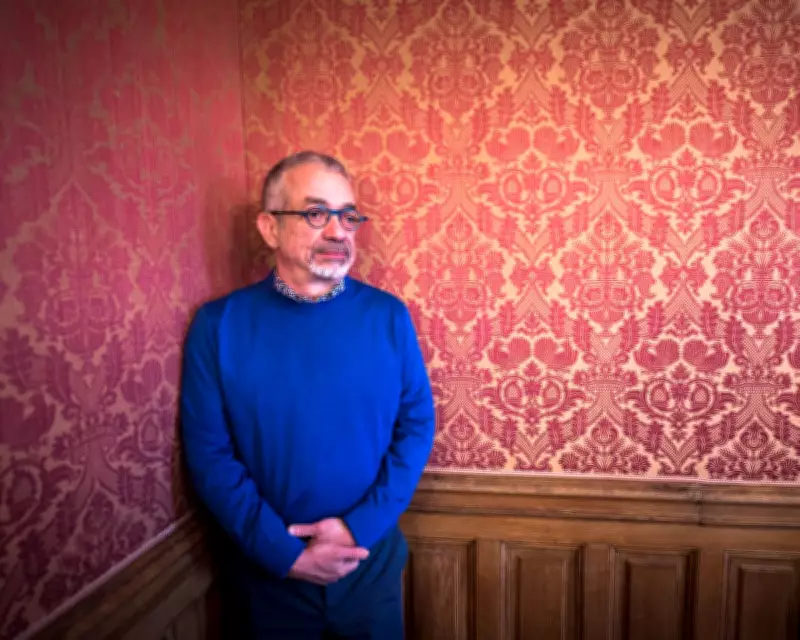
Rabih Alameddine's National Book Award Triumph with Beirut's Queer Tale
Rabih Alameddine has secured the prestigious 2025 US National Book Award for fiction with his seventh novel, The True True Story of Raja the Gullible (and His Mother). This compelling work presents an irresistible queer coming-of-age narrative set against the tumultuous backdrop of Beirut, Lebanon, spanning decades of conflict and contemporary crises.
A Drag Entertainer's Philosophical Journey
Meet Raja, the novel's unforgettable narrator: a 63-year-old gay philosophy teacher and drag performer who shares a cramped Beirut apartment with his spirited octogenarian mother, Zalfa. When Raja receives an invitation to a writing residency in the United States, he seizes the opportunity to recount his life story through a meandering, rule-breaking narrative style that mirrors the complexity of existence itself.
"A tale has many tails, and many heads, particularly if it's true," Raja declares early in the novel. "Like life, it is a river with many branches, rivulets, creeks and distributaries." This philosophical approach sets the tone for a story that refuses linear conventions while exploring profound themes of memory, survival, and authentic freedom.

Lebanon's Turbulent History as Backdrop
While the novel bookends its action in 2023, the majority of the narrative unfolds across pivotal moments in Lebanese history: the devastating civil war from 1975 to 1990, the 2019 banking collapse, the catastrophic Beirut port explosion in 2020, and the global COVID-19 pandemic. Rather than presenting a grim historical catalog, Alameddine transforms these events into rich settings for character development and social commentary.
The banking crisis becomes comedic material when Zalfa transforms into a protest icon, braving tear gas with homemade signs that declare "This Grandmother Wants All the Brothers of Whores in Jail" and achieving unexpected celebrity status among Raja's students. Similarly, the pandemic lockdown leads to an unlikely friendship between Zalfa and Madame Taweel, the neighborhood mafia boss, who bond over makeup tutorials and low-budget films featuring Raja in drag performances.
Trauma, Memory, and Unconventional Liberation
The novel's emotional centerpiece revolves around Raja's repressed memories of his wartime captivity at age fifteen. Held by a militiaman named Boodie just one year his senior, Raja experiences two months of conflicting emotions that blend horror with exhilaration, terror with desire, and powerlessness with unexpected agency. This complex relationship defies simple categorization, presented with elements of twisted domestic drama and occasional slapstick humor.
In a powerful rejection of conventional trauma narratives, Raja ultimately refuses both the label of victimhood and the pressure to forgive. "I felt free in that situation. Maybe even happy," he confesses, while simultaneously acknowledging his conscious choice not to forgive Boodie's participation in a murderous system. The true trauma, Raja suggests, came not from captivity itself but from returning to a society unwilling to accept his authentic identity.
Sartrean Philosophy Meets Drag Fabulousness
Throughout the novel, Raja draws inspiration from Jean-Paul Sartre's existential philosophy, particularly the concept that humans are "condemned to be free" and must create meaning through their own life projects. This philosophical framework combines unexpectedly with Raja's drag persona to create a unique perspective on identity formation and personal liberation.
Alameddine's narrative voice remains consistently buoyant and unapologetically camp, maintaining its cheerfulness even when addressing sobering historical events. The novel demonstrates remarkable emotional range, moving seamlessly from heartbreaking scenes of Raja's childhood struggles with familial expectations of masculinity to hilarious episodes of intergenerational bonding during national crises.

A Mother-Son Relationship Redefined
The relationship between Raja and Zalfa provides the novel's emotional anchor, evolving from conventional parent-child dynamics to something more complex and mutually sustaining. When Raja returns from captivity wearing a dress, Zalfa stands as the only person who doesn't turn away—a moment that encapsulates the novel's exploration of unconditional acceptance.
Their interactions during the pandemic lockdown reveal the depth of their bond, with Zalfa's need for human connection and storytelling finding expression through her unlikely friendship with the neighborhood mafia boss. These scenes balance humor with genuine pathos, illustrating how personal relationships can provide stability amid societal collapse.
Literary Achievement and Cultural Significance
The True True Story of Raja the Gullible (and His Mother) represents a significant achievement in contemporary literature, blending Lebanese history with queer narrative traditions in innovative ways. Published by Corsair, the novel has received critical acclaim for its rule-breaking approach to the trauma plot and its insistence that painful past experiences need not dominate present identity or narrative possibilities.
The novel delivers one compelling message with radical simplicity: while we cannot change historical events, we retain the power to determine what those events mean in the context of our lives. Through Raja's philosophical reflections and Zalfa's irrepressible spirit, Alameddine creates a testament to human resilience and the ongoing quest for authentic freedom.