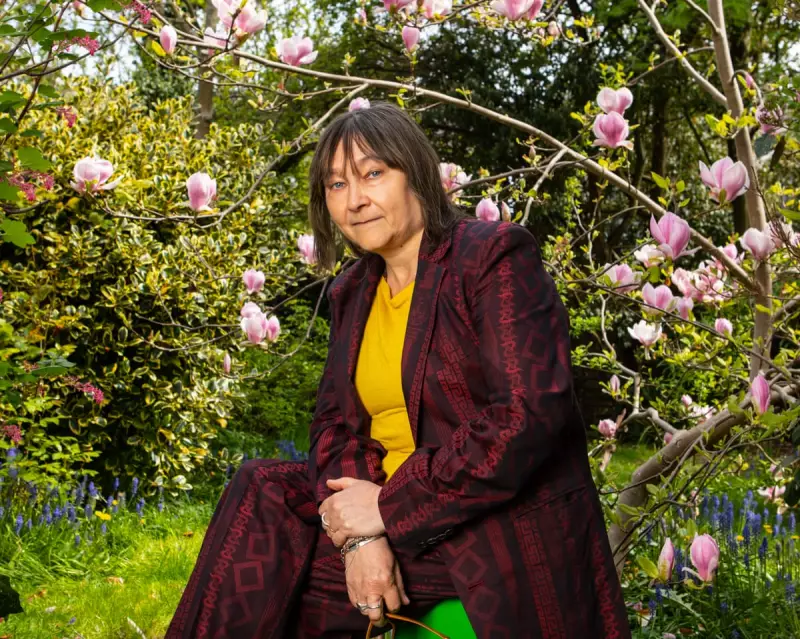
Ali Smith's Literary Journey: From Beatles to Brontë
Scottish author Ali Smith has offered a fascinating glimpse into her literary world, revealing the books that shaped her childhood, the writers who changed her perspective, and the works she returns to time and again. In a candid interview, the celebrated novelist shares her earliest reading memories and the profound impact certain texts have had on her creative development.
Early Reading Memories and Childhood Favourites
Smith's earliest reading memory involves teaching herself to read at just three years old using Beatles 45 record labels. She vividly recalls the moment of recognition when she first understood the words "I," "Feel," and "Fine," though she admits it took considerably longer to decipher "Parlophone." This early encounter with language would prove formative for the future author.
Growing up, Smith developed a passionate attachment to Charlotte's Web by E.B. White, which she championed during a classroom debate in 1972. Her teacher, Sister Vincent, initially objected to the book because "animals speak in it, and in reality animals don't speak." Smith recently reread the childhood favourite for the first time since she was nine and found herself moved to tears, describing it as "a fine book, about all sorts of language, injustice, imaginative power and friendship versus life's tough realities."

Transformative Literary Encounters
As a teenager, Smith experienced a pivotal moment when she discovered Liz Lochhead's Memo for Spring while babysitting for her English teacher. The slim volume of poetry by a young Scottish woman resonated deeply with Smith, who recognised a Scottish English close to her own voice that she had never encountered in published work before. This discovery "filled me with excitement and hope" and fundamentally changed what Smith believed was possible for Scottish writers.
Smith credits several writers with making her want to become an author herself, mentioning Muriel Spark and Toni Morrison as particular inspirations. She describes Morrison's body of work as "a sustained and courageous masterclass in how the aliveness in writing shifts the energy in life," while Spark's Loitering with Intent "will never fail to send me on my way rejoicing."
Enduring Favourites and Comfort Reads
The author reveals that she frequently returns to Simone de Beauvoir's fiction, particularly praising Les Belles Images (1966) as "a coruscating postwar satire on the performance of happiness." She also mentions never stopping her rereading of Ovid's Metamorphoses, describing it as "a book that'll always remind its readers to stay fluid and adaptable regardless of crazed changing times."
For comfort reading, Smith turns to Tove Jansson's The Summer Book, which she calls "a piece of perfection composed of loss, light, clarity and good nature." She marvels at how this "trim" book that "fits easily in the pocket of a jacket" manages to contain "much of everything in life that really matters."
Literary Discoveries and Current Reading
Smith admits to discovering several major writers later in life, including Vladimir Nabokov ("What sheer shining joy"), Fyodor Dostoevsky ("Where have I been all the years?"), and Henry James. She recounts reading James's The Golden Bowl in her garden one summer and becoming so engrossed that she found herself "running down our garden path shouting out loud to my partner: 'Sarah! Sarah! The golden bowl is broken!'"
Currently, Smith is reading Liadan Ní Chuinn's Every One Still Here, praising the stories for "facing up to the truth of lives in a way that very little new writing I've read does" and for "changing and recharging the potential of the short story form."
As for books she struggles with, Smith makes a humorous promise regarding Charlotte Brontë's Jane Eyre and Villette: "I promise I'll try Charlotte Brontë's Jane Eyre and Villette again, just not right now, OK?" This lighthearted admission reveals that even celebrated authors have their literary challenges.