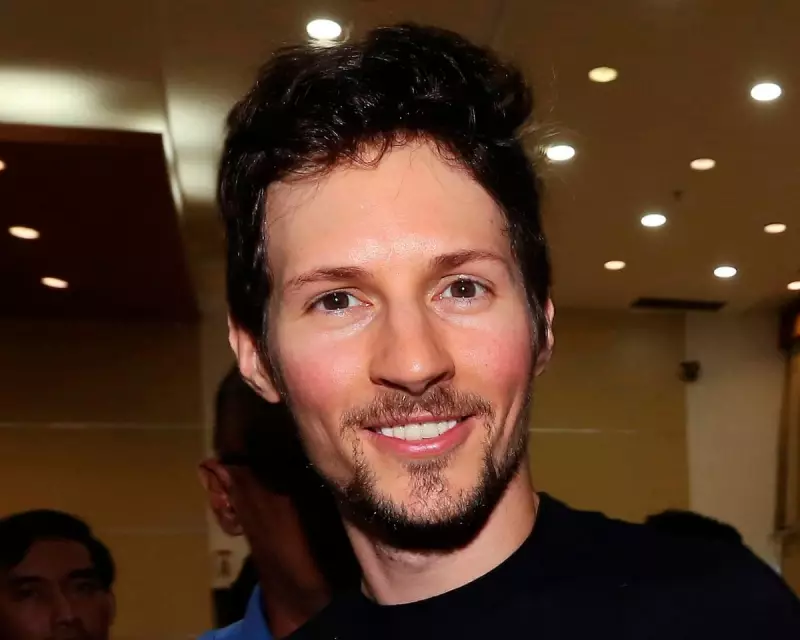
A new biography promises to pull back the curtain on one of the tech world's most enigmatic figures: Pavel Durov, the Russian-born co-founder of the Telegram messaging app. The book, titled The Populist by independent Russian writer Nikolay Kononov, charts Durov's journey from a science prodigy in St Petersburg to a multibillionaire tech visionary who has repeatedly clashed with authorities.
The Making of a Digital Populist
Kononov's work is the result of a 14-year effort to understand Durov's strategy and mindset, drawing on conversations with the man himself, his colleagues, rivals, and critics. The author labels Durov as "one of the first digital populists," a founder who programmed his products, from VKontakte to Telegram, with the ability to communicate his libertarian ideas directly to millions of users, bypassing traditional media and institutions.
This direct line to over a billion users has been central to promoting Telegram's brand of near-absolute free speech. However, Kononov reveals a stark contradiction in Durov's approach. While his public persona is built on libertarian ideals, his management style is intensely centralised. "He is essentially the only one making all the product decisions at Telegram," Kononov states, describing the operation as a "one-man show" where power rests almost entirely in Durov's hands.

Clashes with Power and a Shifting Worldview
The biography details pivotal confrontations that have shaped Durov's path. It recounts, for the first time, a tense 2014 meeting with President Vladimir Putin. According to Kononov, Durov described the encounter as a one-way conversation where Putin reprimanded him over illegal content on VKontakte and suggested he leave Russia. Durov subsequently sold his stake, left the country, and eventually founded Telegram from Dubai.
However, Kononov suggests the clearest recent mark on Durov came not from Russia but from the West. In August last year, Durov, who holds French citizenship, was detained and held for three days in France as part of an investigation into crimes linked to Telegram. The experience of a permanently lit cell and sleep deprivation deeply rattled the tech mogul, who had spent years insulating himself from state reach.
This ordeal appears to have sharpened his hostility. Kononov notes Durov now frames Europe as sliding toward "total digital control" and has increasingly embraced conspiratorial rhetoric, even appearing to endorse a far-right conspiracy theory about the killing of Charlie Kirk.
The Unchanging Visionary and the Art of Compromise
What surprised Kononov most was Durov's lack of evolution. "Durov hasn't changed or evolved in all the years that I have interviewed him," the author said, describing a worldview firmly rooted in an ultra-libertarian, anti-institutional strand of right-wing thought. Durov is portrayed as part of a new wave of moguls, like Elon Musk and Peter Thiel, who combine tech dominance with a personal mythology and suspicion of government.
His interests extend to longevity science and pronatalism, and he claims to have fathered dozens of children via sperm donation. Yet, Kononov is adamant that despite persistent rumours, he found no evidence Durov has worked for or with Russian security services.
The ultimate lesson Durov has learned, according to the biography, is pragmatic compromise. He will bend to both Russian and Western authorities when it serves his interest and allows Telegram to keep operating. This self-serving mindset, encapsulated in a quote where Durov said he never wastes time on things that aren't useful to him personally, ultimately ended the author's personal relationship with his subject when Kononov questioned the contradiction between Telegram's authoritarian internal structure and its free speech ethos.