Luke Kennard's 'Black Bag' Novel: A Campus Comedy for Modern Times
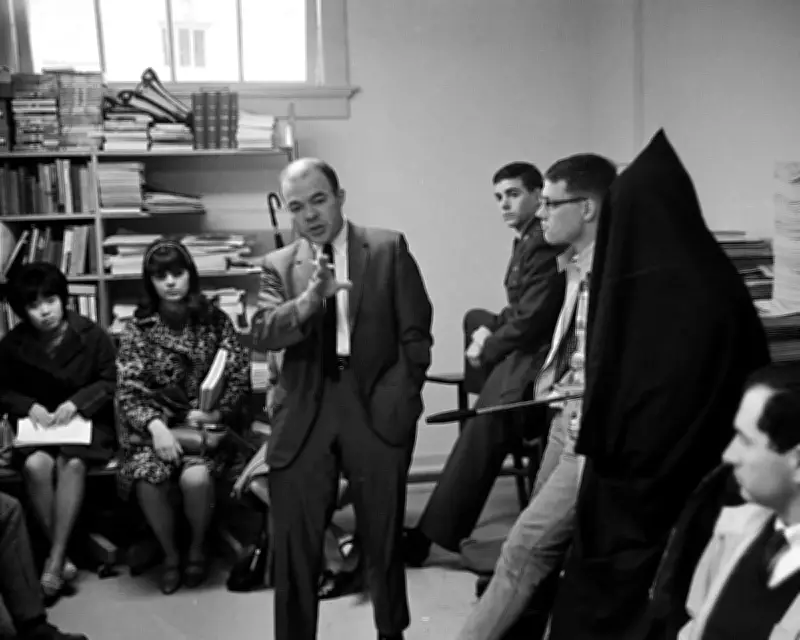
The original Black Bag experiment took place in 1967 at Oregon State University, where Charles Goetzinger had a student attend classes for an entire semester dressed in a large black leather bag with only their feet visible. This real-life psychological study forms the foundation for Luke Kennard's uproarious new novel, Black Bag, which transforms the concept into a sharp satire of contemporary life and creative disillusionment.
A Surreal Acting Opportunity
The unnamed narrator of Black Bag is an out-of-work actor living in London who stumbles upon what he considers the perfect role. Advertised on the remarkably transparent website strange-acting-jobs.org, the position requires him to sit completely silent and motionless at the back of a university lecture theater for an entire academic term, wearing nothing but a black leather bag. He will receive cash payments for his unusual performance. "This is my big chance to do absolutely nothing, as thoroughly as possible," he declares with genuine enthusiasm.
Kennard, a poet who became the youngest-ever nominee for the Forward Prize in 2007, brings his signature surreal humor to this campus comedy that resonates deeply with our current era. His previous works, including the acclaimed novel The Transition, similarly explore the absurdities of late-capitalist, technocratic societies through bizarre social experiments that mirror Black Mirror-style scenarios.

The Experiment Unfolds
The novel's protagonist is an affable millennial underachiever in his late thirties, barely scraping by through a combination of poorly attended social-issue plays and lucrative murder-mystery dinner theater for wealthy patrons. Exhausted by his subsistence-level existence and desperate for a role he can embrace with genuine conviction, he eagerly accepts the Black Bag position.
Dr. Blend, the wonderfully bland course convener overseeing the experiment, explains the specific requirements: "Bag is to be characterless. The occasional involuntary movement will be allowed." When the narrator enthusiastically promises to give the role his absolute dedication, Dr. Blend dryly responds, "About half should be sufficient."
Modern Interpretations and Complications
As the experiment progresses, the narrator enlists his childhood friend Claudio, a successful livestreamer who immediately recognizes the commercial potential. "I think it's a statement about being a man," Claudio suggests. "A rejection of the current options." Meanwhile, post-humanist professor Justine Pearce becomes fascinated with Black Bag for her research on "the coming technocracy," expressing a desire to "fuck nothing" as part of her academic inquiry.
The narrator grows increasingly attached to his bag, wearing it during his personal time, while rumors circulate about other Black Bags appearing across campus and whispers of a secret bag society. These absurd scenarios provide tremendous comedic material while offering keen insights into contemporary art, masculinity, and friendship dynamics.
Millennial Discontent and Creative Struggle
Where Black Bag truly resonates is in its poignant depiction of modern creative life, particularly for millennials. Kennard captures the grim realities of grotty apartments, awkward parental visits, constant professional rejection, and diminishing hope with both humor and compassion. The narrator confesses his deepest fear to Claudio: "What terrifies me is that, in my heart of hearts, I am nothing more than an English suburbanite." This realization proves more frightening than any imagined technological apocalypse.
The novel brilliantly explores how prolonged exposure can normalize even the most bizarre circumstances, mirroring Goetzinger's original finding that students eventually accepted and befriended the bag-clad participant. Black Bag fizzes with wit and inventive storytelling while communicating a profoundly human concern for meaning and connection in an increasingly absurd world.

While the original 1967 experiment required an entire semester for acceptance, Kennard's novel captures reader affection from the very first page. Black Bag stands as a campus novel perfectly suited for our current era, blending sharp social commentary with genuine emotional depth and laugh-out-loud humor.