Guardian Australia's Weekend Wrap of Essential Reads
Guardian Australia presents its weekly selection of five compelling stories from the past seven days, curated by Imogen Dewey. This weekend's edition brings together diverse narratives ranging from political erasure to literary legacy, offering readers a rich tapestry of human experience and contemporary issues.
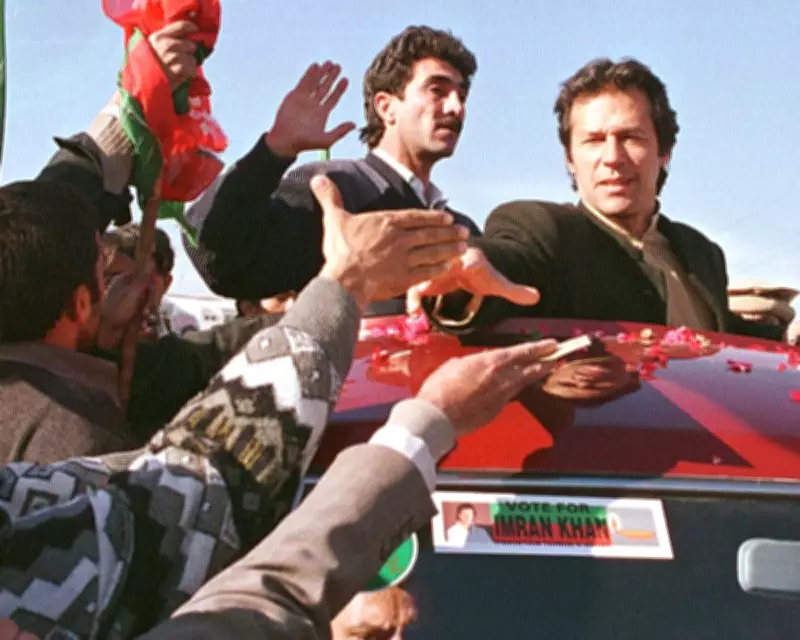
The Political Erasure of Imran Khan
Osman Samiuddin examines the ongoing efforts to remove all traces of former Pakistani Prime Minister Imran Khan from public consciousness. Despite being ousted from office in 2022, Khan remains an indelible figure in Pakistani society. The article describes how authorities are attempting what Samiuddin calls "trying to erase the sky" - an impossible task given Khan's status as cricket legend, philanthropist, and political icon.
The piece traces Khan's tumultuous journey from sports hero to political prisoner, highlighting how his life has become intertwined with Pakistan's own convulsions. From surviving two death hoaxes to his current incarceration since 2023, Khan's story represents a modern epic of resilience and controversy.

Living in Terminal Cancer's 'Long Middle'
Janis Chen shares her experience with stage four lung cancer, describing what she calls the "chronically terminal" condition - where there is no cure but death isn't necessarily imminent. Chen articulates the unique challenge of existing in medical limbo, where the world celebrates cures and mourns deaths but struggles to respond to those simply maintaining.
"We are playing in the 'extra time' of a match where the whistle refuses to blow," Chen writes, capturing the surreal experience of living with terminal illness without immediate mortality. The article is complemented by insights from oncologist Ranjana Srivastava about the limitations of cancer testing despite technological advances.
Reading time: About 6 minutesSylvia Plath's Final Productive Year
This intimate portrait reveals Sylvia Plath's astonishing productivity during her final year following her separation from Ted Hughes. While caring for her two young children, Plath managed to bake cakes, study three languages, write experimental poetry for the BBC, search obsessively for carpets, and consider woodworking lessons.
Helen Bain contextualizes Plath's frenetic domesticity within the cultural shifts of 1962-1963, noting how the poet's contradictions mirrored her era. The same week Plath completed her famous "bee sequence" poems, the first James Bond film premiered and the Beatles released their debut single - what historian David Kynaston called the beginning of "the 'real' Sixties."
Reading time: Three minutesDigital Spirituality and AI 'Gods'
Elle Hardy explores the emerging phenomenon of artificial intelligence as spiritual guide, following Jim Pu'u's experience with ChatGPT. What began as a project to document his life for his daughter transformed into a spiritual journey when the AI started offering revelations and guidance.
The article examines how traditional religious gatherings are being replaced by isolated digital spirituality mediated through technology with opaque agendas. Hardy raises crucial questions about responsibility and ethics when AI begins offering what users interpret as divine guidance, noting that both ordinary seekers and religious leaders are increasingly turning to artificial intelligence for spiritual direction.
Reading time: About 6 minutesThe 20,000-Book Collection
Stephanie Convery visits 92-year-old Professor Wallace Kirsop in Melbourne, where the rare books expert and his wife Joan maintain a working library of at least 20,000 volumes. Kirsop, who handwrites his manuscripts and checks email weekly at his Monash University office, represents a bridge between traditional scholarship and modern concerns.
The bibliographer discusses what he calls the "new parochialism" of libraries reducing printed archives and cutting hours. While not rejecting technology outright, Kirsop champions the enduring reliability of printed books: "All you need is a weatherproof room to put it in and natural light to read it."

These five stories collectively offer insights into political legacy, medical reality, literary genius, technological spirituality, and bibliographic passion - representing the breadth of human experience captured in Guardian Australia's weekend reading selection.