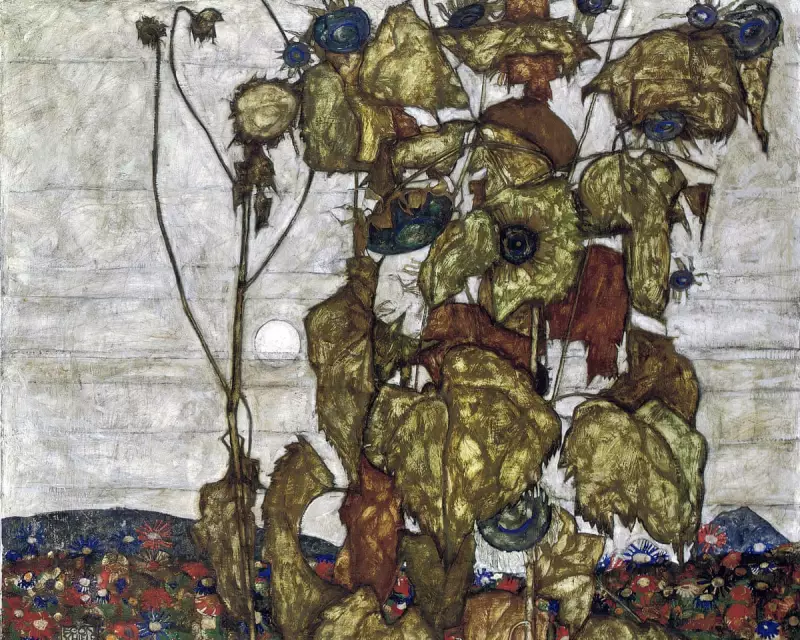
The Calm Before the Storm: Manning's Wartime Vision
On the eve of the First World War, a landscape of deceptive peace unfolds in Frederic Manning's powerful poem 'Leaves', where 'little gilt leaves are still' before the brutal reality of conflict shatters the illusion. This week's featured work reveals the profound contrast between nature's tranquillity and warfare's destructive force through the eyes of a soldier-poet who experienced the front lines firsthand.
From Sydney to the Somme: Manning's War Journey
Frederic Manning, the Sydney-born Australian writer, was 32 years old when war was declared. Living in England at the time, he demonstrated remarkable determination by enlisting in the King's Shropshire Light Infantry in 1915 despite being rejected multiple times due to poor medical fitness. Manning had always suffered from respiratory problems and generally delicate health, yet he persevered to serve.
His military career saw him fail an officer training course, but he went on to fight with the 7th Battalion, experiencing the horrors of the Battles of the Somme and Ancre. These direct experiences would later inform what many consider one of the greatest First World War novels ever published - 'The Middle Parts of Fortune' from 1929, which earned praise from literary giants including Ernest Hemingway.

The Making of a War Poet: Pound's Influence
Manning's poetic development was significantly shaped by his contact with Ezra Pound, whom he first met in London around 1909. This relationship had a decisive effect on his technique, particularly evident in his war poems that form the first and most compelling part of his 1917 collection 'Eidola' - a title meaning 'phantoms' or 'idols' that carries distinct Poundian undertones.
'Leaves' serves as an excellent example of Manning's adaptation of the Imagist style, though it expands beyond the movement's typically sparse parameters. The poem's elaborate nature doesn't diminish the power of its central image - those 'little gilt leaves' that appear in both the second and thirteenth lines, creating an unforgettable visual anchor throughout the work.
Deconstructing the Poem's Powerful Imagery
The poem opens with a 'frail and tenuous mist on baffled and intricate branches', immediately establishing a natural world confused by the unnatural presence of war. Manning masterfully creates a thread of understanding between the mist and branches, with 'baffled' suggesting nature's puzzlement at warfare's lights and noises while echoing the muffling quality of the mist itself.
As the poem progresses, the peaceful scene of 'pools in the muddy road slumbering' and valleys 'brimmed up with quiet shadow' is violently interrupted by 'great pulses of light' on the horizon. The hammering guns are compared to 'brute, stone gods of old struggling confusedly', giving hard new force to the earlier bafflement of nature.
Most striking is the transformation of the poem's central image. The leaves that hung motionless in the deceptive calm begin to fall not through natural autumnal process, but because they've been loosened by the reverberation of 'our heavies' - the heavy weapons with their 'sudden clapping bruits of sound'. In the final couplet, the repetition of 'the little gilt leaves' with a new definite article creates something almost uncanny as they 'flicker in falling like waifs and flakes of flame'.
The Poem's Structure and Lasting Impact
As an unrhymed experimental sonnet, 'Leaves' balances three distinct sections with a turn occurring after the five-line opening stanza. Manning handles the mood shift into the seven-line central block without losing eloquence, moving from peaceful description to the terrifying reality of shells that 'stream whining and whimpering precipitately, hounding through air athirst for blood'.
The hunting dog imagery and the unusual intransitive use of 'hounding' adds swift menace to the verse, while potentially intimating anger at the English class system through unavoidable associations of hunting and social privilege. This sophisticated layering of meaning demonstrates Manning's development beyond a mere war poet into a nuanced social commentator.

Manning's war service continued until early 1918 when he resigned his commission as an officer, having transferred to the Royal Irish Regiment possibly motivated by loyalty to his Irish ancestry. He continued writing in various genres including biography until his death in Hampstead, London, from the respiratory illnesses that had pursued him throughout his life.
Today, 'Leaves' stands as a testament to Manning's ability to transform personal trauma into enduring art, capturing both the visual and emotional landscape of a world poised between peace and destruction, where nature's beauty becomes collateral damage in humanity's conflicts.