George Sand: The Bohemian Author's Radical Legacy and Enduring Influence
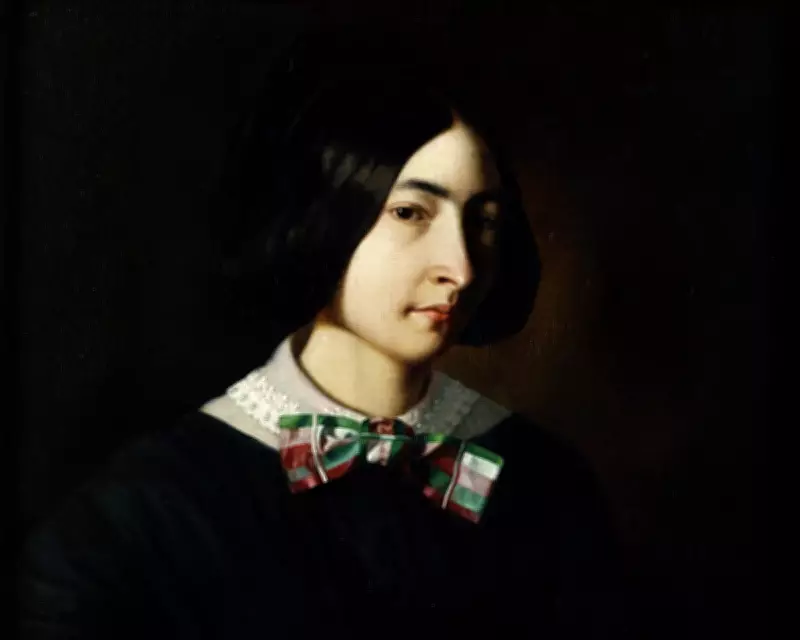
In the annals of European literary history, few figures stand as boldly and controversially as George Sand. A 19th-century portrait captures her essence, but it is her life and work that reveal a writer of immense courage, vision, and queerness. With radical politics and flamboyant affairs, Sand courted controversy, yet her legacy demands a debunking of myths to appreciate a mind far ahead of its time.
A Literary Titan Ahead of Her Era
George Sand, born Amantine Lucile Aurore Dupin de Francueil in 1804, emerged as one of the great romantics, transforming culture and shifting social attitudes in ways that resonate today. Victor Hugo hailed her as "an immortal", while Gustave Flaubert called her "one of the great figures of France". Matthew Arnold placed her above Goethe, declaring her "the greatest spirit in our European world". The 150th anniversary of her death offers a poignant moment to revisit her extraordinary achievements and enduring impact.
To truly understand Sand, we must dismantle the misconceptions surrounding this pioneering ecological, feminist, and republican writer. A prolific polymath, she authored 70 novels, alongside travel writing, criticism, autobiography, political polemics, and visionary essays on nature's interconnectedness. She founded progressive periodicals and achieved success as a playwright, all while navigating a male-dominated world.

Defying Norms and Breaking Barriers
When Sand burst onto the Parisian literary scene in 1831 at age 27, writing for Le Figaro, she immediately became notorious. Gossip columns and male critics painted her as both a man-hater and a man-eater. Charles Baudelaire labeled her "a latrine", and Friedrich Nietzsche dismissed her as "a dairy cow". Yet, through pandemics, riots, typhoid, divorce battles, custody disputes, bereavements, and wars, Sand never wavered in her vocation.
Her writing, though beautiful and expressive, employed radical techniques. She pioneered emotional, idealistic narratives about social injustice, focusing on intimate details of lived experience rather than the broad panoramas of contemporaries like Balzac or Dickens. Starting with her bestselling 1832 debut Indiana, which critiqued arranged marriages, she centered women and children in their own stories—a legacy now taken for granted, as seen in the admiration of the Brontë sisters.
A Life of Complexity and Controversy
Sand's personal life was as multifaceted as her work. Born to a Parisian sex worker and an aristocratic cavalry officer, her legitimacy was secured by a shotgun marriage just a month before her birth. At 18, she married an alcoholic boor, a union that failed within a decade, producing two children, one possibly from an affair. Leaving her family home for Paris with lover Jules Sandeau, she co-wrote commercial fiction but soon surpassed him, adapting his name into the famous pen name George Sand.
Her flamboyant promiscuity added to her notoriety. She often wore men's clothes, a habit adopted for better horseback riding as a teenager, which in Paris became a costume proclaiming her status among literary "boys" and granting her freedom of movement. Despite a bylaw prohibiting crossdressing, Sand embraced this subversion, alongside wearing dresses and engaging in mostly heterosexual affairs, including with author Prosper Mérimée and actor Pierre-François Bocage.
Relationships and Ecological Insights
In 1838, Sand began a relationship with Frédéric Chopin, which lasted nine years. Contrary to traditional portrayals casting her as the villain, she cared for Chopin during his tuberculosis, assumed financial responsibility, and enabled his composition of works like the Preludes. Her letters reveal Chopin's lack of desire for her, while his own correspondence shows explicit affection for male friends.
Beyond her personal life, Sand was a pioneering ecologist. In her country novels and essays for Le Temps in 1871-72, she presented nature as independent and interdependent, prefiguring James Lovelock's Gaia hypothesis by a century. She personified nature as Corambé, a non-binary divinity of her own invention, blending her feminist and ecological visions.

Legacy and Lasting Relevance
Sand's refusal to conform made her a trailblazer for future female artists, from Elizabeth Gaskell to Louise Bourgeois and even Taylor Swift. Her subversive adoption of male attire—cigars, top hats, spats, and riding coats—queered notions of authority and challenged gender norms. She campaigned for causes like ending arranged marriage, supporting the 1848 revolutionaries, and advocating for a young rape victim with mental disabilities.
In the Val de Loire region, where she grew up and aided the poor, she was known as the Good Lady of Nohant. Her storytelling, as noted by friend Gustave Flaubert, integrated all aspects of her life. At her funeral in 1876, celebrities and villagers mingled in mud and rain, a scene Flaubert described as "like a chapter in one of her books".
George Sand's legacy is not merely historical; it remains astonishingly relevant today. Her courage, vision, and queerness continue to inspire, reminding us of the power of defying expectations and embracing one's true self.