Guardian Australia's Weekend Reading Selection
Good morning from Guardian Australia. This weekend's essential reading wrap brings together a diverse collection of stories from the past seven days, carefully selected by Imogen Dewey. From children's literature classics to haunting nuclear landscapes, family culinary traditions to technological responses to loneliness, and a celebration of jazz greatness, there's something for every reader. Pour yourself a coffee, settle in, and explore these five compelling narratives.
1. The Accidental Children's Author: Graeme Base's Unlikely Journey
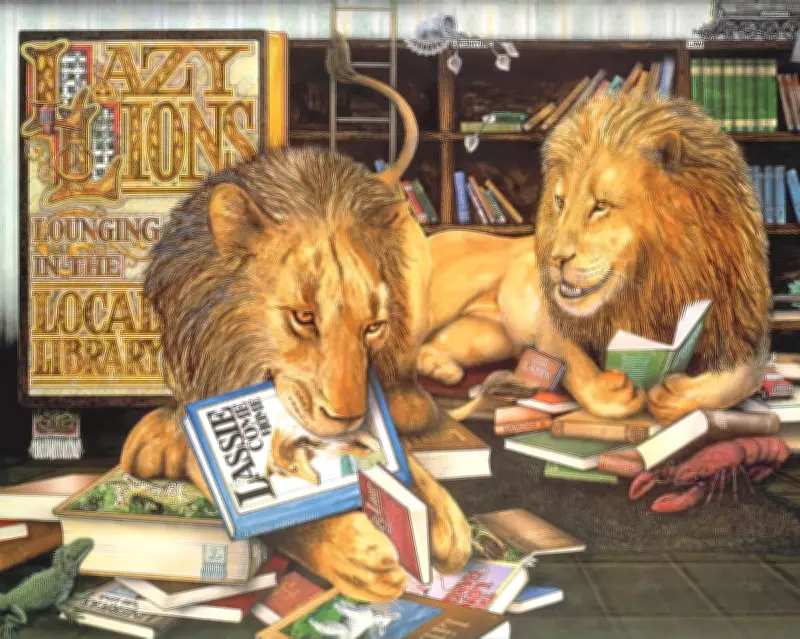
Graeme Base never intended to become a children's book author. In fact, when he first contemplated creating an alphabet book, his initial thought was dismissive: "What an idiot – as if the world needs another English-language alphabet book." Yet against his own expectations, Base would go on to create Animalia, a work that Sian Cain describes as "quite unlike any alphabet book published before or since."
Base specialises in what might be considered the best kind of children's literature – those books adults often assume children won't appreciate due to their complexity, peculiarity, or verbose nature. With a talent for intricate illustration and an esoteric visual sensibility, Base found himself on an unexpected path to the New York Times bestseller list. Following Animalia's success, inspired by reading Agatha Christie during a holiday, he conceived his next major hit, The Eleventh Hour.

Both Animalia and The Eleventh Hour have been selected by Guardian readers among the 50 best Australian picture books ever published. The voting for this recognition remains open until Wednesday, inviting further participation from literary enthusiasts.
2. Fukushima's Frozen Classrooms: A Region in Suspension
Fifteen years have passed since a catastrophic tsunami and Japan's most powerful recorded earthquake triggered the world's worst nuclear disaster since Chernobyl. Justin McCurry paints an evocative picture of the Fukushima region, where time appears to have stood still in haunting fashion.
At Kumamachi elementary school, adjacent to the nuclear power plant, classrooms remain exactly as they were when children evacuated in haste. Textbooks still lie open on desks, pencil cases scatter across floors, and uneaten bento boxes await collection that never came. Along corridors, shoes line the escape routes taken by fleeing students.
In the absence of human inhabitants, nature has reclaimed the urban spaces. Bears, raccoons, and boars now roam streets that once bustled with community life. This raises profound questions about whether former residents can or should return to these ghost towns, and what restoration might mean for both people and the environment that has flourished in their absence.
3. Culinary Heritage: Family Recipes as Time Travel
Jimi Famurewa explores how family recipes serve as "a form of time travel" and "an act of cultural preservation" that connects generations across geographical and temporal divides. Guardian readers have shared their cherished culinary heirlooms, revealing how dishes evolve while maintaining their essential character through family lines.
From Turkish spinaka (a spinach and feta pie) to "Bapa's beans" – tinned baked beans transformed into a delicious Indian curry – these recipes tell stories of migration, adaptation, and continuity. As Sonia, 40, from Manchester recalls: "My grandparents could make a meal out of anything. Even though there was not much money, there was always a feast, and whoever was there would be included."
These culinary traditions demonstrate how food becomes a tangible link to ancestors and homelands, preserving flavours and techniques that might otherwise fade from memory.
4. The 'Are You Dead?' App: Technology Meets Social Isolation
A viral Chinese application has exposed deep-seated anxieties about loneliness and social connection in contemporary urban life. Originally named "Are You Dead?" and developed by Moonscape Technologies, the app surged to become China's most downloaded paid application before rebranding as "Demumu" (a portmanteau of "Death" and the affectionate suffix "Mumu").

The app's functionality is strikingly simple yet profound: users check in daily by pressing a large green button. Should someone miss two consecutive days, the system automatically alerts their designated emergency contact. As Amy Hawkins reports, this concept has resonated powerfully in Chinese cities where marriage and birth rates have reached record lows, and solitary living has become increasingly common.
Analysts note the emergence of a "loneliness economy" where technology attempts to fill gaps created by shifting social structures. While liberation from traditional family arrangements offers new freedoms, it can also create voids in human connection that both reflect and address contemporary anxieties about dying alone and unnoticed.
5. Miles Davis at 100: The Enduring Genius of a Jazz Icon
This year marks the centenary of Miles Davis's birth, prompting music critic Ammar Kalia to explore what made the jazz legend so profoundly influential. Through conversations with surviving collaborators and contemporary musical heavyweights, a portrait emerges of an artist whose impact transcends genre and generation.
Sonny Rollins recalls how Davis "would hear every note each person played, and we all took something different away from his wisdom." Trumpeter Ambrose Akinmusire observes that Davis shared with artists like Dizzy Gillespie, Joni Mitchell, and Björk a daily questioning of whether he remained the same person as yesterday.
Pianist Bill Evans notes Davis's unique ability to "write a song or put a band together that felt like he was playing to just one person." Terence Blanchard emphasises how Davis "didn't play the trumpet like a trumpet ... he always played the moment," allowing the music itself to dictate his expression. Saxophonist Melissa Aldana captures the spiritual dimension: "You hear one note and you know it's Miles. You can't play like that and not be spiritual."
Davis's 1959 masterpiece Kind of Blue remains the bestselling jazz album of all time, testament to his enduring appeal across decades of musical evolution.
Further Reading Opportunities
For those enjoying this weekend reading selection, Guardian Australia offers additional newsletter options including the weekly culture and lifestyle publication Saved for Later, which provides rundowns of must-reads, pop culture trends, and weekend tips. The full range of local and international newsletters remains available for subscription, ensuring readers never miss compelling content across diverse interests and perspectives.