In an age defined by data harvesting, virtual realities, and political slogans that echo fictional dystopias, it seems our present was meticulously outlined in the pages of novels decades ago. From the omnipresent surveillance of George Orwell's 'Nineteen Eighty-Four' to the bio-engineered pandemics of Margaret Atwood's 'MaddAddam' trilogy, authors have long served as uncanny prophets of our technological and social landscape.
The Labyrinth of Time and the Multiverse
The concept of parallel realities, now a staple of quantum physics and blockbuster cinema, found an early expression in literature. Jorge Luis Borges's 1941 short story 'The Garden of Forking Paths' envisioned a labyrinthine novel where every possible narrative path is taken, creating "a growing, dizzying web of divergent, convergent, and parallel times." This idea remarkably prefigured the "many worlds" interpretation of quantum mechanics proposed by Hugh Everett in 1957.
While physicist Alberto Rojo's 2005 essay explored this link, Borges himself playfully denied any knowledge of physics. The interplay between fictional speculation and scientific discovery remains a mystery, much like the forking paths themselves. Another potent example is H.G. Wells's 1914 novel 'The World Set Free', which described "atomic bombs." The physicist Leo Szilard, who read the book, credited it with helping him grasp the terrifying significance of his own theory of the nuclear chain reaction in 1933.

Dystopian Blueprints: Surveillance, Control, and MAGA
Perhaps the most chillingly accurate predictions concern systems of control. The warnings of Yevgeny Zamyatin's 'We' (1924), Aldous Huxley's 'Brave New World' (1932), and Orwell's 1949 masterpiece have become absurdly relevant manuals for our age of surveillance capitalism. In these visions, the state eradicates privacy, mistrusts solitude, and seeks to violate the inner mind.
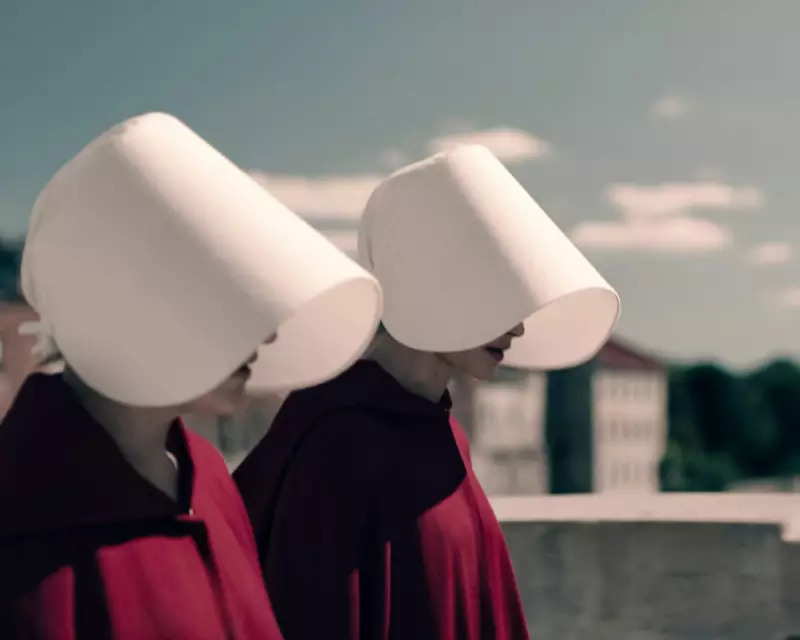
This lineage extends powerfully to Margaret Atwood's 'The Handmaid's Tale' (1985), a prescient story of mass surveillance and the state control of women's bodies. Later, in Octavia E. Butler's 'Parable' novels (1993, 1998), she depicted a climate-ravaged, unequal America where a nefarious president vows to "Make America Great Again"—a phrase that echoes from Reagan's era to our modern political discourse.
Virtual Worlds and Pre-Crime: From Fiction to Function
The digital fabric of our lives was also woven in advance. William Gibson's 'Neuromancer' (1984) coined "cyberspace," while Neal Stephenson's 'Snow Crash' (1992) named the "metaverse," an immersive virtual reality requiring a headset—a concept Mark Zuckerberg's Meta is now spending billions to realise.
Meanwhile, predictive policing has moved from science fiction to street-level trials. Philip K. Dick's 'The Minority Report' (1956) explored "pre-crime" units using psychics to arrest people before they offend. Today, UK authorities trial similar operations using data mining and algorithms instead of clairvoyants, raising the same ethical questions Dick posed about pre-emptive guilt.
Dick also gifted us the concept of "kipple"—the useless junk that multiplies and overwhelms. In our digital age, kipple has evolved into algorithmic rubbish, spam inboxes, and AI-generated slop. His first law, that "kipple drives out nonkipple," feels like a perfect diagnosis of online clutter.
As Margaret Atwood has noted, these future fictions are ultimately deep examinations of the writer's present. The most prescient authors extrapolate the currents of their time into powerful, enduring warnings. They may not have possessed a crystal ball, but their insights into human nature, power, and technology have provided a startling map to our uncharted present. In a world where tech barons sometimes mistake dystopian blueprints for business models, perhaps the most utopian act left is to heed these literary warnings and consciously fight the kipple.